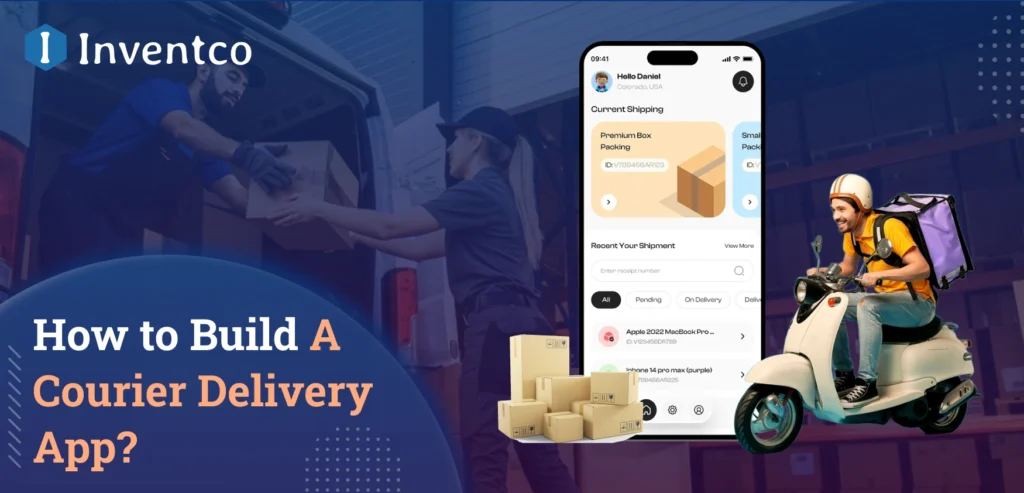
The logistics industry has been significantly impacted by the explosion of e-commerce, coupled with a profound change in consumer expectations. To stay competitive in a crowded marketplace, logistics companies have begun integrating technologies that enhance customer experience and streamline business processes. Consumers today expect fast and easy delivery, with the ability to track their package in real time and know the delivery person’s every step.
Today’s delivery applications allow businesses to streamline their operations by managing orders, tracking shipments, optimizing delivery routes, and dispatching drivers in real time. Digitizing these processes within a business means fewer delays and a lower operational error rate. This results in customers losing control and lower levels of trust and satisfaction with the business.
Technology-based platforms, which enable a scalable delivery network, will provide the greatest competitive advantage to businesses with complex logistics operations. This will be true regardless of whether the business serves a single local area or spans multiple regions. It will allow the business to effectively accommodate and respond to increasing customer demand.
To build an understanding of a courier delivery app, planning must include the appropriate features, an effective technology system, and an effective user experience. This blog will analyze the individual steps to build a mobile app and what businesses must consider to develop a functional, scalable, and profitable logistics platform.
Key Takeaways
- Delivery and courier service apps are revolutionizing logistics by providing customers and businesses with real-time tracking, automated dispatching, and better last-mile delivery.
- With the expansion of e-commerce, growing consumer demand for immediate delivery, and digital logistics platform adoption, the courier and on-demand delivery market is growing rapidly.
- To enhance delivery operations, efficient courier apps must have tracking, order management, payment, driver management, and analytics.
- To help delivery businesses enhance delivery efficiency while decreasing operational costs, integrated systems like AI route optimization, predictive delivery estimates, and automated dispatch systems should be used.
- Building a courier delivery application requires several steps, including but not limited to market research, building a product strategy, deciding a technology stack, developing features, and testing, followed by deployment and maintenance.
- Building a courier delivery application will typically cost anywhere from $10,000 to $100,000+, depending on the systems, features, integrations, and scalability.
- The upcoming logistics transformations, including drones, blockchain-based tracking, Internet of Things (IoT) monitoring, and hyperlocal delivery models, will once again change the courier delivery ecosystem.
- The ZONE Delivery App is a real-world example of a scalable and streamlined logistics management solution, operational efficiency improvement, and support for high-volume deliveries to businesses.
Market & Stats for Courier Delivery App
Over the years, courier companies have increased their focus on creating mobile solutions that increase delivery volumes and minimize manual errors. Parcel and courier delivery has been booming, driven by an increased focus on online shopping and express delivery.
Have a look at the major trends of the courier delivery industry in detail below:
- The global parcel delivery logistics market is estimated to reach $620.11 billion in 2026 and is expected to grow to $822.12 billion by 2030, expanding at a 7.3% CAGR as e-commerce and cross-border shipping continue to rise.
- The global on-demand delivery market was valued at $70.32 billion in 2023 and is projected to reach $225.33 billion by 2030, growing at a CAGR of 18.1%, driven by rising demand for fast, flexible delivery services.
- The on-demand logistics market is estimated at $198.96 billion in 2025 and is expected to reach $421.73 billion by 2030, reflecting strong growth fueled by real-time delivery expectations and digital logistics platforms.
- The hyperlocal delivery app market is also expanding rapidly, growing from $2.61 billion in 2025 to $3.26 billion in 2026, with an impressive 25% annual growth rate due to rising smartphone usage and urban delivery demand.
How a Courier Delivery App Works?
A mobile application for courier delivery services integrates customers, delivery partners, and logistics businesses via a single centre, fully automating and managing the logistics flow for each delivery. The customer begins the process by entering the pickup and delivery addresses, an overview of the delivery item, and the delivery request time in the application. The application, in turn, calculates and displays the total delivery charge.
If an order is placed, the courier partner nearest to the customer will be automatically selected by the system. Smart dispatch systems take into consideration the driver’s location, delivery priority, and driver rest status to assign orders to drivers for faster delivery. The driver receives the request in their application and will head to the customer’s pickup address. The delivery process will commence after the item has been inspected and picked up by the driver.
In addition to real-time package tracking via the application, customers are able to view the most optimal route chosen by the driver using route optimization. Your driver will complete the delivery by accepting an electronic signature, offering a photo proof of delivery, and providing an electronic confirmation code. Upon completion of the delivery, customers will receive a notification that they are not required to provide a rating or review regarding the service.
Step-by-Step Process: How to Develop a Courier Delivery App?
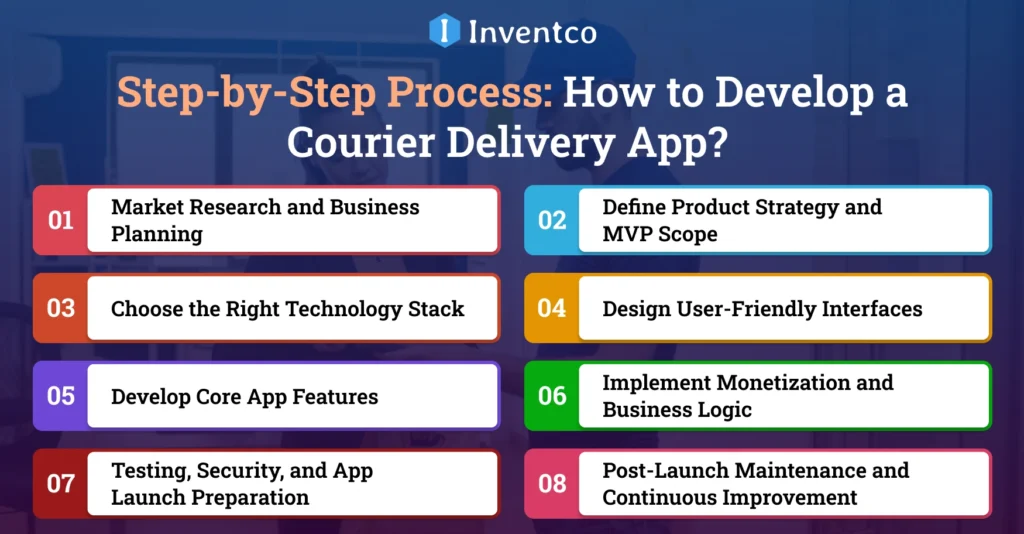
Developing a courier app involves a lot of planning and strategy. To assist you further, below is the step-by-step mobile app development process you need to take:
Step 1: Market Research and Business Planning
All development journeys begin with initial research to develop a good understanding of the customer’s needs, various trends in the process of delivery, and the challenges in the logistics field. Your development should also include a competitive analysis, a description of the target market, and a listing of the different potential business offerings such as on-demand, last mile, or logistics enterprise through various mobile applications. It is also important to create a timeframe for the different stages of development to act as a guide. This planning will also include defining the various revenue streams.
Step 2: Define Product Strategy and MVP Scope
Development of the product is guided by a clearly defined vision of the product. It is the development of the user journey that drives the development of the product roadmap. It is also a step towards realising the wireframes and early app prototypes that act as guides to the various workflows and user touchpoints. To mitigate risk, further the development of the product and validate your initial concept, a lot of startups will begin with an MVP mobile app that provides expedited delivery for a limited number of use cases that are identified to be the ‘core’ delivery use cases.
Step 3: Choose the Right Technology Stack
Picking the right technology stack for mobile apps is important in creating a scalable courier platform. Businesses typically choose modern mobile app development frameworks like Flutter or React Native for cross-platform mobile apps. For processing and managing data, along with facilitating the GPS API, payment processors, and databases for tracking, processing, and optimal operational efficiency, backend frameworks such as Node.js and Django are used.
Step 4: Design User-Friendly Interfaces
A well-designed user interface leads to better customer retention and quicker deliveries. Developers create a simple dashboard for customers, drivers, and admins to easily manage and communicate about their orders and their status. The performance of the app across different platforms is influenced by the UX and considers design guidelines for both Android and iOS. Developing good UX is also a way for the company to distinguish itself in the growing app development trend environment.
Step 5: Develop Core App Features
This is the stage where the bulk of the features, such as order placement, tracking of packages, payment systems, and driver management systems, are added. Other systems that can enhance the efficiency of operations include real-time notifications, optimized routing, and delivery scheduling systems. Knowing the typical mobile app development challenges can assist teams in creating systems that can accommodate the growing complexity of the delivery volume and the business itself.
Step 6: Implement Monetization and Business Logic
A courier delivery platform must identify a specific revenue model to ensure sustainable growth. The most common models include delivery commission, subscription service, premium service, and surge pricing for high-priority deliveries. Selecting the right mobile app monetization strategy secures long-term profitability while offering a competitive pricing model to the users and businesses that rely on the platform.
Step 7: Testing, Security, and App Launch Preparation
The application must undergo mobile app testing to identify and rectify performance issues, bugs, and gaps in usability. Prior to launch, developers implement security measures that include encryption and authentication and utilize mobile app security best practices to ensure the protection of user data. App store optimization is used to optimize the application’s listing, resulting in higher downloads post-launch.
Step 8: Post-Launch Maintenance and Continuous Improvement
Once a mobile app is deployed, businesses must focus on monitoring performance and bugs and implement regular feature updates. The focus on mobile app maintenance of the platform is essential to ensure that the app is stable and that it operates within the requirements of the newest technologies. Analyzing the long-term scalability and associated costs also helps to support service quality in conjunction with business growth.
Key Features of Parcel Delivery Application
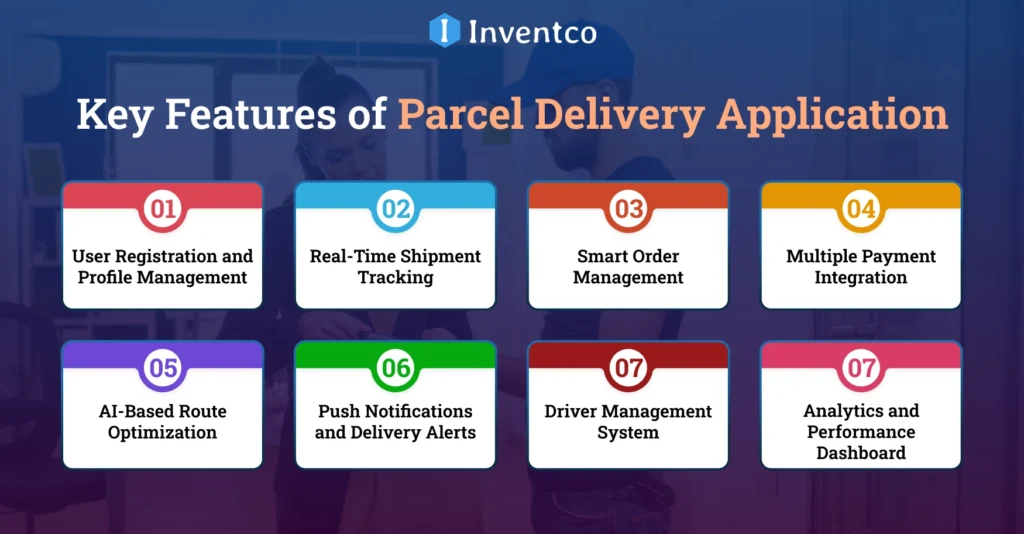
To enhance transport functionality in a parcel delivery app, several elements are imperative. Here are some must-have features of a mobile app:
1. User Registration and Profile Management
A Delivery application for couriers must facilitate a straightforward registration process with Email, Phone Number, or Social Media. Users should also be able to manage personal information, addresses, delivery preferences, and order history from their profile.
2. Real-Time Shipment Tracking
Tracking in Real-Time is another important feature delivery apps should have. It enables users to track their parcels at each stage of the delivery process. With the integration of GPS, users can track the Couriers live, how long it will take to reach them and even the status of the parcel.
3. Smart Order Management
Users must be able to schedule pickups, deliveries, and order modifications, and track all shipments from a single screen. This feature allows businesses and users to manage their deliveries better and minimize the amount of coordination needed.
4. Multiple Payment Integration
The app’s ability to accept different forms of payment, including credit and debit cards, digital wallets, and online banking, is essential for safe and flexible transactions. Secure payment gateways give customers the flexibility to choose their payment methods and allow businesses to process their orders without any problems.
5. AI-Based Route Optimization
Artificial intelligence is being integrated into advanced delivery platforms. These platforms analyse real-time traffic, road lengths, and delivery priority in order to suggest to drivers the fastest routes, the least delays, and the greatest delivery efficiency overall.
6. Push Notifications and Delivery Alerts
Push Notifications provide the user with information on key events like order confirmations, driver assignments, pickup and delivery statuses, etc. These automated notifications increase user engagement and improve the overall customer experience.
7. Driver Management System
An effective driver management system enables the logistics company to streamline delivery assignments, monitor driver productivity, and track live driver locations. This allows better coordination between the dispatching teams and the delivery partners.
8. Analytics and Performance Dashboard
Analytics Dashboards allow delivery businesses to capture performance data, order volume, customer patterns, and operational processes. Based on these metrics, businesses can improve logistics processes and grow delivery volume.
Advanced Features of a Courier Delivery App
The courier delivery apps of today have shifted from simplistic tracking and booking features. These apps now incorporate advanced technologies like artificial intelligence, machine learning, and data analytics. This provides operational efficiency, delivery precision, and improved customer satisfaction.
1. AI-Powered Route Optimization
AI-powered route optimization has the ability to track users in real time and provide solutions based on multiple factors. These can include weather, delivery urgency, and even the location of the delivery drivers. This can increase operational productivity and decrease delivery time and cost.
2. Predictive Delivery Time Estimation
Sophisticated predictive algorithms help to increase the accuracy of delivery time estimations. This can be achieved by analyzing patterns from previously captured historical data, as well as the current traffic conditions and variables/parameters along the delivery route.
3. Automated Dispatch System
An automated approach to a dispatch system means the delivery requests will effortlessly be allocated to the courier who is most suitable, available, and closest to the delivery, as well as having the least workload. This means that the manual effort required to coordinate delivery requests is removed and logistics can be managed much more simply.
4. Digital Proof of Delivery (POD)
With digital systems, operational drivers can record a digital signature, take a photo, and even request an OTP to verify that an activity has occurred. This creates transparency and minimizes arguments, and it identifies and protects a record of completed operational tasks.
5. Smart Delivery Scheduling
Users with flexible delivery time preferences increase the number of smart scheduling options available to the business. This is especially beneficial for optimizing drivers’ workloads, balancing business activity, and increasing the number of successful deliveries.
6. Data Analytics and Demand Forecasting
Sophisticated analytical tools assist companies in evaluating trends in deliveries, patterns in consumer demand and operational efficiency. These analytics provide understanding and help logistics companies predict demand, optimize assets, and strategize through analytics.
How much does it cost to build an app for parcel delivery?
The cost to build a mobile app for parcel delivery depends on several factors, including feature complexity, platform selection, development location, integrations, and overall system architecture. Businesses aiming to develop delivery apps are advised to strike a balance between the initial cost of app development and the cost of future updates to meet the growing needs of customers.
The cost of app development is expected to be $ 10,000 to $ 100,000 for the development of a courier delivery app. This cost will vary depending on the level of functionality of the app and the technological integrations.
Basic Courier Delivery Apps ($10,000 – $25,000)
Basic-level apps support the basic and preliminary features of an app. These include user registration, booking orders, scheduling, and basic shipment tracking. These apps are suitable for startups or a local courier service that needs to utilize an app to act as a delivery platform.
Mid-Level Courier Apps ($25,000 – $60,000)
Apps in this category provide advanced features such as tracking in real time, optimization of delivery routes, integration of payment gateways, push notifications, and feedback systems and ratings for customers. These apps are excellent for growing logistics companies as they deliver a more seamless delivery process.
Advanced Courier Delivery Apps ($60,000 – $100,000+)
Apps in this category offer advanced and latest features such as the integration of 3rd party logistics, a dashboard for analytics, adaptable infrastructure, and optimization of routes through AI. These apps are ideal for large companies in logistics that deliver a lot of packages.
In addition to development, businesses must also have a budget for future updates and maintenance, which typically is 15- 20% of the total app development cost each year.
Future Trends in Courier Delivery Apps
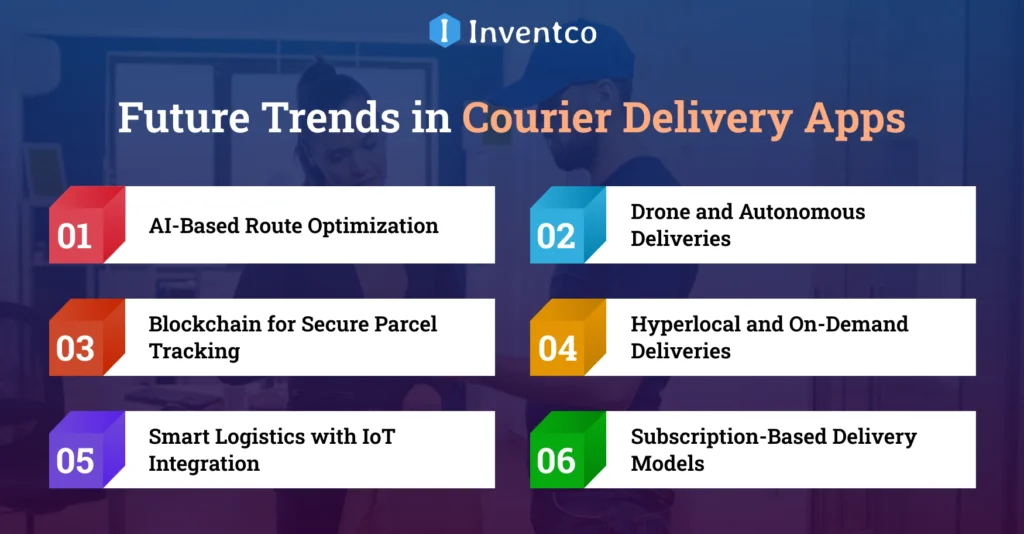
The rapid evolution of technology in logistics is changing the way courier companies handle deliveries and the way customers interact with companies. The new technologies are allowing businesses to improve efficiency and cut costs while addressing customer needs for speed and intelligence in delivery.
1. AI-Based Route Optimization
Artificial intelligence is used increasingly to inform decision-making with regard to road congestion, delivery locations and types of orders, and delivery priorities. Fuel consumption is lowered and delivery times are improved as AI assists drivers in delivering to multiple locations in large logistics networks.
2. Drone and Autonomous Deliveries
To increase the speed of last-mile delivery operations, courier companies are looking into the use of delivery drones and autonomous delivery vehicles to streamline the process and reduce the need for human involvement in deliveries.
3. Blockchain for Secure Parcel Tracking
The use of blockchain technology has the potential to improve transparency and security of delivery data. Delivery records become tamper-proof, and trust is increased among customers, logistics service providers, and supply chain partners.
4. Hyperlocal and On-Demand Deliveries
There is a growing trend with hyperlocal and on-demand deliveries. Courier apps are utilizing real-time order assignments and developing local delivery networks to deliver quicker within city limits.
5. Smart Logistics with IoT Integration
The use of Internet of Things (IoT) enablement has made it possible to connect packages, vehicles, and even entire warehouses. i.e., to remotely and/or automatically track the status and the location of a package, and other important data concerning the package, to improve the levels of visibility and control within the logistics process.
6. Subscription-Based Delivery Models
Some delivery services are utilizing a subscription system to create a stable cash flow. It enables customers who are engaged in e-commerce or those who require regular deliveries to quickly and conveniently utilize the system.
Top 5 Courier Delivery Apps
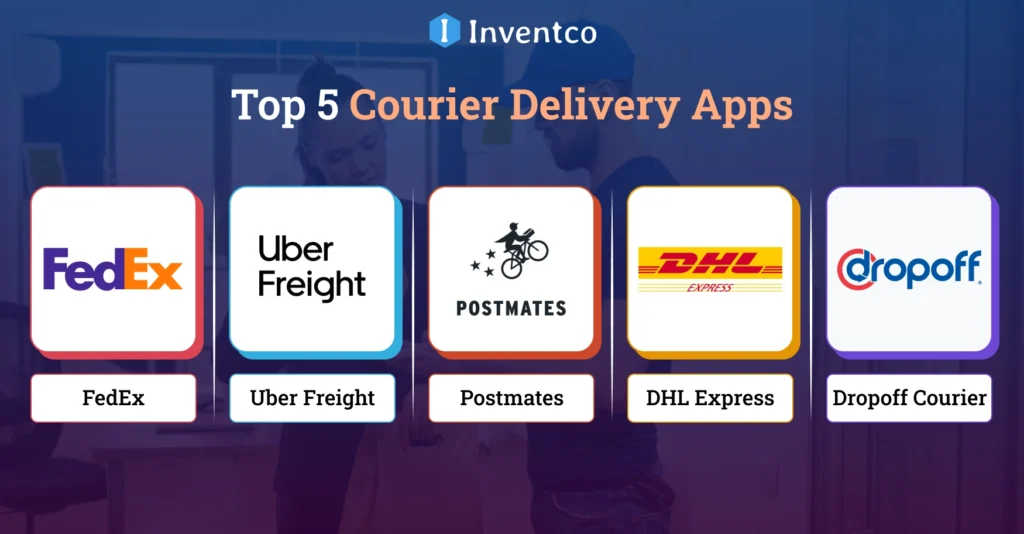
For both consumers and businesses, numerous courier and logistic services apps have changed how shipments are managed, with the use of real-time tracking, quicker dispatching, and efficient delivery management. Here are the top-rated courier delivery apps most used in the world.
1. FedEx Mobile App
With the FedEx mobile app, users can track shipments, schedule deliveries, get delivery time estimates, and get real-time alerts. The app helps both businesses and individuals manage shipments from a single mobile app.
2. Uber Freight
Uber Freight is a digital logistics app that simply connects shippers and carriers. The app makes booking freight, accessing real-time shipment tracking and transparent pricing easy. There is no need for any manual handling between shippers and carriers, as the app does it.
3. Postmates
Postmates is an on-demand delivery app that allows users to quickly receive food, groceries, and packages. The app is extremely popular in metropolitan areas, as it allows businesses to add local courier deliveries to their services for better delivery of everyday items and increased convenience to their customers.
4. DHL Express Mobile App
With the DHL Express mobile app, customers can receive status notifications, schedule deliveries, and track international shipments. It provides shipment management tools and global logistics capabilities so businesses and individuals can better manage cross-border shipments.
5. Dropoff Courier App
Dropoff is a professional courier platform that specializes in same-day and scheduled deliveries. Their app enables businesses to engage in quick and secure transportation of packages via dedicated drivers to make the management of urgent deliveries easier across cities.
Real-World Example: ZONE Delivery App by Inventco
To build a successful courier delivery platform, you need a solid plan and an approach that combines features, a well-thought-out scalable backbone, and solid real-world logistics knowledge. ZONE Delivery Application is a good example of this. Inventco, a technology company specializing in sophisticated logistics and mobility technologies, designed the ZONE platform.
The ZONE platform is an intelligent delivery management system developed to automate and improve the delivery lifecycle for merchants, customers, drivers, and logistics companies. Owing to the platform’s sophisticated backend and frontend development, thorough engineering, meticulous software testing, and research-driven product development, ZONE is designed to build a connected ecosystem of stakeholders.
ZONE offers dedicated mobile applications and web dashboards that provide real-time delivery management. While merchants can schedule orders, manage stock, assign multiple deliveries to drivers, and customers can request deliveries, add package info, and track deliveries, drivers can navigate, manage orders, and track earnings through the dedicated application and interface. Customers and drivers are offered a clear, streamlined experience.
ZONE offers many features, such as QR-based delivery tracking, multilingual support, performance dashboards, and a secure infrastructure to improve operational efficiency and improve user experience. ZONE showcases the real-time integrations offered through the Local Gateway API, allowing automated delivery order placement and real-time order tracking, to demonstrate the seamless integration capabilities offered to third-party systems, such as eCommerce stores.
Smart product planning, reliable technology, and strategic product development demonstrate the potential of a scalable logistics platform. This emphasizes the need for pace-compliant delivery systems for emerging delivery businesses.
Conclusion
Courier delivery apps have become essential for logistics businesses aiming to meet the growing demand for fast, transparent, and reliable delivery services. From real-time tracking and automated dispatch systems to AI-powered route optimization, these platforms help streamline operations while improving customer satisfaction. For startups, building a courier delivery app requires a well-planned strategy that includes market research, scalable technology, user-focused design, and continuous maintenance.
Understanding development costs, essential features, and emerging logistics trends also plays a crucial role in long-term success. By investing in a robust and scalable delivery platform, businesses can enhance operational efficiency, expand their service capabilities, and stay competitive in the rapidly evolving digital logistics ecosystem.
FAQ’s
Q1. How long does it take to develop a courier delivery app?
Ans. The development timeline typically ranges from 3 to 6 months depending on features, integrations, and platform complexity. Basic apps launch faster, while advanced logistics platforms with AI capabilities require longer development cycles.
Q2. What are the essential features of a courier delivery app?
Ans. Core features include user registration, order booking, real-time parcel tracking, route optimization, payment integration, driver management, push notifications, and analytics dashboards that help businesses manage deliveries and monitor operational performance effectively.
Q3. What is the cost to build a mobile app for courier delivery?
Ans. The cost to build a mobile app for courier delivery usually ranges between $10,000 and $100,000+. Pricing depends on app complexity, number of features, technology stack, integrations, and development team location.
Q4. Which technologies are used for courier delivery app development?
Ans. Common technologies include Flutter or React Native for frontend development, Node.js or Django for backend services, Google Maps APIs for tracking, and secure payment gateways for processing transactions.
Q5. Can courier delivery apps integrate with eCommerce platforms?
Ans. Yes, courier delivery apps can integrate with platforms like Shopify, WooCommerce, or custom eCommerce systems through APIs. This allows businesses to automatically create delivery orders and track shipments in real time.
Q6. How do courier delivery apps generate revenue?
Ans. Courier apps generate revenue through delivery commissions, subscription plans, surge pricing for urgent deliveries, premium logistics services, and partnerships with businesses that require regular shipments or last-mile delivery solutions.

Ajay Bhal
He is an on-demand app solutions expert with 11+ years of experience in business consulting and building scalable, user-centric digital products. He specializes in robust on-demand platforms across industries, combining technical expertise with business-focused strategy to deliver efficient, top notch solutions that drive growth and enhance user experience. You can connect with him on LinkedIn to follow insights.