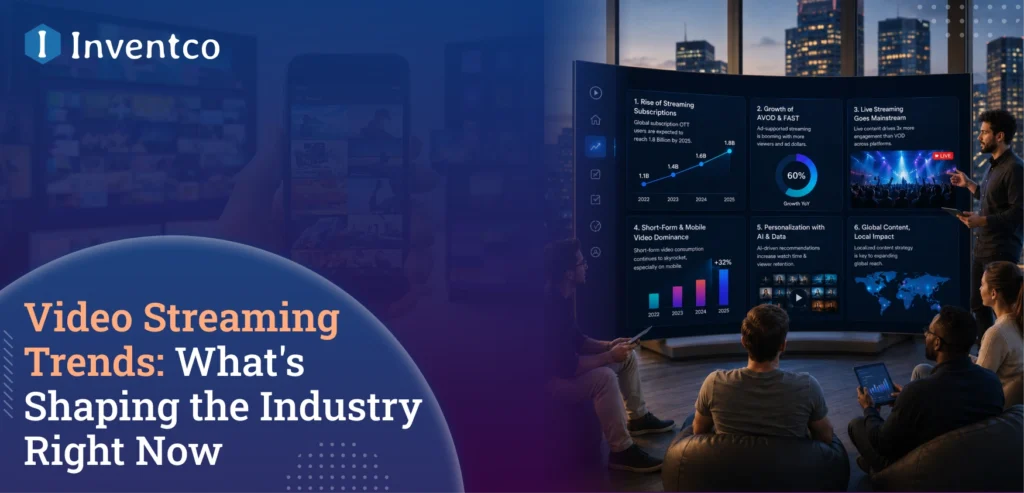
The video streaming industry isn’t just growing anymore. It’s evolving, the days when success was measured solely by subscriber numbers are over. In 2026, the real competitive advantage comes from keeping viewers engaged, increasing retention, and building sustainable revenue streams. For businesses, this changes how streaming platforms are built, scaled, and monetized.
The opportunity has never been bigger. Industry estimates place the global video streaming market at $190-$280 billion by 2026, with projections indicating double-digit annual growth through the early 2030s. While estimates vary, one thing is clear: streaming has become the default way people consume entertainment, sports, live events, education, and even shoppable content.
Custom streaming platforms are being built to capture as much of the market demand as possible. The apparent range of a simple Minimum Viable Product is as little as $10,000 to as much as $30,000, and even exceeding $100,000 for more complex and finalized versions that include enterprise-level features and use AI to provide recommendations, integrate multiple frameworks for monetization, and include support for multiple devices and Connected TVs (CTVs).
This guide highlights the relevant trends and consumer preferences of 2026, as well as the relevant technologies that will alter the landscape and how they will be deployed in streaming. These trends and technologies will be the best way to inform the choices you make for years to come as you create or modernize a streaming platform.
Quick Answer
Video streaming trends in 2026 will include AI-driven personalization, prioritization of Connected TV (CTV), low-latency live streaming, short-form content, AI-driven content generation, and advanced content protection. For monetization, companies will implement hybrid revenue models like Subscription Video on Demand (SVOD), Advertising Video on Demand (AVOD), Transactional Video on Demand (TVOD), Free Ad-supported Streaming Television (FAST), and AI-enhanced pricing. Other innovations will include implementing server-side ad insertion (SSAI), shoppable video, and churn prediction to create optimized experiences. All these systems will help video streaming companies maximize customer engagement and achieve a scalable, profitable, and digital future.
Key Takeaways
- The industry has pivoted from a subscriber-growth race to a retention-and-profitability race.
- AI-driven personalization is now a baseline expectation, not a competitive differentiator.
- Hybrid monetization, blending SVOD, AVOD, FAST, TVOD, and commerce, is replacing single-revenue-stream models.
- FAST (Free Ad-Supported Streaming TV) channels continue gaining living-room shelf space, especially on connected TV.
- Live commerce and shoppable video are emerging as high-conversion revenue channels.
- Low-latency streaming (WebRTC, LL-HLS) is becoming a baseline requirement for live and interactive content.
- Content authenticity and provenance standards (such as C2PA) are becoming operational requirements rather than optional add-ons.
- Platforms designed around these trends from the architecture stage cost meaningfully less than those retrofitted later.
Video Streaming Market Size & Growth in 2026
The global video streaming market continues to expand rapidly, creating significant opportunities for media companies, startups, and enterprises investing in digital entertainment.
- Market Growth: The industry is expected to reach USD 190-280 billion in 2026, with forecasts projecting a double-digit CAGR over the next decade.
- Regional Leaders: North America remains the largest market due to strong OTT adoption and Connected TV (CTV) usage, while Asia-Pacific is the fastest-growing region, driven by mobile-first consumers and affordable internet.
- Key Growth Drivers: Rising demand for live streaming, AI-powered personalization, subscription services, and ad-supported platforms continues to accelerate market expansion.
Video streaming is no longer just about acquiring subscribers. Long-term success depends on maximizing viewer engagement and retention, and diversifying monetization, making it one of the most promising digital markets for businesses in 2026 and beyond.
Top Video Streaming Trends in 2026
The future of video streaming will not be limited to entertainment. While the video streaming industry continues to evolve, trends will shape the future of video streaming in terms of customer expectations, monetization, and distribution. These trends will enable enterprises to stream video content more reliably and intuitively.
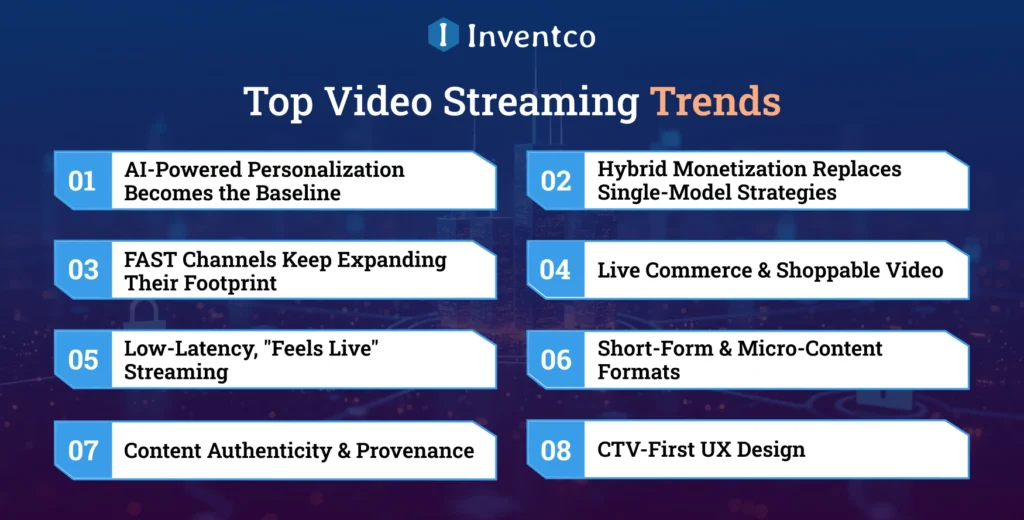
1. AI-Powered Personalization Becomes the Baseline
Artificial intelligence has enabled video streaming platforms to evolve how content is offered. Systems have been developed that scour user, device, and platform data to create content suggestions that users are more likely to engage with. These innovations allow platforms to cultivate a base of loyal customers and increase the retention of customers.
2. Hybrid Monetization Replaces Single-Model Strategies
Building video streaming apps that combine subscription models with advertising, Pay-Per-View, and free streaming channels is now the norm. This hybrid model optimally monetizes content while offering consumers more flexible payment options. This attracts a larger audience, increases customer lifetime value, and reduces reliance on subscriptions.
3. FAST Channels Keep Expanding Their Footprint
Free Ad-Supported Streaming TV (FAST) continues to attract viewers seeking budget-friendly entertainment. Because advertising supports FAST services, more users can attract new ad-revenue monetization. This is especially true as more users adopt Connected TVs and more viewers seek free, on-demand content.
4. Live Commerce & Shoppable Video
Video streaming is becoming increasingly integrated with shopping through live commerce. Viewers can see products, engage with the host, and even purchase them without leaving the streaming service. This service, popular with the public for video streams on fashion, beauty, and electronics, is increasing the brand’s revenue and improving customer engagement and conversion.
5. Low-Latency, “Feels Live” Streaming
Low-latency streaming is quickly becoming the standard for sports, gaming, live shopping, and other interactive events. Innovations like WebRTC and Low-Latency HLS streaming are reducing lag, allowing audiences to interact with the stream in real time. Streaming more quickly means even greater engagement and improves the user experience for people participating in time-sensitive activities that impact sales in real time.
6. Short-Form & Micro-Content Formats
This mobile app development trend currently appears to be aimed at enabling users to view short-form content. This is more apparent in short, quick updates such as educational clips, micro-dramas, and other content designed for rapid consumption. This sort of content encourages users to watch more frequently and with greater engagement. Streaming companies are putting these short-form content styles more front and center in their collections to increase streaming usage and promote interactivity and engagement.
7. Content Authenticity & Provenance
To keep viewer trust with the advent of AI-generated content, platforms are beginning to implement standards for content sourcing. This includes the use of the C2PA and similar mobile app frameworks and mobile app tech stacks. These practices limit the spread of false information by providing clear content origins and helping people trust it. This meets the standards regulators are placing on user-generated content.
8. CTV-First UX Design
Connected TVs are now the predominant mechanism for consuming video content. As a result, most companies are prioritizing this user experience over all others. Users can expect a more CTV-First design to improve interaction with the remote control. These designs will also help to fully utilize and control large video displays. However, companies will ensure that these CTV-First designs are fully compatible with mobile phones, tablets, and the web.
Monetization Trends in Video Streaming (2026)
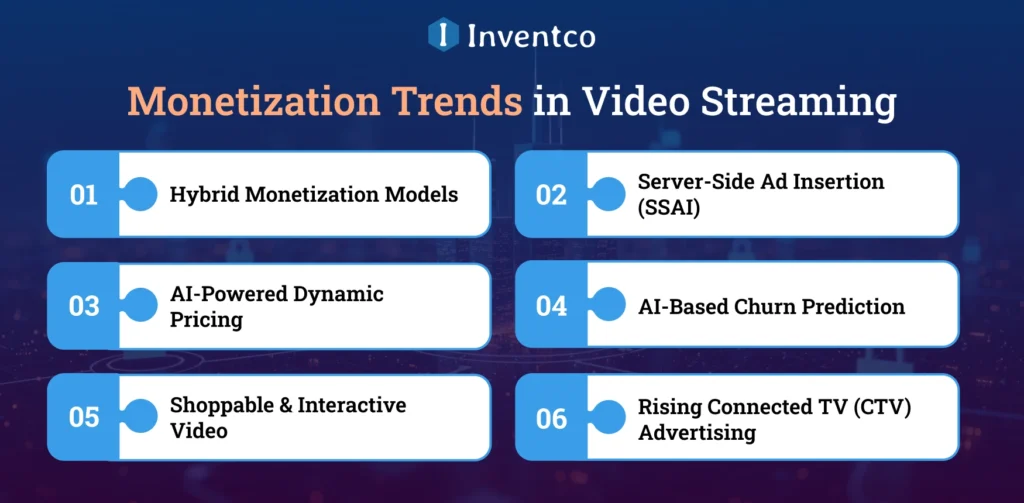
Mobile app monetization is changing quickly. In 2026, the most successful platforms will be those that integrate multiple revenue streams and use AI to optimize profitability, retention, and personalized viewing.
1. Hybrid Monetization Models
Video streaming services began merging subscriptions (SVOD), ad-based (AVOD), transactions (TVOD), FAST channels, and in-app purchases into a single system. This design helps businesses that own the platforms finance their operations in various ways to maximize customer value.
2. Server-Side Ad Insertion (SSAI)
Server-Side Ad Insertion for streaming video helps add ads to video streams, makes the viewing experience smoother, and reduces ad-blocking. There are many benefits to SSAI, including high ad completion rates and premium advertising formats that enable SSAI to stream ads across all devices and many streaming platforms.
3. AI-Powered Dynamic Pricing
AI is being adopted by streaming services to better align subscription prices with users’ regional demand, user habits, devices used, and purchasing behavior. Dynamic pricing is transforming subscription flexibility across regions, ensuring affordability, and optimizing revenue.
4. AI-Based Churn Prediction
Using machine learning, streaming video services can finally predict customer behavior and, in this case, prevent subscription loss. Services are much more effective in this focus by providing users with offers and discounts, or by personally recommending content.
5. Shoppable & Interactive Video
Interactive streaming enables viewers to purchase highlighted products directly within the video without leaving the video platform. Featuring products in a video with sales enabled directly in the video creates new income streams in all segments, including fashion, beauty, entertainment, fitness, electronics, and beyond, while also shortening the buying journey and increasing engagement.
6. Rising Connected TV (CTV) Advertising
Connected TV advertising is becoming more popular as advertisers look to streaming services to reach the audiences that have left traditional television. Advertising revenues for AVOD and FAST services are increasing due to demand for quality advertisements, and within streaming service markets, CTV advertising is becoming one of the fastest-growing opportunities for advertisers.
Video streaming services are beginning to realize the profitable opportunity in monetization services that leverage intelligent use of Artificial Intelligence. Companies that incorporate AI, hybrid revenue models, and versatile advertising from the outset will be more profitable and achieve stronger positive growth.
Role of AI in Shaping Video Streaming
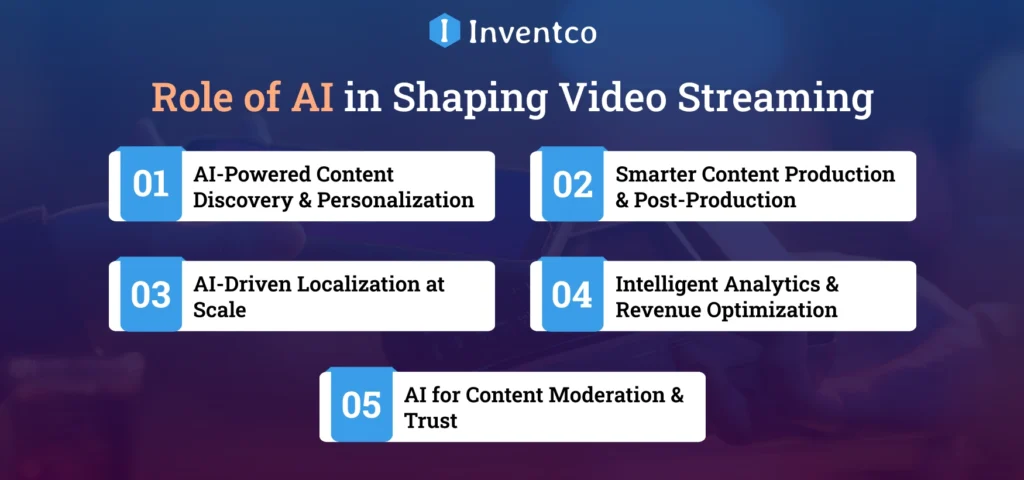
AI can now impact all elements and stages of video streaming, from content creation through to monetization. It allows video streaming services to optimize their processes and develop casts for content and services designed to help them grow their businesses.
1. AI-Powered Content Discovery & Personalization
AI is helping streaming services offer users content suggestions based on their watch history, how long they spend watching, and their search history. It is even helping them create more personalized home pages, thumbnails, and even trailers for videos. This is both increasing user engagement and helping streaming services retain users for longer.
2. Smarter Content Production & Post-Production
The use of Generative AI in video production automates subtitle and caption creation, detects and creates highlight reels, and even develops promotional material. As a result, there is a significant impact on production budgets and timelines, while content teams can publish higher-quality videos faster than before.
3. AI-Driven Localization at Scale
AI simplifies global content expansion through automated dubbing, multilingual subtitles, voice translation, and region-specific content adaptation. This reduces localization costs while helping streaming platforms deliver culturally relevant experiences, expand into new markets faster, and engage audiences in multiple languages without significant manual effort.
4. Intelligent Analytics & Revenue Optimization
AI-generated analytics make measuring viewer sentiment, analyzing content and engagement metrics, and assessing revenue streams more timely and precise. The insights from this data enable businesses to refine pricing models and make targeted investments in content type and quality to maximize profitability and increase customer satisfaction with the streaming experience.
5. AI for Content Moderation & Trust
The rapid increase of AI-generated content leaves many platforms struggling to meet audience safety and trust needs. With their proprietary tool sets, streaming services can moderate AI-generated content, protect intellectual property, and verify content compliance with copyright restrictions.
Artificial Intelligence is now a core component for streaming services. Companies that use AI in their content services, customer personalization, monetization, and safety will be the market leaders in streaming.
What These Trends Mean If You’re Building a Streaming Platform in 2026 and Beyond
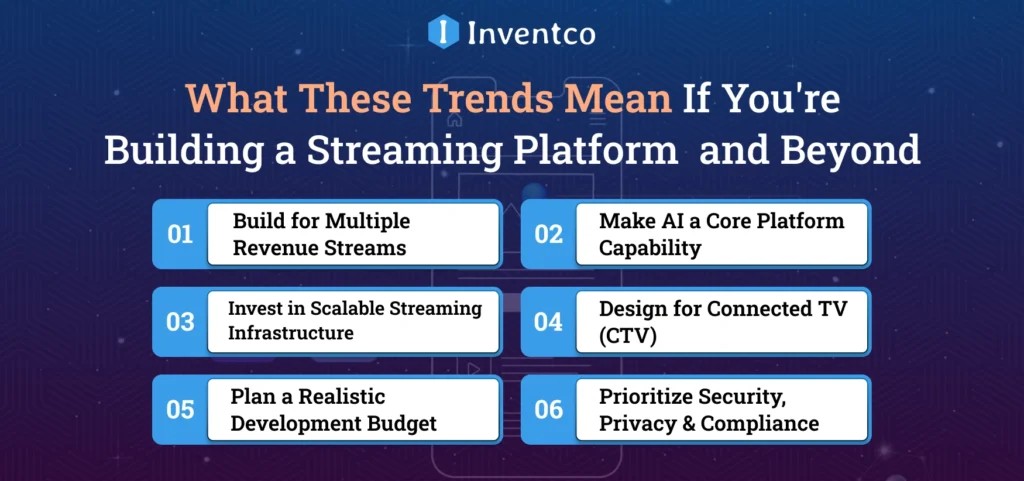
To succeed with a streaming service in 2026 and beyond, building the OTT app won’t be enough. Companies need to incorporate tech, monetization, AI, and UX to meet customers’ dynamic market demands from day one.
1. Build for Multiple Revenue Streams
Building a flexible monetization architecture (SVOD, AVOD, TVOD, FAST, in-app purchasing) that accommodates user preferences and enables the company to expand and maximize its revenue throughout its lifecycle is a must.
2. Make AI a Core Platform Capability
Intelligent recommendations, dynamic content discovery, and automated audience insights are just a few of the ways in which incorporating AI helps engage users and optimize content to meet their needs, while reducing churn and improving the speed and accuracy of business decisions.
3. Invest in Scalable Streaming Infrastructure
Advanced low-latency streaming is a must for delivering engaging live content and interactive experiences for viewers. Investments in the right streaming infrastructure and CDN will facilitate the performance playback that audiences demand.
4. Design for Connected TV (CTV)
With CTV becoming the primary method of content consumption, streaming platforms will need to fully support it. Platforms will need to support user interfaces that are easy to navigate with TV remotes as well as user experiences that are consistent across mobile and web platforms.
5. Plan a Realistic Development Budget
Streaming platforms differ in budget based on feature preferences, size, and technology. A Minimum Viable Product (MVP) may contain fewer but more expensive building blocks such as advanced Artificial Intelligence (AI), Live Streaming, Hybrid Monetization and Analytics, and Cloud Computing. Planning for these costs early on helps incorporate growth strategies and helps avoid the expensive rework for a robust platform.
6. Prioritize Security, Privacy & Compliance
The cost of losing users and digital content is even greater than the costs of content protection and anti-piracy solutions. Early investment helps secure the platform and builds trust among users. Protecting users’ and content data helps reduce operational and compliance risks.
Successful streaming platforms prioritize flexible, long-term architecture, while others prioritize short-term demands. Businesses that invest now in flexible structures, AI and Security spend, and Diverse Monetization will have the strongest competitive edge in the streaming space, where innovation is fast, and growth is key.
How Inventco Tracks & Applies These Trends and Helps Brands
As a best video streaming app development company, Inventco continuously tracks emerging technologies, changing viewer behavior, and evolving monetization models to help businesses stay ahead of the market. Our experts apply the latest trends, including AI personalization, hybrid monetization, Connected TV (CTV), and low-latency streaming, to build scalable platforms that remain competitive for years.
Real-World Success: AfroSport TV
One of our successful projects is AfroSport TV, a feature-rich sports streaming platform developed by Inventco. We built a high-performance streaming solution that delivers live sports, on-demand content, multi-device accessibility, and a seamless viewing experience. The platform is designed for scalability, enabling content providers to expand audiences while delivering reliable, high-quality video streaming across web, mobile, and smart TV devices.
What Inventco Offers
As a trusted video streaming app development company, Inventco provides end-to-end development services, including:
- AI-powered content recommendation and personalization
- OTT platform development for web, mobile, and Smart TVs
- Hybrid monetization integration (SVOD, AVOD, TVOD, and FAST)
- Live streaming and low-latency video delivery
- Connected TV (CTV) application development
- Cloud-based video infrastructure and CDN integration
- Content security, DRM, and anti-piracy solutions
- Streaming analytics and performance optimization
Partner with Inventco to build a secure, AI-powered, and scalable video streaming platform that delivers exceptional user experiences while supporting long-term business growth.
Conclusion
The video streaming market in 2026 will focus on immersive experiences and engagement enabled by hybrid monetization, AI, and Connected TVs (CTVs). Success will be determined by more than viewers and subscribers. Businesses that excel in personalization and viewer engagement will have adaptive revenue systems and flexible, scalable structures. Future-ready technologies support building a cost-effective structure for long-term growth.
No matter the size of your OTT platform, choosing the right video streaming app development company is vital. Inventco brings together AI, innovative, scalable architecture, and industry expertise to deliver seamless, high-performance streaming solutions. Our platforms enable businesses to gain an edge over their competitors amid ever-changing market demands and increase their revenue.
FAQs
Q1. What are the biggest video streaming trends in 2026?
Ans. The most significant trends in video streaming in 2026 include AI-driven personalization, hybrid monetization (SVOD, AVOD, FAST, and TVOD combined), FAST channel expansion, live commerce and shoppable video, low-latency live streaming, and a broader industry shift from subscriber growth toward retention and profitability.
Q2. What is the future of video streaming?
Ans. The future of video streaming is hybrid and AI-native: platforms that combine multiple monetization models, use AI for personalization and content operations, and treat connected TV and live, low-latency delivery as core infrastructure rather than optional features.
Q3. How is AI used in video streaming?
Ans. AI in video streaming powers content recommendations, dynamic thumbnails and promos, automated subtitling and localization, churn prediction, dynamic ad insertion, and real-time analytics that inform pricing and content-investment decisions.
Q4. What monetization model works best for streaming platforms in 2026?
Ans. There isn’t a single best model — the platforms performing strongest in 2026 run hybrid monetization, blending subscription, advertising, transactional, and FAST revenue streams, with AI routing individual viewers to the tier most likely to maximize their long-term value.
Q5. How much does it cost to build a video streaming platform in 2026?
Ans. A focused MVP typically starts at $10,000–$30,000, while an enterprise-grade platform with AI personalization, hybrid monetization, live streaming, and CTV support can cost $100,000 or more, depending on features, integrations, and scale.

Ajay Bhal
He is an on-demand app solutions expert with 11+ years of experience in business consulting and building scalable, user-centric digital products. He specializes in robust on-demand platforms across industries, combining technical expertise with business-focused strategy to deliver efficient, top notch solutions that drive growth and enhance user experience. You can connect with him on LinkedIn to follow insights.