Digital mental health solutions are becoming more common due to rising awareness of mental health issues and the easy availability of these resources. Today, mobile tech, AI, and telehealth services are changing the way consumers receive therapy, track their emotional states, and access health professional resources. As a result, numerous health care providers, start-ups, and digital health companies are investigating the mental health app development process to understand how to improve access and provide individualized mental health services.
Digital mental health solution apps have been created to assist with professional monitoring and to help the individual manage their own level of stress, anxiety, etc. These apps help with mood tracking, guided therapy, virtual wellness, and consultation programs.
Yet, the development of mental health apps that are successful requires ideas, understanding and knowledge of the mental health app development process, technical architecture and compliance, and costs associated with health app development, specifically the back end and the long-term scalability.
This guide will cover how to build a mental health app, what essential features will help it succeed, the steps to take to build it, and a rough estimate of how much it would cost, given the current state of the digital healthcare ecosystem.
Key Takeaways
- Given the increase in awareness toward emotional wellbeing and the rise of digital healthcare tools, the need for mental health apps is expanding.
- Mental health apps provide tools for stress, anxiety, and overall mental health management, such as interactive mood journals, self-paced guided meditation, and online therapy through video calls.
- Increased use of digital mental health and wellbeing solutions is exemplified by the popular use of the apps Calm, Headspace, Talkspace, BetterHelp, and Moodfit.
- Incorporating features such as user onboarding, clinician profiles, calendar integration and scheduling, AI integration, journaling, and encrypted telehealth to provide therapy are standard requirements for mental health apps.
- Personalized mental health care and user engagement can be achieved through advanced features such as AI-simplified analytics, integration of wearable tech, behavioral analytics, and gamified mental health activities.
- The development of a mental health app begins with market research and feature development, then wireframes, security planning, the development process, testing, launch, continuous maintenance, and finally, testing.
- Depending on the features, technology, and overall complexity, building a mental health app will cost between $10,000 and $100,000+.
- Working with a quality mobile app development company will allow mental health platform developers to create flexible, secure, and scalable mental health platforms that focus on the user experience.
Mental Health App Market Statistics
- The global mental health apps market was valued at around $8.40 billion in 2025 and is expected to reach $9.45 billion in 2026, growing to approximately $18.81 billion by 2031 at a CAGR of 14.7%.
- Another report estimates the market will grow from $9.94 billion in 2025 to $22.73 billion by 2030, reflecting strong adoption of digital therapy, mood-tracking, and tele-mental health platforms.
- Some long-term forecasts suggest the market could expand to over $35.29 billion by 2034, highlighting the rapid growth of digital mental wellness solutions.
- The digital mental health industry overall (including apps, teletherapy, and AI tools) reached $27.84 billion in 2024 and is projected to grow to $153.03 billion by 2034, with a CAGR of about 18.5%.
What is a Mental Health App?
A mental health app is a tool used for tracking, managing, and boosting users’ mental health through web and mobile apps. Users can take advantage of tools for tracking mood and mental health, meditation assistance, stress management, and virtual therapy appointments.
Furthermore, mental health apps are developing telehealth capabilities, and mental health practitioners can offer therapy, mental health management, and mental health consultations to users. Mental health apps also self-monitor mental health and self-care; therefore, self-care should not replace professional help, diagnosis, and treatment.
Features such as personalized health education and guides, mental health activity tracking, and AI analytics are enhancing the mental health app experience. Mental health apps are becoming integral to the fundamental health care solutions offered by start-up health technology companies and mental health care service companies. These platforms are often part of broader healthcare app ideas, where digital solutions are designed to improve accessibility and long-term patient engagement.
Top 5 Mental Health Apps
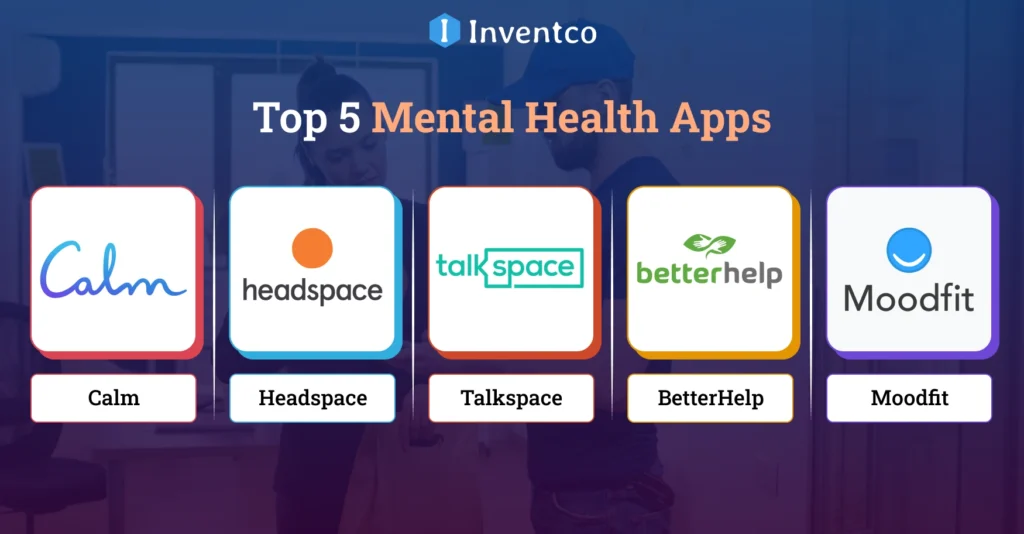
The popularity of mental wellness applications such as Headspace, BetterHelp, and Calm has skyrocketed due to the increasing need for online mental health services. These applications, which are designed to address stress, anxiety, and emotional concerns, include features like virtual therapy sessions, meditation, and mindfulness exercises to provide mental wellness support as an ongoing part of daily life. Some of the most downloaded mental health applications are as follows.
1. Calm
Calm is a mental wellness app that focuses on stress management, sleep improvement, and mindfulness. The app promotes these skills through goal-oriented guided meditation, breathing activities, music for relaxation, and bedtime stories. Calm has received prestigious awards because of its ease of use and extensive library of relaxation content. Calm is a meditation and mindfulness app that has received over 100 million downloads and countless 5-star reviews.
2. Headspace
Headspace is a mindfulness and meditation service designed to help manage stress and anxiety while improving focus and concentration. The platform provides users with podcasts, guided meditations, sleep aids, breathing exercises, and mindfulness courses designed for both beginners and experienced users. Users are also assisted with wellness tips, mental health education, and meditative and mindfulness exercises. The platform is available to over 100 million users worldwide, which showcases the various needs of people and the importance of mental health.
3. Talkspace
Talkspace is one of the first platforms of its kind and offers users the opportunity to connect with licensed therapists via text, video, or audio calls. The platform also aims to make therapy less stigmatized, more accessible and more flexible. Users are able to participate in individual, couples, and teenage therapy from the comfort of their phones.
4. BetterHelp
BetterHelp is also one of the more recognized digital therapy platforms available to users. Through the app, users can access licensed therapists via text, phone, and video calls. Users can communicate with their therapists as often as needed and can receive support from their therapist even while sessions are not happening. The app is available in a large number of countries and features disclosures, worksheets and wellness programs geared toward improving users’ emotional health.
5. Moodfit
Designed to support users in developing healthier emotional habits, Moodfit is a mental health tracking app. Moodfit’s functionality includes tracking moods, journaling, stress management, breathing exercises, and mental resilience-building activities. Moodfit also utilizes CBT to assist users in building their resilience. Users can also track sleep, exercise, and gratitude in order to promote their wellness.
Must-Have Features of Mental Health Apps
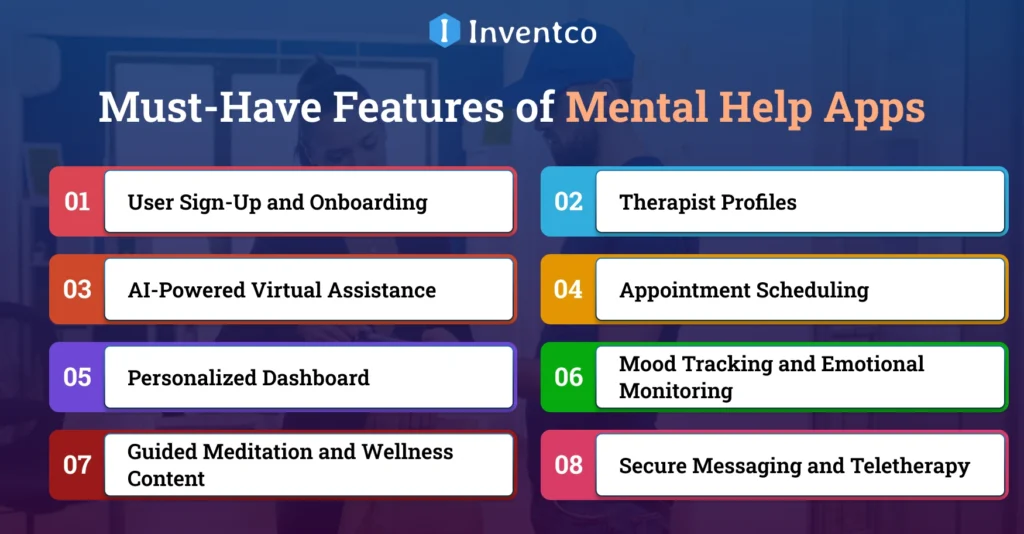
Due to their varying target audiences and purposes, mental health apps have differing features. Meditation apps focus on guided meditations, whereas mood tracking apps focus on tracking emotions. However, core features of mobile apps remain essential for effective user support.
1. User Sign-Up and Onboarding
Seamless account creation and onboarding allow users to easily begin their mental health journey. Apps may request basic demographic information or offer preliminary assessment questionnaires that tailor emotional support to their needs, milestones, and goals.
2. Therapist Profiles
Users can view detailed therapist profiles that contain information about their qualifications, experience, area of expertise, languages spoken, and availability. Having this information helps users select therapists who fit their needs and desired outcomes for therapy.
3. AI-Powered Virtual Assistance
AI virtual assistants are present in most contemporary mental health apps and offer users guidance, reminders, and emotional support. They address frequently asked questions, suggest activities, and support users in monitoring their goals and objectives.
4. Appointment Scheduling
Users can book appointments with therapists directly in the app, with integrated scheduling, similar to a doctor appointment booking app.
5. Personalized Dashboard
Your dashboard enables you to consolidate your mental health data in one convenient place. It includes information spanning your mood history, therapy trajectory, activities, and suggests further engagement opportunities to enrich your journey.
6. Mood Tracking and Emotional Monitoring
Mental health apps include mood and emotion trackers to help users document daily feelings, levels of distress, and behavioral trends. This information helps identify and document emotional triggers and the resulting behavioral changes, increasing self-awareness and enabling your therapist to offer more precise support. Engagement patterns here are similar to the best pill reminder apps, which encourage consistent daily user interaction.
7. Guided Meditation and Wellness Content
Wellbeing and mental health apps include resources such as guided meditation, relaxation techniques, breathing exercises, and sleep stories. These resources help users reduce stress, manage anxiety, and develop healthier mindfulness habits through structured content.
8. Secure Messaging and Teletherapy
With secure chat and video calls, users can message and consult therapists in real time. Communication is fully encrypted to keep your information confidential. Support and therapist contact depend on your level of comfort with verbal and visual communication.
Advanced Features of Mental Health Apps
With the comprehensive evolution taking place in the field of digital healthcare, the latest mental health applications employ sophisticated technological means such as artificial intelligence, data analytics, and the integration of transdisciplinary wearable technology to provide individual users with personalization, facilitate ongoing engagement, improve therapeutic outcomes, and provide users with ongoing monitoring of their emotional wellbeing.
1. AI-Driven Personalized Recommendations
Artificial intelligence (AI) is employed by various applications to provide users with tailored recommendations for meditation practices, therapeutic exercises, or wellness programs. These recommendations are based on individual users’ specific emotional needs, mental health data, behavioral patterns, mood trends, and activity levels. This reflects the growing adoption of AI in healthcare, enabling more personalized and data-driven mental wellness experiences.
2. Wearable Device Integration
The integration of mental health applications with wearable devices (e.g., smartwatches, fitness trackers) can assist users in understanding the relationship between their mental health and physical health by monitoring health metrics (e.g., sleep, heart rate, and activity) as these metrics relate to the mental health of users.
3. Voice-Enabled Emotional Check-Ins
Voice recognition technology allows users to log their emotions. This system is capable of providing analysis of the user’s emotional state based on tone and speech patterns to determine the user’s levels of stress.
4. AI Chatbots for Immediate Support
AI chatbots are programmed to provide emotional support to users as well as clinical guidance. Despite the user’s current mental state and the unavailability of a therapist, AI chatbots can help users by suggesting coping strategies and may provide information on breathing exercises or mindfulness practices.
5. Behavioral Analytics and Predictive Insights
Behavioral analytics and the analytics of user behaviors are employed by mental health applications to assist users with the identification of patterns in their data that are associated with common mental health concerns (e.g. anxiety, stress, or depression) in order to provide users with preemptive mental wellness techniques.
6. Gamification for Engagement
The use of gaming technology like progress badges, wellness streaks, and goal milestones motivates users to engage in mental health activities consistently and build healthy habits.
7. Community Support and Peer Groups
Community boards and support peer groups provide users the ability to connect with those facing the same difficulties and nurture an environment for the support of shared experiences and emotional upliftment.
8. Crisis Support and Emergency Assistance
More sophisticated mental health apps come with features for users in crisis who need immediate support, including, in the case of severe distress or urgent mental issues, emergency responders and mental health professionals.
How to Develop a Mental Health App?
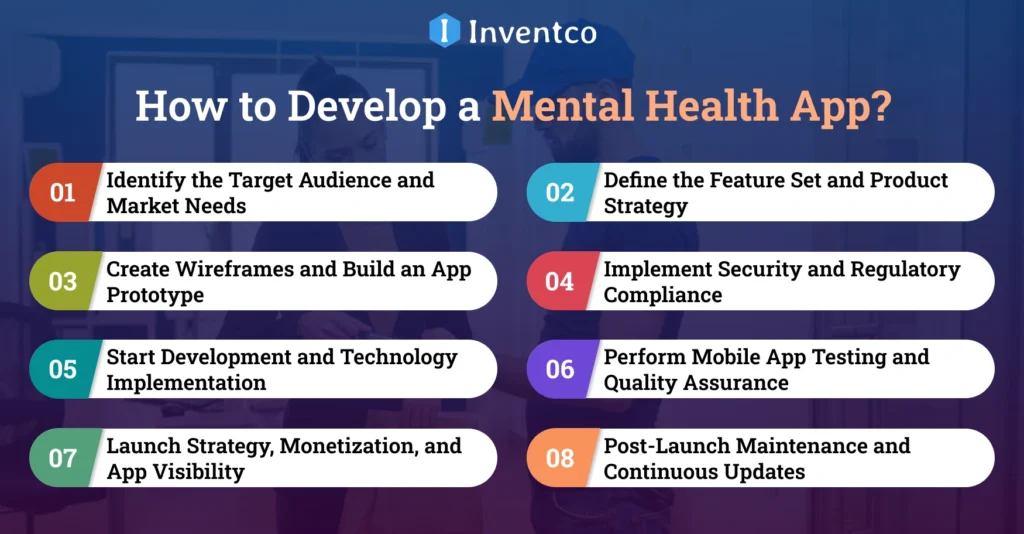
Developing a mobile app for mental health needs a combination of user-driven techniques, technology that can be scaled, safety, and iterations. Here are some of the things that companies need to consider to develop effective and reliable digital mental health solutions.
1. Identify the Target Audience and Market Needs
Understanding the audience and their mental health needs comes after the mobile application’s initial planning. This includes competitors and app development trends to leave a definitive footprint. Similar validation approaches are used when businesses plan to build a medicine delivery app, ensuring strong market alignment and scalability. Audience segmentation, behavioral patterns, and pain points are important for designing business solutions. engagement.
2. Define the Feature Set and Product Strategy
Once the audience is established, the business features are mapped next. Companies are advised to consider basic and advanced features, but be specific about the platform, either Android or iOS. Performance is important to support a growing user base, which is why this choice of mobile app technology stack and mobile app development frameworks. These systems can also integrate with platforms such as pharmacy app development solutions to enable broader connectivity within the healthcare ecosystem.
3. Create Wireframes and Build an App Prototype
Design planning begins with app wireframing, which helps visualize the app’s layout and user journey. Designers then create an app prototype to test workflows and usability before development begins. Many startups launch an MVP mobile app first to validate product ideas, gather feedback, and reduce development risks while optimizing the overall development strategy.
4. Implement Security and Regulatory Compliance
Mental health mobile applications provide users with sensitive data, making security and compliance with legislation a top priority. Developers must meet mobile app security practices, which require the protection of user data through the use of encryption, secure authentication, and data protection methods. Compliance with healthcare regulations to protect the platform, maintain user trust and uphold legal or regulatory compliance.
5. Start Development and Technology Implementation
In this phase, the team of developers constructs the platform using the chosen mobile app tech stack and frameworks. The duration required to build a mobile app varies based on the number and type of features, layout and design intricacies, required APIs, and the desired level of vertical and horizontal scalability. In addition, the team should mitigate the mobile app development challenges. These include problems regarding optimal application performance, whether the application is able to function with multiple operating systems, and Top Mobile App Development Challenges & Solutions in 2026 the resilience of the application’s backend.
6. Perform Mobile App Testing and Quality Assurance
Integrating quality assurance and testing into our mobile app development process allows our team to identify issues within the app functionality. Our mobile app testing process ensures that the app works seamlessly across a wide variety of devices and operating systems, and includes a variety of analyses such as user tests, performance and load testing, security testing, and bug testing. Our QA experts analyze end-user experience and UX to ensure that the app works as expected, allowing users to perform mental health tasks on the app without a problem.
7. Launch Strategy, Monetization, and App Visibility
Once the app is developed and thoroughly tested, our clients are ready to launch the app. During this time, our clients can engage in app store optimization (ASO) to improve the app’s visibility and likelihood of downloads. Additionally, our clients can select mobile app monetization strategies like subscriptions, in-app purchases, paid therapist chats, and more, which will help sustain revenue as users continue to engage with the mental health services provided by the app.
8. Post-Launch Maintenance and Continuous Updates
Maintaining a successful app requires ongoing mobile app maintenance. To sustain customer engagement and retain users, our clients should anticipate and plan for ongoing app updates, which include performance improvements, bug fixes, and the addition of user-requested features. Our clients should also plan for a mobile app maintenance cost to ensure long-term app maintenance, which includes scalability, security improvements, and improved mobile app maintenance and technology updates.
Cost to Build a Mental Health App
The cost to build a mobile app, especially a mental health platform, depends on the variety of app features, technology stack, and development strategy. Typically, the cost of developing a mental health app is $10,000 and can go all the way to $100,000 and more due to the wide range of functionalities and app scalability.
Here are the estimations for the costs to develop mobile apps for mental health:
1. Basic Mental Health App ($10,000 – $25,000)
A fundamental mental health application often contains features, such as, user sign up, mood tracking, journaling, meditation, and a basic dashboard of a mental health application. These types of applications are generally created as MVP solutions that provide a way for a new mental health startup to enter the market, receive essential early user feedback, and then gradually adjust and expand any features.
2. Mid-Level Mental Health App ($25,000 – $60,000)
Developing a mid-tier mental health application provides more features such as therapist profiles, appointment scheduling, chat and video consultations, dashboards for progress tracking, and more. These applications are more interactive; as a result, the user interface and user experience design are more complex, and the back-end systems are more robust to ensure the application is functioning without errors.
3. Advanced Mental Health App ($60,000 – $100,000+)
Advanced Mental Health applications offer unique features such as AI-based suggestions, the ability to connect to wearables, a strong behavioral analytics component, integrations with telehealth, and personalized wellness programs. These applications come with a need for advanced security and infrastructure solutions as the functionality and number of users increase, and the need for scalable architecture and robust systems.
Building a mental health mobile application involves several variables that affect cost, including the integration of several complex features, sophisticated UI/UX design, the selection of a mobile application platform (iOS or Android), the experience of the Development Team, and the complexity of tools and technologies, as well as the lower the security and the need for runtime support.
Development costs can be controlled by working with the mental health application solutions provider to outline the features and their corresponding costs. As digital healthcare expands, solutions like medical billing software development are also being integrated to streamline operations and financial workflows.
Build Your Mental Health App with Inventco
Building a trustworthy mental health application means partnering with a company that has a strong vision for the product, design and development scalability. Inventco is renowned for the development of mobile applications with a high emphasis on performance, security, and user experience. The company is outstanding in the development of innovative ideas in the healthcare and wellness solutions space for Startups and Enterprises.
Inventco has a defined process, which includes the development of a plan for strategy, UI/UX design, software development (both backend and client), and comprehensive healthcare software development. This means that the app is built with the expectation that there will be scalability and reliability, and that there will be a need for it to grow in the future.
Inventco’s competence can be seen in the Dunnnit app, which provides personal development and self-improvement opportunities by presenting users with challenges aimed at helping them build their self-esteem, learn new abilities, and achieve goals. The app suggests individualized challenges depending on the user’s choice of interest in areas such as fitness, mindfulness, productivity, or hobbies.
Dunnnit emphasizes consistency by using gamified elements and dynamic progress bars, which provide real-time tracking of progress. The app offers the personal development experience as fun and rewarding by using a structured combination of challenges, reminders, and tracking achievements.

Conclusion
The demand for digital mental wellness solutions is rapidly increasing as people seek accessible ways to manage emotional well-being. Developing a successful platform requires careful planning, the right technology stack, strong security practices, and user-focused design. From identifying the target audience to integrating essential and advanced features, each stage of mental health app development plays a crucial role in building a reliable and scalable solution.
By understanding the development process and the costs of building mobile app solutions, businesses can create impactful platforms that support therapy, self-care, and continuous wellness monitoring. With the right strategy and development partner, organizations can deliver meaningful digital mental health solutions. Choosing the right partner is essential, making it important to understand why to choose Inventco for healthcare app development.
FAQ’s
Q1. What is a mental health app and how does it work?
Ans. A mental health app is a digital platform that helps users manage their emotional wellbeing through mood tracking, meditation, therapy sessions, and AI-based recommendations, enabling accessible, continuous mental health support anytime, anywhere.
Q2. What are the key features required in a mental health app?
Ans. Essential features include user onboarding, therapist profiles, appointment scheduling, mood tracking, guided meditation, secure messaging, and dashboards. Advanced apps also integrate AI, wearables, and behavioral analytics to enhance personalization and engagement.
Q3. How much does it cost to develop a mental health app?
Ans. The cost of developing a mental health app ranges from $10,000 to $100,000 or more, depending on features, complexity, integrations, security requirements, and scalability needed for long-term growth and performance.
Q4. Why is compliance important in mental health app development?
Ans. Compliance ensures user data protection, legal adherence, and trust. Since mental health apps handle sensitive information, implementing encryption, secure authentication, and healthcare regulations is essential to maintain credibility and avoid legal risks.
Q5. What technologies are used in mental health app development?
Ans. Technologies include AI for personalization, cloud computing for scalability, APIs for integrations, wearable connectivity, and secure backend systems. These technologies enable real-time monitoring, predictive insights, and seamless user experiences across devices.
Q6. What are the steps involved in developing a mental health app?
Ans. The process includes market research, feature planning, wireframing, security implementation, development, testing, launch, and maintenance. Each stage ensures the app is user-centric, scalable, and aligned with healthcare standards.

Ajay Bhal
He is an on-demand app solutions expert with 11+ years of experience in business consulting and building scalable, user-centric digital products. He specializes in robust on-demand platforms across industries, combining technical expertise with business-focused strategy to deliver efficient, top notch solutions that drive growth and enhance user experience. You can connect with him on LinkedIn to follow insights.