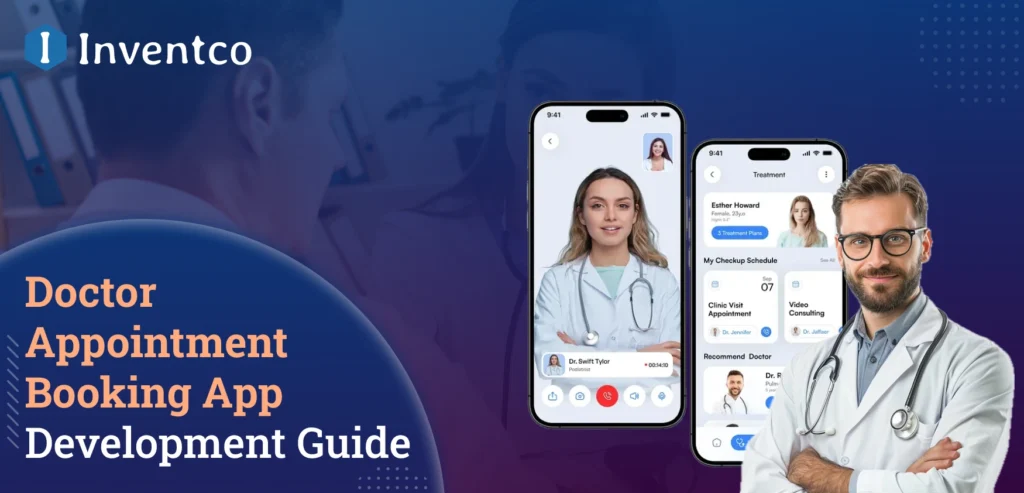
After the U.S. invested billions of dollars in digital health innovation, traditional doctor appointment scheduling still remains time-consuming and inefficient. While patients must deal with extensive wait times and scheduling conflicts, doctors continue to face missed appointments and scheduling inefficiencies.
This issue provides an opportunity for entrepreneurs to create real-time doctor appointment scheduling applications. The U.S. digital health market continues to expand as patients increasingly use virtual appointment services, driving greater demand for healthcare app development and more personalized patient care.
The application’s scheduling interface is not the primary challenge when developing a doctor appointment application. The real difficulties lie in architecture, system security, data management, integration with EHRs and telemedicine platforms, and the design of a user-friendly system.
This guide focuses on building a profitable and scalable healthcare app to help you develop a doctor appointment application. It is designed to walk you through the business model, development milestones, features, technology, compliance, costs, and other strategic aspects you need to consider.
Key Takeaways
- Doctor appointment apps are rapidly growing, driven by rising digital health investments and increasing demand for convenient healthcare access.
- Traditional scheduling inefficiencies create strong opportunities for scalable, real-time booking platforms that improve patient experience and provider operational efficiency.
- Choosing the right business model directly impacts revenue, scalability, and long-term sustainability for founders in competitive digital healthcare ecosystems.
- Core and advanced features such as real-time booking, telemedicine, and AI scheduling effectively drive engagement, retention, and platform monetization.
- A scalable, secure technology stack ensures high performance, seamless integrations, and long-term adaptability in evolving healthcare systems and user demands.
- Compliance with regulations like HIPAA and GDPR is essential to ensure data security, build trust, and enable sustainable growth.
- AI, telemedicine, and data-driven personalization are shaping the future of healthcare platforms, unlocking new revenue streams and significantly improving patient outcomes.
Market Opportunity: Why Doctor Booking Apps Are a High-Growth Investment
In a global market valued at over $483 billion in 2026 and likely to exceed $1.1 trillion by 2035, mobile, on-demand health technologies and remote care capabilities are being adopted at a rapid pace. Alongside telehealth, digital-first healthcare offerings are gaining strong traction, with projections reaching $455 billion by 2030.
As one of the fastest-growing segments of the digital health market, appointment scheduling still remains one of the most inefficient areas in healthcare delivery.
Key Growth Drivers
Patient Demand for Convenience
Patient expectations have evolved, with users now wanting appointments to be easily booked, scheduled in real time, and managed directly from their mobile devices.
Healthcare Digitization Initiatives
Healthcare systems worldwide, both public and private, are actively working to improve care delivery and are investing in infrastructure to support digital appointment technologies.
Telemedicine Integration
Scheduling systems are becoming more advanced and are now considered an integral part of telemedicine platforms.
Operational Efficiency for Providers
From a provider standpoint, streamlined digital appointment systems reduce administrative burden, minimize no-shows, and improve the overall patient experience.
Key Business Models in Doctor Appointment Apps
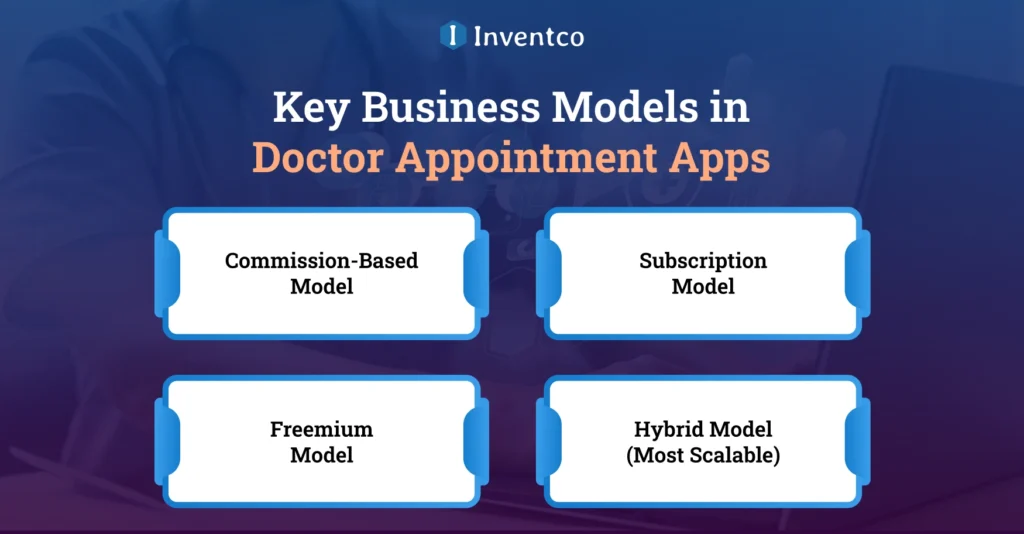
Choosing a business model for an application is a crucial step for any business looking to define its revenue, customer reach, and future growth. This stage also helps founders explore broader healthcare app ideas aligned with long-term scalability and monetization. The strategy applied to doctor appointment apps should align with target users, platform type, and anticipated growth.
1. Commission-Based Model
In this model, the doctor appointment app charges healthcare professionals for each successful appointment booked. This is common in marketplace-type apps where multiple doctors or clinics are listed.
Best for: Marketplace-type apps that prioritize fast customer onboarding and a high volume of transactions.
2. Subscription Model
Healthcare professionals pay a monthly or annual fee to join the platform and gain additional benefits, such as data analytics, priority listings, and appointment management tools.
Best for: SaaS-driven healthcare solutions aimed at clinics and hospitals looking to maximize operational efficiency.
3. Freemium Model
Basic appointment booking remains free for users, while advanced features, such as premium scheduling or telemedicine consultations, require payment.
Best for: Platforms looking to expand user reach and enable gradual monetization.
4. Hybrid Model (Most Scalable)
This model combines subscription and commission-based approaches, providing flexibility and multiple revenue streams for the platform.
Best for: Scalable healthcare platforms focused on delivering high value throughout the customer journey while maintaining flexible growth and monetization options.
When developing a doctor appointment app, this model is most likely to offer balanced monetization and sustainable growth.
Read More: Physical Therapy App Development Guide
Core Problem Doctor Booking Apps Solve (And Why It Matters)
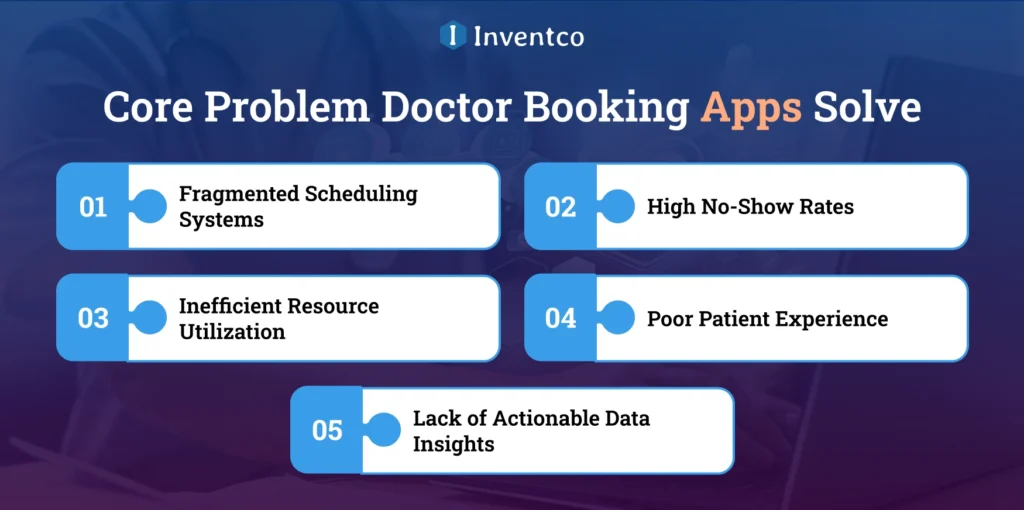
Before deciding on features or selecting a technology stack, it is important to understand the core operational issues these platforms aim to solve. This is where real business value and long-term scalability are created.
1. Fragmented Scheduling Systems
Scheduling is still performed either manually or partially through digital tools, leading to issues such as double booking, inefficient Scheduling, and a lack of real-time coordination across departments. Similar inefficiencies are also addressed by platforms like top medicine delivery apps, which optimize healthcare access through digital workflows.
2. High No-Show Rates
No-show appointments are financially detrimental, resulting in lost value due to poor utilization of clinical time and a lack of scheduling optimization.
3. Inefficient Resource Utilization
Clinically available time, consultation slots, and staff availability are often underutilized due to inefficient resource scheduling.
4. Poor Patient Experience
Lack of real-time, self-service booking options, limited access to information, high drop-off rates, and long waiting times during scheduling or consultation booking lead to increased patient frustration.
5. Lack of Actionable Data Insights
Critical insights such as time utilization data, booking patterns, patient behavior, and service demand trends are often missing or underutilized.
Addressing these challenges through doctor appointment app development enables providers to improve operational efficiency, enhance patient experience, and build a more predictable and scalable healthcare business model.
Essential Features That Drive User Retention & Revenue
A high-quality doctor appointment booking app requires a balance of user experience, operational efficiency, and monetization opportunities as the platform scales. Mobile app features play a key role in maintaining this balance.
Patient Panel
1. Easy registration & profile management
A frictionless user experience initiates and sustains app adoption across varying demographics and patient scenarios.
2. Real-time doctor availability
Enables users to make instant and informed booking decisions, as availability is displayed in real time across different time slots.
3. Appointment booking & rescheduling
Provides patients with the flexibility to schedule and reschedule appointments with ease. The engagement strategies here are similar to those of the best pill reminder apps, which drive consistent user interaction and retention.
4. Secure payment integration
Ensures seamless and secure transactions, enabling monetization through consultations, subscriptions, and premium service offerings.
Doctor Panel
1. Schedule management
Optimizes resource allocation by eliminating scheduling conflicts and improving operational efficiency.
2. Appointment tracking
Simplifies the management of multiple appointments, ensuring a smooth workflow and improved patient turnout.
3. Patient history access
Provides access to patient medical history, ensuring continuity of care and informed decision-making.
4. Availability control
Enables dynamic Scheduling, reducing the number of unplanned or missed appointments.
Admin Panel
1. User management
Streamlines role management across doctors, patients, and administrative users for efficient onboarding and control.
2. Analytics & reporting
Tracks booking and user activity patterns to support data-driven decision-making.
3. Revenue tracking
Enables financial monitoring by analyzing revenue from subscriptions, consultations, and payments.
4. Platform control
Enhances platform performance, flexibility, and functionality through system updates and optimized operational processes.
Advanced Features
1. AI-based appointment scheduling
Optimizes time slot utilization by leveraging AI to predict patient booking patterns.
2. Teleconsultation (video/audio)
Creates new revenue streams and enhances patient-doctor engagement through remote consultations.
3. EHR/EMR integration
Improves efficiency by integrating EHR/EMR systems to streamline data capture and reduce manual processes.
4. Smart notifications
Enhances communication and engagement throughout the patient journey, reducing missed appointments and improving overall experience.
Step-by-Step Development Roadmap (From Idea to Launch)
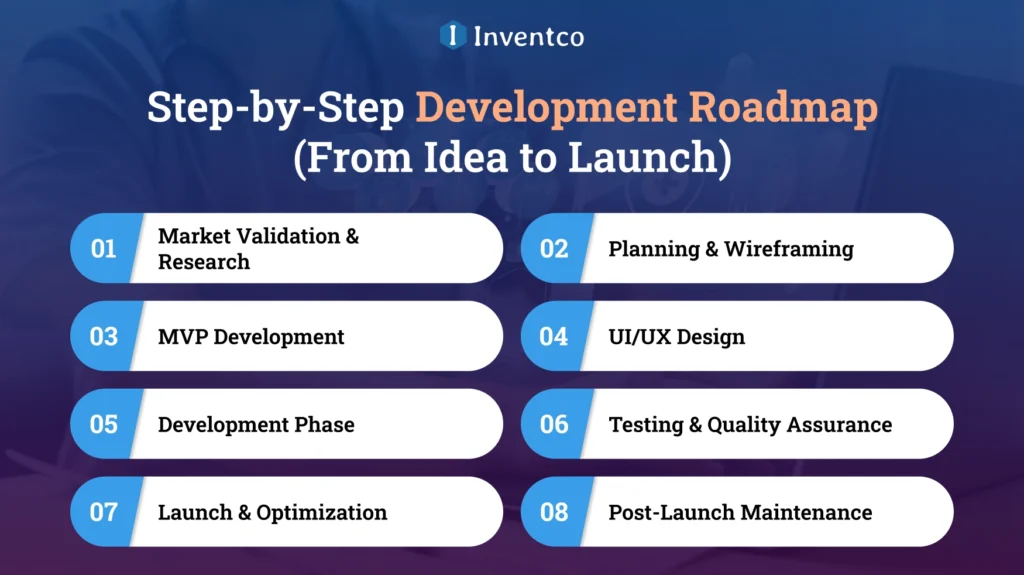
A structured development approach minimizes risk, optimizes resources, and ensures faster time-to-market while maintaining scalability and performance.
1. Market Validation & Research
Building a successful doctor appointment booking app starts with clarity. Begin by identifying your ideal users and competitors, and create a strong value proposition. Businesses planning to build a medicine delivery app can follow a similar validation approach to identify demand and scalability potential. Assess market demand, identify existing gaps, evaluate monetization opportunities, and aim to eliminate as many unknowns as possible. The earlier you address these factors, the fewer core mobile app development challenges you will face.
2. Planning & Wireframing
Translate your idea into a visual structure through an app prototype and wireframing. This stage defines user flows, feature placement, and platform architecture. It helps stakeholders align on product direction and reduces costly revisions later. A well-defined blueprint ensures efficient development and lays a strong foundation for scalable product execution.
3. MVP Development
MVP development focuses on building a basic version of the app with essential features such as booking, registration, and notifications. It allows you to validate your product vision in real-world scenarios by launching a functional version of the app based on your initial concept.
4. UI/UX Design
Design directly impacts user retention and conversion. Focus on creating a seamless user experience with a clean layout, intuitive interface, and clear navigation. Ensure interactions are fast and user guidance is simple and easy to follow.
5. Development Phase
Structured mobile app development begins with planning the frontend, backend, and API integrations. These integrations can extend to systems such as pharmacy app development and connected healthcare platforms. Based on your budget and target audience, choose the appropriate architecture and platforms, such as Android & iOS or a cross-platform approach. It is essential to use modern, up-to-date technologies to ensure long-term scalability and adaptability to evolving frameworks.
6. Testing & Quality Assurance
Mobile app testing ensures the reliability, security, and performance of the app. Performance and functional testing help identify and resolve issues early. Thorough testing is critical in healthcare, where continuous operation and accuracy are essential. This phase ensures the app meets user expectations and complies with required regulations.
7. Launch & Optimization
A successful launch involves more than just deployment, it requires preparation to ensure optimal performance. App Store Optimization (ASO) helps improve visibility and drive downloads. Analyzing user behavior and app performance is crucial, but continuous improvement and feature optimization are key to long-term growth and relevance.
8. Post-Launch Maintenance
To ensure long-term success, the app requires regular updates and mobile app maintenance. Well-maintained apps build user trust and retention. Ongoing maintenance ensures performance, security, and compatibility with evolving technologies. Continuous improvements are essential as both user expectations and technology continue to evolve.
Technology Stack for Scalable & Secure Doctor Appointment Booking App Development
Technology choices significantly impact a product’s scalability, performance, security, and long-term cost-effectiveness. A doctor appointment app must have a scalable architecture that supports high user concurrency and real-time scheduling, as well as a secure, compliant system. It should also enable seamless integration with EHRs, payment gateways, and other third-party APIs.
Based on your target audience, budget, and time-to-market requirements, you can choose between Android, iOS, or a cross-platform solution. A well-defined mobile app technology stack and development framework can help achieve your objectives while enabling faster, low-maintenance, and scalable development.
| Layer | Technology Options |
| Frontend (User Interface) | React Native, Flutter, Swift (iOS), Kotlin (Android) |
| Backend (Server Logic) | Node.js, Django, Ruby on Rails |
| Cloud Infrastructure | AWS, Google Cloud, Azure |
| Database | PostgreSQL, MongoDB |
| Third-Party Integrations | Payment gateways, Video APIs, Calendar systems, EHR/EMR |
Key Considerations for Founders
Choosing a technology stack is not just about selecting tools, it defines the long-term trajectory of your platform. The right technologies and frameworks enable you to build scalable system components that support continuous development and performance as your user base grows.
For founders, this translates into:
- Faster go-to-market timelines
- Lower long-term operational and mobile app maintenance costs
- Scalable infrastructure capable of supporting business expansion
Your choice of tools and technology ultimately separates a basic doctor appointment app from a truly enterprise-grade, high-performance healthcare platform.
Also Read: How to Develop a Women’s Health Tracking Mobile App?
Compliance & Data Security: HIPAA, GDPR & Beyond
The sensitivity of data handled by healthcare apps makes HIPAA compliance and data security a fundamental building block. When building a doctor appointment application, ensuring compliance, data protection, and system sustainability is critical for trust, scalability, and long-term success.
Key Compliance Standards
- HIPAA (USA): Protects patient health information by regulating its collection, storage, transmission, and access across the healthcare ecosystem.
- GDPR (Europe): Governs GDPR compliance requirements around data privacy, user consent, and processing practices, ensuring transparent handling of personal data and compliance across European digital ecosystems.
Core Security Requirements
- End-to-end encryption: Ensures the protection and confidentiality of sensitive data during transmission and storage throughout its lifecycle.
- Secure authentication (multi-factor): Adds multiple layers of security, reducing the risk of unauthorized access for both patients and healthcare providers.
- Role-based access control: Restricts data access based on user roles, ensuring sensitive information is handled appropriately.
- Data anonymization: Removes personally identifiable information from datasets, improving privacy, ensuring compliance, and enabling safe data analysis. Strong data governance also helps organizations define how sensitive healthcare data is collected, managed, accessed, and protected throughout its lifecycle.
Why Compliance Matters for Founders Building Healthcare Apps?
Compliance is not just a technical requirement—it is a business necessity. Strong compliance measures help avoid legal penalties, prevent loss of user trust, and ensure uninterrupted business operations.
Applying mobile app security best practices from the beginning helps secure your platform, ensure compliance, and support scalability. Similar compliance frameworks are critical in medical billing software development, where data accuracy and privacy are essential. This is essential for building credibility, enabling market growth, and positioning your product as a reliable digital healthcare solution for founders and investors.
Doctor Appointment Booking App Development Cost Breakdown
One of the most challenging aspects founders face is determining the healthcare app development cost for a doctor appointment scheduling application. The investment varies based on the app’s complexity, included features, target platform, and long-term scalability requirements.
Basic App (MVP): $10,000 – $30,000
A Minimum Viable Product (MVP), typically ranging from $10,000 to $30,000, is designed to capture the core idea with minimal investment and faster time-to-market. This version includes essential features such as user registration, a doctor directory, appointment booking, and notifications.
Mid-Level App: $30,000 – $65,000
Apps in this range include secure payment processing, analytics dashboards, enhanced UI/UX, and a more robust backend architecture. These apps offer better user engagement, improved performance, and early-stage monetization capabilities.
Advanced App (AI + Integrations): $65,000 – $100,000+
An advanced app typically costs more than $65,000 and is built for larger user bases and full-scale telemedicine platforms. It includes enterprise-level AI, advanced scheduling, video consultations, and cloud services. These apps support a complete digital healthcare ecosystem with scalable app monetization.
Key Cost Factors
- App Complexity: Basic scheduling apps without advanced workflows, integrations, or telemedicine features are more cost-effective.
- Features & Functionalities: Advanced features such as EHR integration, intelligent scheduling, and analytics significantly increase development costs.
- Platform Choice: Development time, cost, and performance vary depending on whether you choose a single platform or multiple platforms.
- Development Team Location: Costs vary based on the region, expertise, and experience of the development team.
- Timeline: App development timelines typically range from 2–4 months for MVPs and 6–9 months for fully featured platforms.
App development cost estimation helps founders plan budgets, allocate resources effectively, build a clear growth roadmap, and identify scalable growth and ROI opportunities.
Advanced Features & Trends Defining 2026
Doctor appointment systems have evolved significantly alongside technological advancements. To stay aligned with market trends, improve productivity, and unlock new revenue streams, developers must continuously innovate and adopt advanced capabilities.
1. AI-Powered Scheduling
This reflects the growing role of AI in healthcare, enabling predictive scheduling and improved operational efficiency. AI-driven systems use machine learning to predict patient behavior, optimize time slots, automate bookings, and reduce no-show rates. Driven by evolving AI trends in healthcare, appointment platforms are becoming more intelligent and data-driven.
2. Telemedicine Integration
Integrating remote diagnosis and video consultations expands the platform into a comprehensive healthcare solution. It also increases user engagement and monetization opportunities.
3. Wearable & IoT Integration
IoT enables integration with wearable devices, allowing patients to receive more personalized and proactive healthcare experiences.
4. Voice Search & Assistants
Voice-enabled booking simplifies the appointment scheduling process, making it more accessible and convenient for users.
5. Data Analytics & Personalization
Advanced analytics enables platforms to deliver personalized experiences based on user behavior, improving appointment tracking and engagement. Healthcare becomes more adaptive, with a stronger focus on patient-centric care.
Apps that prioritize healthcare analytics can drive long-term user engagement, improve access to digital healthcare services, and build a sustainable competitive advantage. Healthcare platforms are also expanding into specialized solutions, such as developing a mental health app, enhancing patient engagement and personalized care.
How Inventco Builds High-Performance Healthcare Apps?
At Inventco, we prioritize business outcomes when designing doctor appointment apps. This includes growth, scalability, and measurable results. The app development process begins with the strategy stage, where we establish business objectives, define end users, and create a viable revenue pathway, enabling the product to compete effectively in the healthcare market.
We build high-performing, integrated healthcare architectures designed to scale. Our work with Hello Doctor and MDLink Health is an example of real-world healthcare challenges we address. We develop systems that integrate with existing healthcare software to enhance patient experience, appointment booking, diagnostics, and consultation workflows.
We ensure high conversion and retention rates through optimized user experience, user interface, and user journey design. We refine booking workflows to deliver a better patient experience while improving engagement and operational efficiency.
We take a holistic approach to planning, MVP development, and scaling through continuous optimization. We continuously evolve features and improve app performance, helping healthcare entrepreneurs build high-performing, scalable, and integrated digital healthcare solutions.

Conclusion
Doctor appointment booking applications have become a core part of the digital healthcare ecosystem. They significantly improve access, operational efficiency, and care delivery.
For founders and investors, the real opportunity lies in addressing operational inefficiencies, enhancing patient experience, and building scalable, revenue-generating platforms that integrate seamlessly with modern healthcare systems.
With the right strategy, technology, and execution, businesses can drive user adoption, optimize operations, and achieve sustainable growth in an evolving healthcare landscape. To ensure long-term success, it is essential to understand why choose Inventco for healthcare app development.
FAQ’s
Q1. How to build a doctor appointment app?
Ans. To build a doctor appointment app, start with market research, define features, create wireframes, develop an MVP, test thoroughly, and scale with advanced integrations, ensuring compliance, security, and a seamless user experience.
Q2. What is the cost of a doctor appointment app development?
Ans. The cost of doctor appointment app development typically ranges from $10,000 to $100,000+, depending on app complexity, features, platform choice, integrations, and development team expertise, along with ongoing maintenance and infrastructure expenses.
Q3. How long does it take to develop a doctor appointment app?
Ans. The time to develop a doctor appointment app usually ranges from 2 to 6 months for an MVP, and up to 9 months for a full-featured solution, depending on complexity and development approach.
Q4. What features are essential in a doctor appointment app?
Ans. Essential features include user registration, doctor search, real-time Scheduling, appointment booking, secure payments, notifications, admin dashboard, and patient history, ensuring smooth operations, better engagement, and improved healthcare service delivery experience.
Q5. Is compliance necessary for doctor appointment app development?
Ans. Yes, compliance with regulations like HIPAA and GDPR is essential in doctor appointment app development to ensure patient data protection, avoid legal risks, maintain trust, and enable secure handling of sensitive healthcare information.
Q6. How do doctor appointment apps make money?
Ans. Doctor appointment apps generate revenue through commissions on bookings, subscription plans for healthcare providers, freemium models, and paid features like teleconsultation, offering scalable monetization opportunities for long-term business growth and sustainability.

Ajay Bhal
He is an on-demand app solutions expert with 11+ years of experience in business consulting and building scalable, user-centric digital products. He specializes in robust on-demand platforms across industries, combining technical expertise with business-focused strategy to deliver efficient, top notch solutions that drive growth and enhance user experience. You can connect with him on LinkedIn to follow insights.