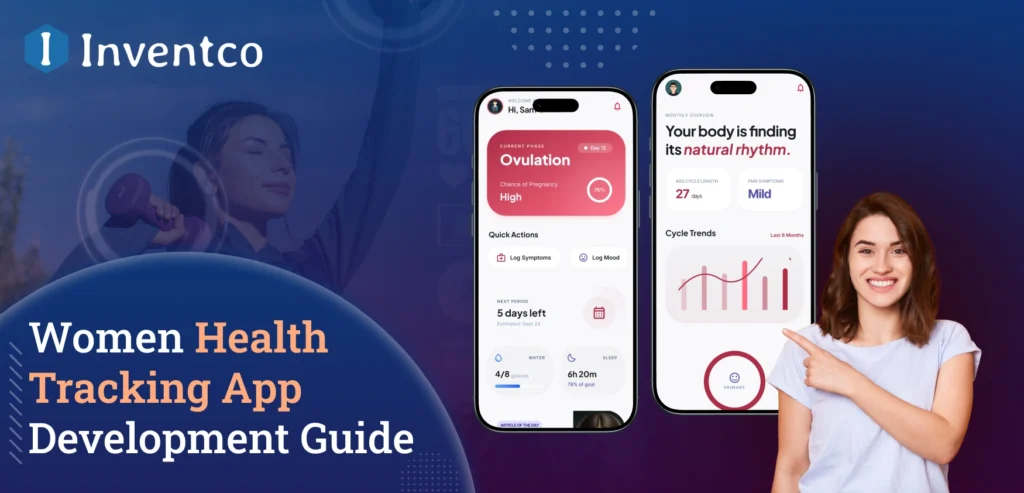
The most promising area of digital health innovation is also one of the most neglected: women’s health apps. Despite the growing focus on personalized healthcare, areas such as menstrual health, pregnancy, cycle syncing, and related mental and emotional wellness remain underserved and require continuous, data-driven solutions.
The FemTech market shows significant potential. With the global market expected to grow to nearly $60 billion over the next five years, demand for digital healthcare products is set to rise. As AI, digital tools, and personalized technologies continue to advance, digital healthcare services are becoming increasingly mainstream.
The potential of these health apps indicates that relying solely on period tracking features is not sufficient for monetization. To remain competitive, platforms must evolve beyond basic tracking and incorporate features that drive continuous user engagement and long-term retention.
This guide provides an overview of the key business-critical areas in women’s health app development, including core features, compliance, technology stack, development stages, and strategic approaches that directly impact user growth, market positioning, and revenue generation.
Key Takeaways
- Domain knowledge, privacy-first architecture, and AI-driven personalization for scalable growth are essential when building women’s health apps.
- Focusing on an MVP outlines potential Product-Market fit, as well as reducing the potential investment, development, and risk exposure.
- To be scalable and sustainable for the long-term, and to gain the trust of users, it’s essential to be compliant with healthcare regulations, such as HIPAA and GDPR.
- Core differentiators will be AI-driven engagement and insights, which will enhance prediction, personalization, and user engagement.
- The right tech stack will guarantee data privacy and support performance while providing seamless scalability.
- Teleconsultation wearables and personalized features will improve retention and profitability and will enhance the potential to monetize.
- Global competition in the femtech space requires validated healthcare software development partners for compliance and scalability.
Market Statistics: FemTech Growth, Funding & User Trends
The women’s health and FemTech ecosystem is experiencing rapid growth, driven by rising demand for personalized healthcare, AI integration, and increased investor interest.
- Industry forecasts suggest the market could reach $250B–$296B+ by 2035, making it one of the fastest-growing segments in digital healthcare.
- The Global Femtech Market is expected to reach USD 60.01 Billion by 2027, according to a new report by Emergen Research
- The women’s health app market alone is expected to grow at ~17–25% CAGR, reaching up to $12B+ by 2030, driven by mobile-first healthcare adoption.
- Global FemTech funding reached approximately $2.2 billion in 2024, showing sustained investor interest despite short-term fluctuations.
What Is Women’s Health App Development and Why Does It Require a Different Approach?
Women’s health tracking app development consists of building health tracking applications for different life stages, such as health, menstruation, fertility, pre- & post pregnancy, and menopause. These apps go beyond tracking and monitoring, as they help track, develop, and enhance a person’s health.
Most health and fitness apps on the market are concerned with only fitness and health. Women’s health apps focus on far more sensitive areas than the others. Apps in the women’s health genre focus on the areas of reproductive and hormonal cycles. Because of the types of information that the apps collect, they have to develop good information privacy and a secure information architecture. Also, they have to develop an information system that allows deep personalization for the user, as they have to collect a lot of information regarding the user’s biological cycles, health, and symptoms.
In addition, these systems must capture and identify user behavioral patterns. These patterns may include emotional, lifestyle, health, and symptom-related data. Such insights are critical to the system, as they provide meaningful value to users. Given their importance, the system’s functionality should also support predictive capabilities, where recommendations are based on medically validated insights.
The mobile app development system must incorporate advanced technologies to meet these requirements and ensure the successful development of women’s health tracking applications.
How to Build a Women’s Health Tracking App: Step-by-Step
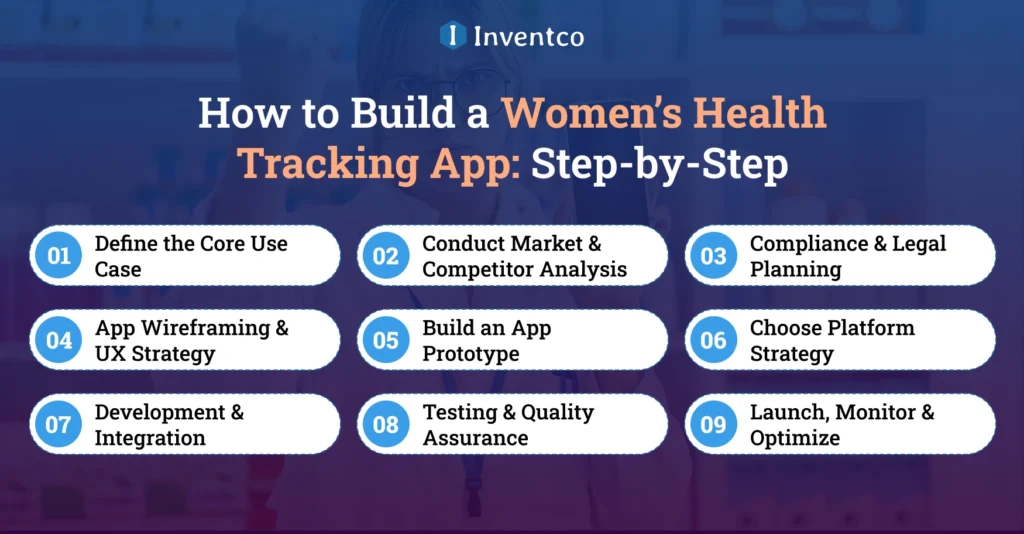
Women’s health tracking solutions can be seen as long-term commitments to health tech partnerships rather than singular developments. Each phase of health tech solution development can integrate end-user trust, clinical precision, and flexible frameworks to balance and maximize ROI and sustainable growth.
1. Define the Core Use Case
The most common pitfall founders face, especially in health tech, is attempting to solve multiple problems simultaneously. Focused and clear use cases, such as period tracking, pregnancy care, fertility planning, or hormonal health analytics, can be scoped faster, validated faster, and more accurately than a complex composite solution. Structuring the development of the solution as an MVP mobile App can provide a controlled investment and solid framework for additional feature development, as well as more rapid user feedback processes.
2. Conduct Market & Competitor Analysis
Before jumping into development, analyze both the functional and dysfunctional components of the current market. Research the clinical and women’s health apps market and discover leading competitors such as Flo, Clue, and Ovia. Research the gaps in user engagement, monetization constructs, and user retention. This will provide the tools necessary to map the current app development trends, as well as the unmet user needs, and determine the differentiated constructs that will cultivate user engagement and revenue.
3. Compliance & Legal Planning
In the women’s health sector, compliance is a non-negotiable requirement in the earliest planning stages of development. Regulatory mapping for areas pertaining to the GDPR, HIPAA, and all applicable regional data privacy laws is essential. Planning around sensitive and personal data collection processes is an essential component of establishing a user data control-and-consent system, which minimizes legal risk and strengthens the health tech solution’s compliance from the outset.
4. App Wireframing & UX Strategy
Health apps require high user engagement and retention levels. For that reason, when using app wireframing tools, create simple yet engaging user flows for features like symptom tracking, cycle tracking, and health dashboards. Your app’s interface should be focused on ease of use and on turning complicated health information into clear and actionable insights. Since users will be sharing personal information, user experience design should also incorporate emotional and sensitive design principles. A positive and intuitive UX will foster trust and increase retention.
5. Build an App Prototype
Before going into full-scale development, app prototyping can be a cost-effective approach to validate or invalidate design concepts. App prototypes can help identify user journey and flow issues, and device features and data flow within the app. Validation achieved during the prototyping stage can help avoid budget overruns that would arise from a redesign during the full-scale development stage. Furthermore, functional prototypes will help attract investment by demonstrating a viable solution to consumer demand and the presence of functional systems within the app.
6. Choose Platform Strategy
Your app’s potential becomes clear during the final stages of development. For that reason, choosing a platform in the initial stages can affect the app’s growth in the long run. Understand the user base of your app in terms of geography, and split the use of the app into platforms in your marketing strategy to collect valuable data on user behavior. To meet user demand, your initial use of a cross-platform framework for a speedier app deployment should be followed by an upgrade to native app development.
7. Development & Integration
This step involves turning your idea into reality. You can create an app with great infrastructure if you choose the right mobile app development frameworks and backend health data management systems. Add APIs for wearables, health records, and other relevant third parties, and implement advanced AI for predictive and personalized insights. A well-built infrastructure during this phase ensures your application will efficiently manage scalability, performance, precision, and security.
8. Testing & Quality Assurance
This is especially true for the needs of health care applications, where any mistake can lead to dire consequences. Hence, comprehensive mobile app testing must be performed to include all the aforementioned components of functionality, data integrity, breaches of security, system failures, and other unexpected behaviors. All real-world scenarios must be considered to maintain consistency and reliability across devices and conditions. A robust QA process will eliminate critical failures and will reinforce user trust, which is one of the most important factors for the adoption of health care applications.
9. Launch, Monitor & Optimize
App launching is the endpoint of its first life cycle. Analytics will demonstrate how the users interact with the app, which will lead to an improved user experience. Integrated with Mobile App Analytics, the app will be optimized and updated on an unscheduled, continual basis to improve the user experience. Future growth, new features, upgrades, and unscheduled continual changes will be included in the initial budget, along with the expected mobile app maintenance. Giving customers sustained value will set the tone for the future growth of your app and the sustained value to be created for customers.
Cost to Develop a Women’s Health App
The development cost of a women’s health tracking app primarily depends on product complexity, included app features, regulatory compliance requirements, and long-term scalability plans. For founders and investors, the key is to balance development costs with business goals, time-to-market, and monetization strategy.
Basic App (MVP): $10,000 – $30,000
This includes core functionalities such as cycle tracking, symptom logging, notifications, and basic analytics. It is the ideal stage to validate product-market fit with a low budget and minimal risk.
Mid-Level Application: $30,000 – $70,000
This includes an improved user experience, payment systems, analytics dashboards, wearable integrations, and AI-driven insights. It supports user growth and enables early-stage monetization.
Advanced Applications (AI + Integrations): $70,000 – $100,000+
This focuses on scalability and includes features such as predictive analytics, teleconsultation, EHR integration, cloud infrastructure, and enterprise-grade security. It is best suited for applications targeting large-scale user bases.
Key Cost Drivers
- Feature Complexity: Advanced AI, real-time analytics, and predictive modeling capabilities require greater development effort.
- Compliance & Security: Implementing HIPAA, GDPR, and data protection frameworks adds both cost and technical complexity.
- Platform Strategy: Choosing between native and cross-platform development impacts cost, performance, and scalability.
- Third-Party Integrations: Integrating wearables, health APIs, and telehealth systems increases overall development cost.
The most effective approach is to start with an MVP and scale incrementally based on user behavior and market demand. This helps optimize costs while minimizing risk.
Tech Stack for Women’s Health App Development
The right technology stack is critical for your application’s future. This is because it determines your application’s overall scalability, performance, and ROI. With women’s health applications, a technology stack should support secure data handling, real-time processing, and AI-driven personalization, ensuring flexibility to grow with the increasing user base and feature set.
Below is a recommended architecture used by high-performing healthcare applications:
| Layer | Technology Options |
| Frontend | Flutter, React Native, Swift, Kotlin |
| Backend | Node.js, Django, Ruby on Rails |
| Database | PostgreSQL, MongoDB |
| Cloud | AWS, Google Cloud, Azure |
| AI/ML | TensorFlow, PyTorch |
| APIs | HealthKit, Google Fit |
| Security | OAuth 2.0, End-to-End Encryption |
The mobile app technology stack that is properly structured and well designed makes certain that the application will handle the sensitive health care data, will allow the appropriate user experience, and will scale to the appropriate level as the number of users increases and as the data complexity increases.
Types of Women’s Health Apps You Can Build
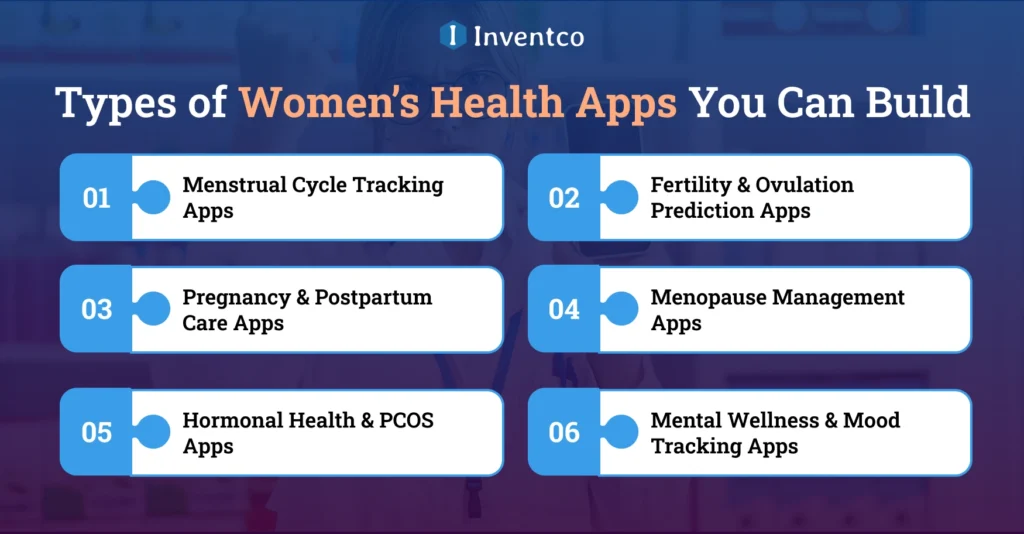
The women’s health ecosystem is not a single market, it’s a collection of high-potential segments, each with distinct user needs, engagement patterns, and monetization models. For founders and investors, selecting an individual segment is a strategic choice that determines your product-market fit, potential revenue streams, and scalability prospects.
1. Menstrual Cycle Tracking Apps
These cycle-tracking applications have good user engagement and retention as they require daily use, and they typically pull in revenue through user subscriptions and monetized premium cycle-related insights.
2. Fertility & Ovulation Prediction Apps
These applications are targeted specifically for women who are trying to get pregnant and use predictive analytics and artificial intelligence to outline ovulation periods and provide other insights related to fertility. Their intended use makes them more valuable, and in turn, users have a higher willingness to pay.
3. Pregnancy & Postpartum Care Apps
These applications provide users with medical and recovery information and support to help them throughout the duration of their pregnancy and the postpartum period. This also establishes partnerships with healthcare systems for the long term.
4. Menopause Management Apps
This segment is new in the market and also has a high potential for niche market dominance. These applications address menopause symptoms, lifestyle changes, and hormonal adjustments.
5. Hormonal Health & PCOS Apps
These applications are designed for women with chronic conditions such as PCOS (Polycystic Ovary Syndrome). They typically include features like symptom tracking, lifestyle recommendations, and comprehensive analytics. This enables users to access more advanced healthcare services.
6. Mental Wellness & Mood Tracking Apps
These applications provide users with insights into their emotional state and related physiological conditions, which help them identify the correlation between hormonal fluctuations and their mental health. This also encourages users to use the application more often.
Considering the aforementioned information, it is clear that each of these segments offers plenty of opportunities to develop women’s health tracking applications with a differentiated value proposition, tailored monetization plans, and prospective growth.
Must-Have Features of a Women’s Health Tracking App
Choosing which functionality your women’s health tracking app will have is a key business decision that will impact user engagement, retention, and revenue. When creating a women’s health tracking app, it’s important to combine essential features and advanced options that will promote retention.
Core Features
The most important features are key to establishing a baseline of usability and gaining user trust, and these features would include the following:
- Cycle Tracking & Calendar: This will enable users to log their menstrual cycles, get insight into their cycle patterns, and get predictive insights. This is the basis for creating engagement, personalization, and daily usage in the app ecosystem.
- Symptom & Mood Logging: This functionality enables users to log their symptoms, moods, and lifestyle data to better understand their health over time. As users continue to engage with the app, it can deliver more personalized and predictive insights.
- Ovulation Prediction: This feature should also be included because users make behavioral changes that are important for their decision-making. This also positively increases the clinical feeling users get from using the app.
- Health Reports & Insights: The app is expected to transform data into actionable insights and well-organized summaries of the data to aid decision-making, trust, and the user’s perception of the app as a reliable health partner.
- Notifications & Reminders: These will increase the user’s experience and engagement with the app, as they will be reminded of the things they need to do with regard to their health.
- Secure User Profiles: This will allow users to have more trust in the app, as their sensitive data is well-guarded with security features, and the app ensures users’ data privacy and reduces breach risk.
Advanced Features
Here are the advanced features to boost your mobile application usability, reliability, and trust, and to identify your product in the marketplace.
- AI-Based Cycle Prediction: Allows the application to implement machine learning, charting the user’s historical data, from which the application can extract information such as patterns or cycles that allow the application to predict the user’s future cycles more accurately.
- Wearable Device Integration: Provides real-time health data of the user with respect to the pre-set health variables which the user can manually set as their goal.
- Teleconsultation Integration: Allows the user to consult registered physicians right from the application, thus providing value and enhancements towards further monetization of the application.
- Personalized Health Recommendations: Offers health suggestions that are customized according to the user’s preferences, health goals, and behaviors.
- Voice & Chat Assistant: Enhances the user’s logging process and obtaining health suggestions via voice commands and chat.
- Community Support Features: Provides users with a community center right from the application where users can share their experiences with each other. This helps in creating and strengthening user loyalty towards the application.
By adding all these features, you are also enhancing the user experience, which then also improves retention, lifetime value, and premium conversion rates.
The Role of AI in Modern Women’s Health Tracking Apps
Most conventional health apps have an operational drawback in that data input from users doesn’t yield a compensating feedback value from the app. Users are not able to track data in an effective manner. AI, however, in comparison, can add a lot more value.
Womxn’s health apps have AI integrate data refining from simple analytics to data that can be acted on with a personalized plan. AI can broaden predictive analytics to be used on cycles, alter trends in inputs, and behaviors. AI adds an additional layer of value by deciphering irregular trends and alerting users so that they can be proactive as opposed to reactive.
The engagement and trust health apps can build come from the self-analytical capabilities the apps possess. AI offers a level of personalization that few apps can offer. AI builds a self-tracking tool of sorts by offering personalized analytics of behaviors, or by adjusting suggestions or recommendations based on the build of a lifestyle.
By conversational AI, logging of data, and receiving constant feedback with suggestions or recommendations offered on an as-needed basis, there is a lowered operational drag on the app and an operational fluidity that is offered to the user.
The basis of any newly developed women’s health tracking app centered on AI is a foundational rule that defines the app’s strategic offerings and profitability. The health tracking app, as built on AI, is developed to yield high levels of adaptable profit streams, customer loyalty, and adjustable offers to the users of the app.
ROI & Monetization Strategy
Women’s health apps have a proven track record of high user retention and monetization, offering continuous engagement that supports sustained revenue growth and long-term scalability.
Monetization Models
- Subscription Model: In this model, the app generates recurring revenue through monthly or annual subscriptions. Users gain access to premium features such as advanced insights, personalized recommendations, and detailed health reports.
- Freemium Model: The freemium model enables rapid user onboarding by offering core features for free, while advanced features, such as AI-driven analytics, personalized health insights, and teleconsultations, are available through paid upgrades.
- Health Professional Consultations: Monetization is achieved through paid consultations with healthcare professionals, while also enhancing user trust and platform credibility.
- Partnerships and Data Monetization: Aggregated and compliant data can create additional revenue streams. Partnerships may include collaborations with wellness brands, research organizations, and healthcare providers.
ROI Perspective
- High Retention: Regular user engagement increases lifetime value and supports conversions across different lifecycle stages.
- Predictable Recurring Revenue: Subscription models ensure stable and consistent cash flow.
- Scalable Infrastructure: The cost of scaling the user base remains relatively low after initial development.
- Strong Market Demand: Growing adoption of digital healthcare solutions continues to drive market expansion.
Applications that leverage AI-driven personalization and engagement tend to achieve higher conversion rates, stronger retention, and improved revenue performance.
Strategic Insight
A well-designed women’s health app evolves beyond a basic tracking tool into a comprehensive digital health platform. With the right architecture, monetization strategy, and user engagement model, it can scale efficiently while addressing key digital healthcare challenges.
Reproductive Data Privacy and Compliance — The Non-Negotiable Foundation
In the case of women-focused apps, data is not a piece of technology that can be monetized but instead is deeply personal, sensitive, and involves the user’s trust and confidence. Because of the nature of the data, a single violation of the security of reproductive or hormone data is likely to result in a loss of trust, massive legal issues, and loss of users.
For founders and investors, the primary focus of privacy and compliance should never be an afterthought. Trust is built on a privacy-compliant security infrastructure that is built to last and complies with international data protection laws.
Key considerations include:
- End-to-End Encryption: Protects the data being transferred and stored from unauthorized access.
- Consent-Based Data Usage: Secure user consent to collect, use, and share data, increasing transparency and regulatory compliance.
- Secure Cloud Infrastructure: Health data is stored in the cloud, which is under a secure cloud environment, using advanced security measures.
- Regular Security Audits: Regular audits ensure remediation of identified vulnerabilities and regulatory and security compliance.
For the development of women’s health tracking apps, building trust with users is the foundation for increased adoption and growth of the app. Compliance with mobile app security is an important part of the user’s confidence when using the app.
Key Challenges in Women’s Health App Development
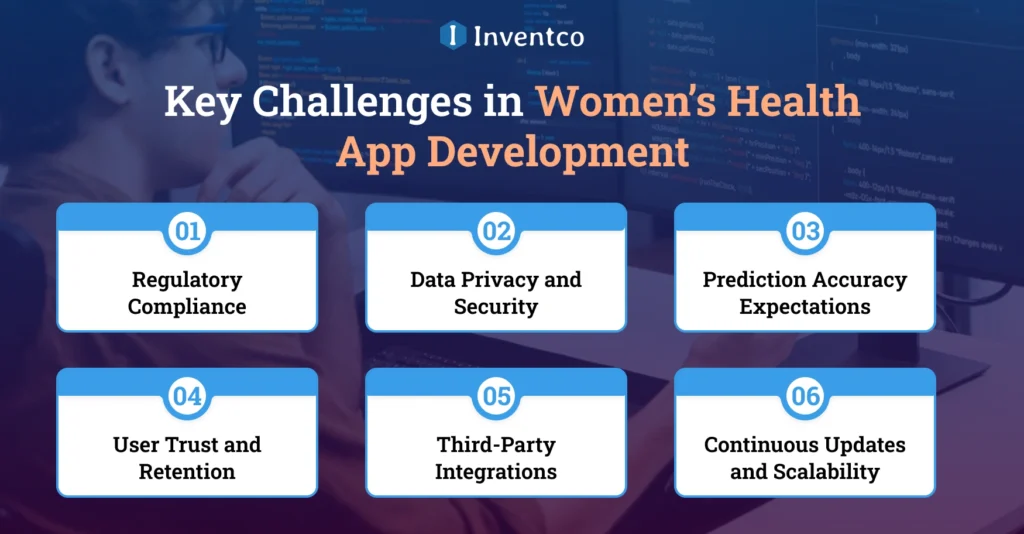
Women’s health apps operate under sensitive conditions due to intersections between health care information, personalization, and user trust. Many startups do not fully comprehend this complexity, leading to issues of compliance, adoption, and scalability. These issues are integral to building a secure and reliable product that will ultimately bring business value.
1. Regulatory Compliance
Challenge: The complexity of dealing with the different regulations when it comes to the health care sector increases the probability of running into legal issues, particularly with the sensitive reproductive and hormonal health data.
Solution: Work with experienced partners in health care technology that can integrate compliance from the beginning of the project to the end so that there are no violations of HIPAA, GDPR, or any other region-specific data protection laws.
2. Data Privacy and Security
Challenge: The information you acquire from your users is very sensitive and must be protected from breaches or else there will be legal issues and loss of user trust.
Solution: Put end-to-end encryption, secure authentication, and regular audits in place. Following Mobile App Security Best Practices will keep your data secure, increase trust in your app, and therefore increase user trust.
3. Prediction Accuracy Expectations
Challenge: Users expect cycle predictions and health insights to be accurate. Inaccurate predictions will result in users abandoning the app and damage your reputation.
Solution: Use AI models that can predict outcomes based on a wide number of data points in combination with a system that can learn predictively and can improve predictions over time.
4. User Trust and Retention
Challenge: Gaining and retaining trust in an app at an early stage when users will be providing sensitive health data is of paramount importance.
Solution: Maintain transparency and consistently deliver personalized value through data-driven insights and messaging to position the app as a trusted, value-driven healthcare platform.
5. Third-Party Integrations
Challenge: The combination of wearables, health apps, and external APIs adds technical complexity and dependence to the system.
Solution: A modular system with scalable API’s allows for increased complexity and dependent systems to run seamlessly without affecting performance.
6. Continuous Updates and Scalability
Challenge: Updated healthcare regulations, a continually growing amount of user data, and the need for continual new features are challenges for the healthcare system.
Solution: A cloud-based scalable system with proactive mobile app maintenance will ensure that system performance is optimised and will avoid downtime and continual evolutionary changes that will improve healthcare systems.
These issues are part of the mobile app development challenges that are common to the healthcare industry, and the challenge of success is to achieve a good balance of compliance, personalization, and performance. A focused and structured approach will ensure your women’s health app is functional, scalable, and secure.
How to Choose the Right Women’s Health App Development Company?
Choosing a mobile app development partner is not a simple procurement decision, it is a strategic choice that will have a long-lasting impact on your product’s scalability, compliance, and long-term ROI. In the very sensitive field of women’s health, the potential downsides of working with the wrong partner are quite serious, including delays, regulatory issues, and low user adoption. In contrast, the right partner can help you grow.
What to Look For
1. Healthcare Domain Expertise
Your development partner should have an understanding of the regulatory requirements, workflows, and data sensitivity of the healthcare industry. This way, your app can be built with clinical and regulatory compliance from the very beginning.
2. Experience with AI-Driven Applications
AI is a core component of the women’s health platforms of the future. Therefore, it is essential to have strong experience developing AI-based applications that can provide predictive analytics, personalization, and data-driven decision-making at scale.
3. Strong Portfolio in Secure Applications
Security is a given. Your potential partner should have experience developing applications that are secure by design in terms of data handling, encryption, and compliance.
4. Transparent Development Approach
Academic development with an emphasis on timelines, costs, processes, and updating the flow of business is necessary. What you need most from partners who have a systematic approach to the development of mobile applications and have an established process.
Case Studies: Delivering Scalable and Secure Healthcare Applications
One of the better evaluation methods for development companies is the evaluation of their expertise through real-world implementations. Inventco is noteworthy for having built sophisticated, innovative healthcare solutions with a good grasp of the elements of scalability, compliance, and user-friendly solutions.
For instance, Espitalia is a global platform for telehealth developed by Inventco to enhance the ease of access to medical services. Users of the application can schedule appointments with doctors of various specialties and have voice and video calls for uninterrupted consultations. Other features include digital prescriptions, follow-up appointments, and secure payments, with everything controlled by a web-based admin panel. The platform builds operational efficiency along with the most secure and intuitive UX/UI for operational healthcare solutions.
Other solutions include Check My Mole, the AI-based application for cancer detection. The app demonstrates Inventco’s prowess with the application of sophisticated, advanced AI in the healthcare industry. It evaluates and analyzes medical imaging and identifies and evaluates the presence of cancer using real-time imaging. The app gets smarter because of machine learning and is able to improve its ability to diagnose over time through learning new and validated data. Early detection and telemedicine systems are integrated with the app to simplify the detection and clinical decision-making processes.
Investors and founders understand that there is much more than technical execution required to build a successful women’s health app. Considerable healthcare knowledge, robust AI, and an innovative approach to capturing and securing sensitive health data are required. Inventco combines all of these areas, providing end-to-end development of the backend, frontend, UX/UI, and testing, with a business outcomes-driven consultancy model. The right development partner will make sure your platform is functional, safe, and compliant, as well as secure to scale for future growth in an increasingly competitive and trust-rich environment.

Conclusion
The founders of women’s health tracking apps need to go beyond the basic tracking capabilities to build on systems that are personalized, private, and predictive. Success in this aspect of women’s health relies on data-driven and real-time experiences that are of genuine value to the end user.
There is a need for integrated solutions that will result in clinically relevant insights, excellent user experience, and the ability to scale. This will drive value and trust in the healthcare app ecosystem.
With the appropriate healthcare app development partner, technology stack, and strategy, there is substantial growth potential and value creation within the emerging femtech ecosystem for apps that will surpass women’s expectations within a sound vertical market for women’s health tracking
FAQ’s
Q1. How much does it cost to build a women’s health tracking app?
Ans. The cost to build a mobile app typically ranges from $10,000 to $100,000+, influenced by features, AI capabilities, compliance requirements, integrations, and development approach. Advanced analytics and security layers significantly increase overall investment and timeline.
Q2. How long does development take?
Ans. Development usually takes between 3 to 9 months, depending on app complexity, feature depth, integrations, and testing requirements. Starting with an MVP mobile App helps accelerate launch while reducing risks and initial development costs.
Q3. Is AI necessary in women’s health apps?
Ans. AI is increasingly essential for women’s health apps, enabling accurate cycle predictions, personalized insights, anomaly detection, and better user engagement. It enhances long-term retention while positioning the app as a data-driven healthcare solution.
Q4. How do these apps make money?
Ans. Women’s health apps generate revenue through subscription plans, premium features, in-app consultations, partnerships with healthcare providers, and data-driven insights. A well-planned mobile app monetization strategy ensures sustainable growth and long-term profitability.
Q5. What platform should I choose first?
Ans. Choosing the right platform depends on your target audience, budget, and timeline. Many startups begin with cross-platform development for faster deployment, then scale to native apps for performance optimization and enhanced user experience.
Q6. How do I ensure app visibility after launch?
Ans. To ensure visibility, focus on strong app store optimization strategies, including keyword targeting, compelling visuals, user reviews, and regular updates. Marketing campaigns and analytics-driven improvements further enhance discoverability and user acquisition post-launch.

Ajay Bhal
He is an on-demand app solutions expert with 11+ years of experience in business consulting and building scalable, user-centric digital products. He specializes in robust on-demand platforms across industries, combining technical expertise with business-focused strategy to deliver efficient, top notch solutions that drive growth and enhance user experience. You can connect with him on LinkedIn to follow insights.