The real estate market is booming faster than ever, and businesses that adapt to the latest trend will dominate the next decade.
From AI-driven real estate valuation to virtual tours, users can get seamless browsing, smooth online transactions, and get real-time information for fast decision-making.
This has led brands to focus on real estate app development as a primary growth opportunity.
A smart real estate app will enhance user experience, automate processes, and generate more revenue, whether you are a startup, a real estate agency, or a property investment company.
In this guide, we highlight the 10 best real estate apps you can develop for 2026, as these options will prepare you for a more sustainable property business.
Understanding Real Estate Apps and Their Market
The global PropTech market is booming, valued at around USD 35.4 billion in 2024 and slated to surpass USD 114.8 billion by 2033.
That growth reflects widespread adoption of technology across buying, selling, renting, and property-management activities.
Moreover, residential and digital real estate platforms now dominate market transformations worldwide, driven by evolving consumer behavior and increasing demand for convenience.
At the same time, mobile usage continues to skyrocket. All over the world, people are buying and using smartphones at an increasing rate. People are even using their phones to handle their real estate needs.
Because users rely on their phones and the internet for nearly all tasks now, they must have virtual tours, AI estimates, chat interfaces, and fast, comprehensive searches for listings to meet their real estate needs. Mobile app development is now vital to the survival of all real estate businesses.
As of October 2023, the future of real estate lies in understanding modern consumer behavioral patterns and demographics; those who act first in 2026 will have a profitable real estate business.
List of The Best Real Estate App Ideas
The following innovative ideas will revolutionize property buying, selling, renting, and investing in the modern world, helping businesses grow.

Real estate apps can be tailored to the modern world to deliver value and complete the digital solutions needed for the consumer of 2026.
| App Idea | Examples |
|---|---|
| Property Listing & Search App | Zillow, Realtor.com |
| Rent & Lease Management App | RentRedi, Buildium |
| 3D Virtual Property Tour App | Matterport, Zillow 3D Home |
| Real Estate Investment & Portfolio App | Fundrise, Roofstock |
| Home Valuation & Price Estimation App | Redfin Estimate, Zillow Zestimate |
| Commercial Real Estate Marketplace App | LoopNet, Crexi |
| Real Estate Auction & Bidding App | Hubzu, Auction.com |
| Tenant Screening & Background Check App | SmartMove, RentSpree |
| Property Management App for Landlords | AppFolio, TenantCloud |
| Smart Home & IoT Monitoring App | SmartRent, Google Home |
1. Property Listing & Search App
Examples: Zillow, Realtor.com
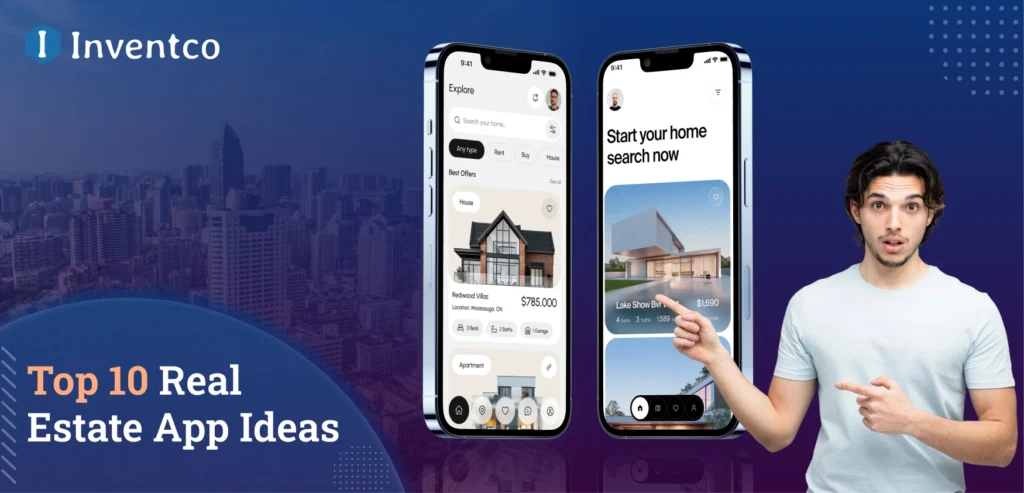
Property listing and search app users can search for properties to buy, sell, or rent through accurate listings, advanced filters, map search, verified data, and seamless browsing. This type of real estate app is the best alternative to traditional brokers and offline property visits.
Features:
- Advanced Property Filters: Price, location, furnished, bhk, and amenities.
- Map-Based Discoverability: View listings on a map.
- High-Quality Photos & 360° Tours: Detailed images and videos for better decision-making.
- Notifications: Price change, new listing and saved search list alerts.
- Agent/Owner Contact: Direct messaging, phone number, and appointment scheduling.
- Verified Listings: Ensures authenticity and reduces fraud for users.
Why Develop This App?
The property listing apps solve the universal need for fast property discovery, helping businesses increase reach and enquiries, automate lead generation, and create a sustainable, profitable digital asset.
Who Should Implement This Idea?
This real estate app idea is best suited for startups, digital property businesses, real estate agencies, property brokers, and large-scale developers looking to improve their digital engagement with customers.
2. Rent & Lease Management App
Examples: RentRedi, Buildium
The real estate mobile app solution for managing rent and lease streamline process by enabling payment, automating reminders and tasks, screening, tracking maintenance, and secure document storage. With this type of real estate app, your rental operation becomes organized, fast, transparent, and efficient.
Features:
- Online rent payments & auto-reminders
- Digital lease creation & e-signatures
- Tenant screening tools
- Maintenance request tracking
- Expense & invoice management
- Document storage & sharing
Why Develop This App?
As operations in the rental business adopt next-gen technology, the demand for and flow of work to be automated increases. This app reduces operational burdens, increases cash flow visibility, prevents late payments, and improves tenant satisfaction through instant communication.
Who Should Implement This Idea?
This type of real estate app idea is ideal for landlords, rental agencies, co-living businesses, property managers, and startups seeking a seamless, automated rental process.
3. 3D Virtual Property Tour App
Examples: Matterport, Zillow 3D Home
An app like this gives users the opportunity to take 3D virtual tours of properties and view and walk through the home remotely in a very lifelike manner. This convenience drives decision-making for buyers and renters and reduces the need for in-person visits.
Features:
- 3D virtual tours & panoramic views
- AR/VR-supported walkthroughs
- Floor plans & space measurements
- High-resolution photo galleries
- Virtual staging options
- Real-time agent-guided video tours
Why Develop This App?
These real estate apps help users view the inside of a home without scheduling an in-person tour. This allows buyers to make quicker decisions on property. It also creates a better experience for clients. This app helps businesses showcase properties more effectively and convert leads into sales more quickly.
Who Should Implement This Idea?
Suppose real estate developers, brokers, luxury property marketers, rental agencies, or PropTech startups are looking to build a real estate app. In that case, a 3D virtual property tour app is the ideal choice.
4. Real Estate Investment & Portfolio Management App
Examples: Fundrise, Roofstock
With this real estate mobile app, users can easily find and analyze investment properties. Users can also track their investment performance and manage their properties in the app. This makes real estate investing easy for rookies and experienced users.
Features:
- Investment property recommendations
- ROI, cash flow & cap rate calculators
- Portfolio performance dashboard
- Fractional property investment options
- Risk analysis tools
- Market trend insights
Why Develop This App?
Real estate app development of an investment app attracts high-value users seeking passive income. It makes property evaluation easier, so users can have a better, more confident investing experience. It also creates a steady income for developers through subscriptions and commissions.
Who Should Implement This Idea?
This real estate app idea is ideal for investment firms, PropTech startups, real estate advisors, crowdfunding platforms, and agencies targeting wealth-focused customers.
5. Home Valuation & Price Estimation App
Examples: Redfin Estimate, Zillow Zestimate
This app aims to provide instant property valuations based on data and market trends. Sellers and buyers need to know the accurate valuation of properties before making any transactions to avoid problems arising from other valuation flaws.
Features:
- AI-powered property valuation
- Real-time market trend analysis
- Comparable sales (Comps) data
- Neighborhood pricing insights
- Price fluctuation tracking
- Customizable valuation reports
Why Develop This App?
Valuations keep prospects serious. Trust in accurate valuations, and users make better decisions. Businesses hold invaluable insights into valuations and decision-making.
Who Should Implement This Idea?
Ideal for real estate agencies, valuation startups, property consultants, PropTech platforms, and investors offering analytics-driven services.
6. Commercial Real Estate Marketplace App
Examples: LoopNet, Crexi
One of the top trends in real estate mobile apps is the commercial real estate marketplace app. This app serves buyers, tenants, investors, and owners of commercial assets like offices, warehouses, retail, and industrial units. It provides comprehensive listings that enhance discoverability and streamline large-scale real estate transactions.
Features:
- Detailed commercial property filters
- Lease rate & ROI insights
- 3D tours for office spaces
- Tenant–owner messaging
- Market analytics & demand trends
- Investment calculators
Why Develop This App?
The demand for commercial real estate is rapidly changing, with customers requiring digital-first options for discovery and exploration. This real estate application addresses all target buyers and facilitates the creation of profitable streams from listings, advertisements, and advanced analytical tools.
Who Should Implement This Idea?
This is suitable for commercial brokers, commercial real estate (CRE) agencies, developers, PropTech startups, and B2B real estate platforms focused on premium commercial clients.
7. Real Estate Auction & Bidding App
Examples: Hubzu, Auction.com
This app enhances the property-buying experience by enabling transparency and speed, allowing users to view auction-enabled properties, bid in real time, monitor auctions, and quickly finalise purchases. It also facilitates the quick sale of distressed assets.
Features:
- Live bidding system
- Auction countdown timers
- Bid history & notifications
- Property condition reports
- Secure payment gateway
- Buyer verification tools
Why Develop This App?
Auction apps attract motivated consumers eager to make purchases. It drives high engagement, accelerated sales cycles, and substantial revenue through listing fees, commissions, and premium bidding payments.
Who Should Implement This Idea?
This real estate app idea is perfect for banks, auction houses, real estate agencies, distressed asset companies, and PropTech startups, helping shorten the time required for property trades.
8. Tenant Screening & Background Check App
Examples: SmartMove, RentSpree
Tenant screening and background check real estate app allows landlords and property managers to verify prospective tenants through background checks, credit history, rental history, and identity verification. This process reduces risk and increases the likelihood of renting to reliable and trustworthy tenants.
Features:
- Credit & background checks
- Employment and income verification
- Rental history reports
- Identity authentication
- Automated scoring system
- Instant approval/denial recommendations
Why Develop This App?
Landlords face a myriad of challenges that come with each potential tenant. This real estate app allows landlords to avoid fraudulent tenants, streamline their processes, and ultimately make rental processes less risky.
Who Should Implement This Idea?
Rental property managers, landlords, and PropTech companies are implementing new strategies to manage rental property portfolios.
9. Property Management App for Landlords
Examples: AppFolio, TenantCloud
Property management app helps landlords efficiently oversee rentals by automating and streamlining payment tracking, maintenance requests, lease storage, expense monitoring, and tenant communications, creating a fully organised, automated rental system.
Features:
- Online rent collection
- Maintenance request system
- Lease management & e-signatures
- Income/expense tracking
- Tenant communication portal
- Automated reminders & reports
Why Develop This App?
The chaos of manually managing rentals across several properties is a time-consuming, inefficient, and cumbersome process. Consolidating all systems into one application. This reduces the landlord’s or property manager’s per-tenant management workload. Improves tenant satisfaction, and robust system automation streamlines all operational processes.
Who Should Implement This Idea?
This is tailored for landlords, property managers, rental agencies, co-living operators, and PropTech companies with fragmented operational processes and extensive multi-unit or large rental portfolios.
10. Smart Home & IoT Monitoring App
Examples: SmartRent, Google Home
Allows the user to remotely control and manage smart devices in a home, such as lights, locks, thermostats, security cameras, and motion sensors, for centralized automated management within an IoT ecosystem.
Features:
- Remote device control
- Real-time security camera monitoring
- Motion & door sensor alerts
- Smart scheduling & automation routines
- Energy usage tracking
- Integration with IoT hubs & voice assistants
Why Develop This App?
Users want centralized management for their smart homes/multiple smart devices. The IoT in smart homes app increases utility and convenience, helps save on energy costs, improves security, and allows users to tap into the expanding real estate in the IoT industry.
Who Should Implement This Idea?
This is a great fit for smart home startups, IoT, and PropTech companies, residential developers, and real estate players that provide premium digitized living environments.
Why Should You Consider Investing in These Ideas?
The real estate business is now fully digital, and customers expect it to offer instant, real-time access, transparency, and convenience. These new app ideas offer a way to get ahead of the competition while providing experiences that buyers, sellers, investors, and tenants want. Whether to optimize lead generation operations or find a more efficient way to find a property, these ideas meet strong market demand and will remain in demand for a long time.
The cost to develop real estate app solutions is more affordable now than ever, thanks to modular development, making innovation more financially feasible for many startups and established enterprises. If you are thinking of establishing a real estate app in the year 2026, these ideas provide the ideal foundation to start a high-growth PropTech business.
How Inventco Can Turn Your Real Estate Idea Into Reality?
Turning a real estate concept into a market-ready digital product requires the right strategy, technology, and execution.
That’s where Inventco excels. As a leading mobile app development company with deep expertise in real estate app development, we transform ideas into high-performing, scalable, and visually stunning PropTech solutions.
From wireframing and UI/UX design to backend engineering, integrations, AI automation, and testing, every real estate app feature is crafted to work seamlessly across platforms.
We help validate your concept, choose the right tech stack, structure intuitive user journeys, and build an MVP that launches fast and performs flawlessly. With Inventco, your real estate app becomes a competitive advantage—not just another digital product.

Conclusion
The real estate business is about to transition into a new era where users want apps that are easy to use, smart, and fully automated.
Modern, unique real estate apps can deliver significant business benefits, including new revenue streams, streamlined operations, and an enhanced user experience.
These benefits are necessary to remain competitive in the PropTech field. Remote tours, smart device integration, automated rental management, and real estate investment software are all ways to strengthen your digital real estate and safeguard your business.
FAQs
Q1. What is a real estate app?
Ans. A real estate app is a digital platform that helps users buy, sell, rent, or manage properties through features like listings, virtual tours, valuations, payments, and agent communication.
Q2. How much does it cost to develop a real estate app?
Ans. The cost depends on features, complexity, platforms, and integrations. Basic apps may start lower, while advanced apps with AI, 3D tours, and automation require a higher budget.
Q3. How long does it take to develop a real estate app?
Ans. A simple app may take 8–12 weeks, while more advanced platforms, such as investment apps, smart home IoT apps, or CRMs, can take 4–8 months, depending on features and testing.
Q4. What features should a real estate app include?
Ans. Search filters, listings, virtual tours, chat options, valuation tools, geolocation, push notifications, property comparison, and secure login are everyday essentials.
Q5. Can I integrate AI or automation into my real estate app?
Ans. Yes. You can add AI for valuations, recommendations, chatbots, fraud detection, and predictive insights to enhance user experience and speed up decisions.
Q6. Do real estate apps generate revenue?
Ans. Absolutely. Standard monetization methods include listing fees, ads, subscription plans, premium property highlights, commissions, and lead-generation partnerships.
Q7. Can a real estate app support both buyers and sellers?
Ans. Yes. Most modern apps are built to serve buyers, sellers, renters, agents, and even investors through different dashboards and roles.

Jitendra Jain
Jitendra Jain is the CEO and Co-founder of Inventcolabs. He is among the most endeavoring leaders in the space of advanced computing and information technology. He has been at the forefront of the tech innovation taking place at Inventcolabs, and his domain insights, ideas, and viewpoints on the latest IT trends and traits impact change through his words and works in motion.