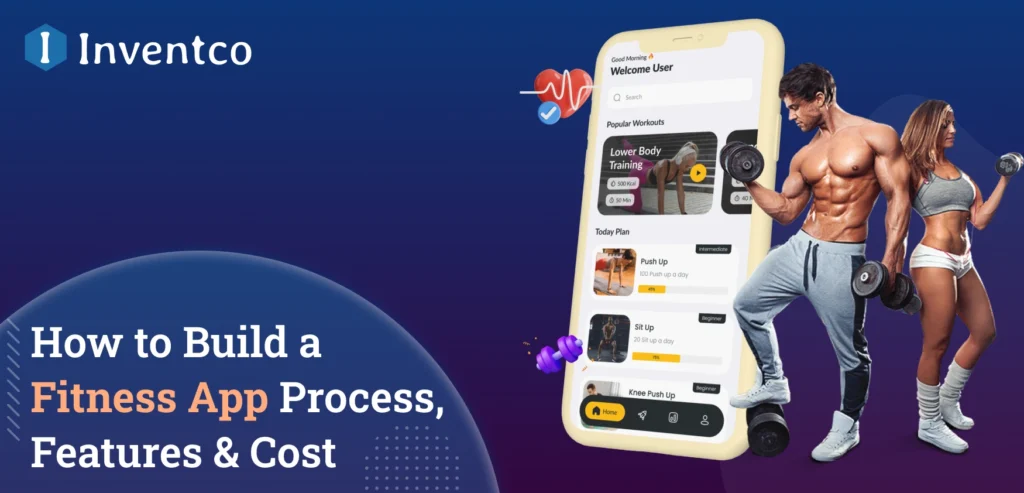
Today’s digital age allows your fitness journey to extend beyond the walls of a gym or fitness studio. As a health-conscious individual or gym attendee, fitness applications are being integrated into your daily routine. These applications are able to help you train, recover, and even utilize AI to give you personalized coaching and meal plans. In addition, they sync with other wearable technologies to track health and tailor the experience to your needs.
As digital fitness solutions continue to expand, the development of fitness applications is becoming an increasingly lucrative venture. After analyzing global health consciousness, the accessibility of smartphones, and the demand for individualized fitness journeys, we can understand why fitness applications dominate the app store. Providing the collaboration of personal trainers, nutritional coaching, mental fitness tools, and other health-related components, these applications create entire ecosystems of fitness solutions.
Today’s fitness applications have evolved past being a collection of tools. Fitness apps that incorporate AI, cloud tech, and can interface with wearables are able to personalize the fitness journey for users and track user accomplishments. In sum, these innovations are changing the landscape of the health and fitness industry.
This guiding document outlines the critical components of fitness application development in 2026, market trends, app types, and associated development challenges, costs, and monetization approaches. Let’s delve into how fitness apps are transforming digital health and explore the current optimal conditions for developing a fitness application.
What is a Fitness App?
Fitness Applications are digital solutions that assist individuals in improving their physical fitness and, therefore, their quality of life as well. These apps can help guide workouts, track activity, offer nutritional support, and assist in recovery. These apps are in their most sophisticated form in the year 2026. Using AI technology, fitness applications can customize fitness plans and adapt to every individual’s goals, fitness level, and routines.
Nowadays, fitness applications can do a lot more than just count steps. For example, they provide real-time, adaptive insights, analyze and react to data, and offer individualized recommendations. Modern fitness apps are focused on the seamless integration of experiences across smartphones, wearables, and other smart devices.
The evolution of mobile fitness apps is enabling health and fitness app developers to deliver personalized and more sophisticated coaching, analytics, and supervision in real time to enhance their role in the ever-growing digital wellness ecosystem.
Fitness App Industry Market Overview (2026 Trends & Insights)
- According to Grand View Research, the global fitness app market is projected to reach approximately USD 13.92 billion in 2026, up from around USD 12.12 billion in 2025, reflecting continued expansion driven by digital adoption and smartphone penetration.
- Forecasts show the fitness app market growing at a steady rate (CAGR ~13.6% from 2025 through 2030), supported by demands for personalized wellness, activity tracking, and connected fitness experiences.
- According to The Business Research Company, the fitness app market will grow from USD 14.66 billion in 2024 to USD 17.71 billion in 2025, at a CAGR of about 20.8%, reflecting strong short-term demand. The trend will continue in 2026 as well.
- Another industry report suggests the market could be worth roughly USD 13.81 billion in 2026, with long-term growth expected up to the 2030s as AI, wearables, and smart coaching continue to evolve.
Step-by-Step Process to Build a Fitness App
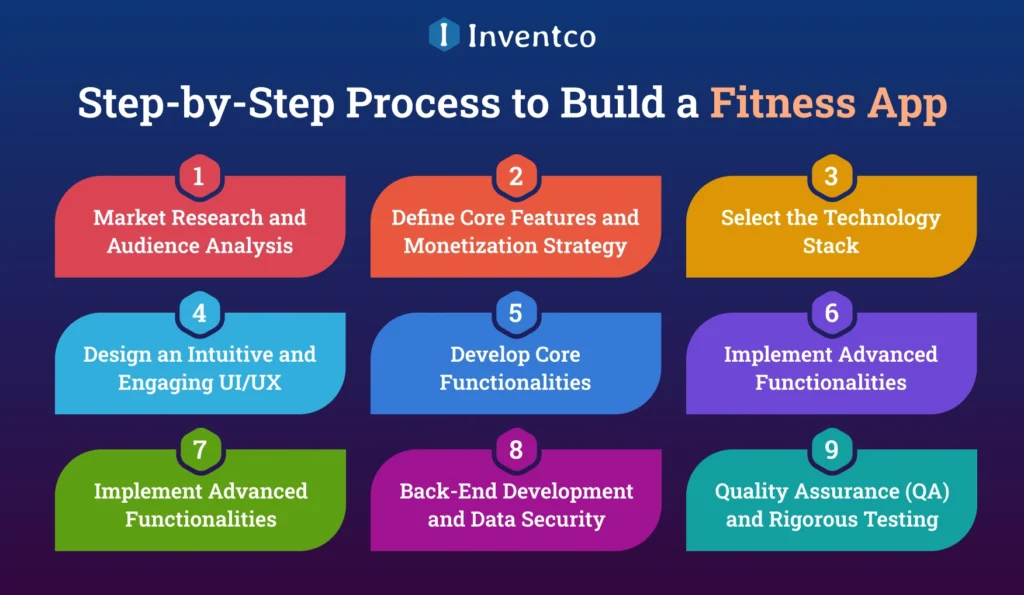
In order to build a successful fitness app in 2026, first consider the user experience, utilize appropriate technologies, and build a detailed plan. Here’s a guide on how to create a fitness app.
Step 1: Market Research and Audience Analysis
For a fitness app to be successful in 2026, it will be necessary to build a solid foundation through market research. This stage will focus on how to best serve your potential customers, targeting their fitness goals, challenges, preferences, and how they use technology. By looking at competitors, user reviews, and market trends, businesses can identify genuine demand and where to position themselves in the market.
Building accurate user profiles will allow businesses to make intelligent decisions during the fitness app development process, creating a product that will resonate with the target audience, increase user engagement, and deliver sustained potential to the user and the business.
Step 2: Define Core Features and Monetization Strategy
One of the most critical steps in building a fitness app for 2026 will be to define its core features and potential revenue streams. Some of the most important core features that will drive user engagement and retention will include workout tracking, tailored training plans, nutrition guidance, and progress tracking.
After building a core set of features, businesses can begin integrating them into their app monetization strategies. This may include subscriptions, in-app purchases, freemium upgrades, or premium coaching. This balanced approach will deliver high value to users while solidifying business sustainability.
Step 3: Select the Technology Stack
Mobile tech stack selection plays a significant role in the app’s performance, scalability, and security. By 2026, fitness apps will need to incorporate real-time data, cloud-based infrastructures, and the integration of wearables.
Along with frameworks and databases, the right APIs will facilitate the cross-platform development of fitness apps. A tech stack that is adaptable and secure will improve app performance and, in the long run, allow the business to roll out new features, manage increasing user traffic, and respond to emerging customer needs.
Step 4: Design an Intuitive and Engaging UI/UX
To succeed in fitness app development in 2026, designers must create high-quality and user-centric interfaces. Users will anticipate systems with fluid navigation and access to workouts and pop-up motivational interfaces to promote usage.
During fitness app development, designers who focus on cross-platform accessibility, customization, and sync usage improve customer retention. Better overall experiences are the result of quality interfaces.
Clean designs, interactive features, and progress trackers combine to reduce user drop-off and improve the overall experience. Quality interfaces and overall better experiences promote the use of the app and are critical to building brand equity.
Step 5: Develop Core Functionalities
When developing important functionalities, health and fitness apps begin to take shape. These are the main components of customer interaction. New Users should anticipate smooth onboarding, customizable goal setting, activity and workout logging, and performance visualizations. These features help users maintain their motivation and inform overall retention and performance measurement of the apps.
Also, by 2026, fitness applications will need to be accurate and fast, with features that are interoperable on various platforms. These fundamentals will help with more engagement on the fitness applications and provide a more reliable foundation for advanced features such as flexible scaling and long-term success.
Step 6: Implement Advanced Functionalities
The digital fitness and wellness market is rapidly growing and developing with an increase in digital tools to monitor fitness and health. Incorporating new technologies will ensure that competitive fitness applications will be available as the market grows and applications need to offer more features to maintain a competitive edge.
Applications will need to contain AI technologies that will provide personalized virtual coaching, advanced workout guidance, and tracking for constant users, as well as partnerships with digital wearables. Enhanced user performance tracking and coaching will need to be real-time.
These newer technologies will determine the amount of engagement users will have with the applications and will be vital for the sustained success of fitness applications as more digital fitness solutions become available to the consumer.
Step 7: Back-End Development and Data Security
Back-end development is crucial for fitness apps’ performance, scalability, and reliability. By 2026, fitness apps will need sufficiently powerful back-end systems to manage and store user data, process APIs, and integrate with third-party services such as wearables and payment systems.
Equally vital is the provision of data security, which encompasses encryption, secure user authentication, and regulatory compliance. A back-end system that is both secure and scalable will be trusted by users, protecting their sensitive health data and supporting sustained growth in the development of health and fitness apps.
Step 8: Quality Assurance (QA) and Rigorous Testing
In the case of fitness apps, the quality assurance (QA) phase is perhaps the most important. It is responsible for the app’s reliability and performance across devices and platforms. In 2026, the quality assurance phase of mobile app development will need to be even more rigorous to validate functionality across multiple operating systems, screen sizes, and real-world use case scenarios.
QA teams will focus testing on goal activity tracking, data sync, performance stability, and mobile app security compliance. Testing and QA help to fix bugs, streamline and buffer the user experience, and prevent performance issues prior to launch. A fitness app that has undergone rigorous testing will streamline the user experience, build users’ confidence in the app, and reduce post-launch support needs.
Step 9: Maintenance and Continuous Improvement
The success of any fitness application hinges on upkeep and iterative enhancement. Post-launch, companies need to monitor changes in performance, user behavior, and feedback to understand how to improve. In 2026 and beyond, regularly updating the app’s features and performance will help it remain competitive and meet users’ ever-changing needs.
Continuous improvements also help the app remain compatible with new devices, the latest operating systems, and emerging fitness technologies. A confident and proactive mobile app maintenance strategy will improve user satisfaction and retention, support the app’s scalability, and facilitate sustained growth.
Taking this approach to building a fitness app helps set standards in the digital fitness and health field, providing users with a personalized and data-driven experience that adapts to their changing fitness needs.
Types of Fitness Apps
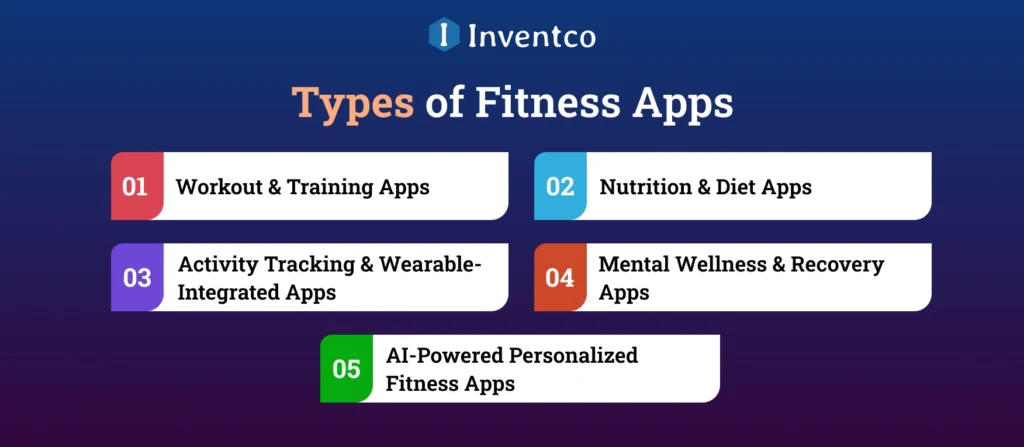
Fitness apps come in all shapes and sizes, addressing all types of user needs and goals. The top fitness apps in 2026 will emphasize personalization, begin utilizing advanced technology, and prioritize a holistic wellness experience across various fitness app types.
1. Workout & Training Apps
Workout and training apps target specific types of guided exercise, such as HIIT and yoga, and just as easily guide users through a strength training program or a home workout. These apps use AI to provide personalized plans, video demonstrations, and progress tracking to help users build workout consistency and achieve their fitness goals.
2. Nutrition & Diet Apps
Nutrition and diet apps assist in managing daily calorie intake and meal planning, as well as tracking meals. These apps provide personalized nutrition plans and food tracking, utilizing data integrations to meet user fitness goals, and provide complete health management.
3. Activity Tracking & Wearable-Integrated Apps
These fitness apps, which use smartphones and wearables to record and analyze exercise (heart rate, steps, workouts), sleep, and other personal health metrics, will define the next generation of fitness apps through the use of real-time analytics and performance insights.
4. Mental Wellness & Recovery Apps
Apps focused on mental wellness assist with managing stress, improving sleep, and offering guided recovery. These apps, aligned with the 2026 trends in holistic health, integrate emotional well-being with physical fitness through mindfulness exercises and recovery tracking.
5. AI-Powered Personalized Fitness Apps
Apps that use Artificial Intelligence (AI) to personalize fitness experiences use users’ behavior and performance data to create unique workouts, nutrition, and recovery plans. With such intelligent solutions, fitness app ecosystems offer personalized experiences. This is why fitness app development is a rapidly growing area of health and fitness.
Explore More: Best Fitness App Ideas to Launch a Scalable Fitness App Business in 2026
Benefits of Fitness Apps for Users & Businesses
Fitness apps offer users and businesses benefits that, in 2026, will create a digital fitness future that will involve long-term monetization and engagement, while improving user health outcomes.
User Benefits
- Personalized Fitness Experiences: In fitness ecosystems that use AI, users experience active participation, as they instantly receive personalized workouts, nutrition, and recovery plans unique to them, in accordance with their goals, behaviors, and real-time performance data.
- Anytime, Anywhere Accessibility: Fitness apps give users more training opportunities by eliminating constraints of time and location. With increased opportunities to train, fitness users can create good habits and consistent routines.
- Progress Tracking & Motivation: Users can use the analytics, dashboards, and goal tracking features to assess performance and level of improvement, and to collect measurable data over time.
- Wearable & Device Integration: With the advanced development of fitness apps, users can eliminate the need to use multiple apps to monitor various health attributes, such as level of activity, sleep, and heart rate, as well as overall wellness, because they can easily sync multiple wearables.
Business Benefits
- Scalable Revenue Opportunities: Business fitness app development can monetize business fitness activities through in-app purchases, subscriptions, premium services, and personalized coaching plans.
- Direct User Engagement: Developing health and fitness applications gives businesses the opportunity to interact with health-conscious customers and provide personalized experiences.
- Data-Driven Insights: Business decisions can be more effective with the help of user analytics to improve features, personalize offerings, and create tailored experiences.
- Brand Loyalty & Market Growth: Building and maintaining a presence in the competitive digital fitness market is possible through fitness applications, resulting in increasing brand loyalty and long-term market growth potential.
Must-Have Features in Fitness Apps
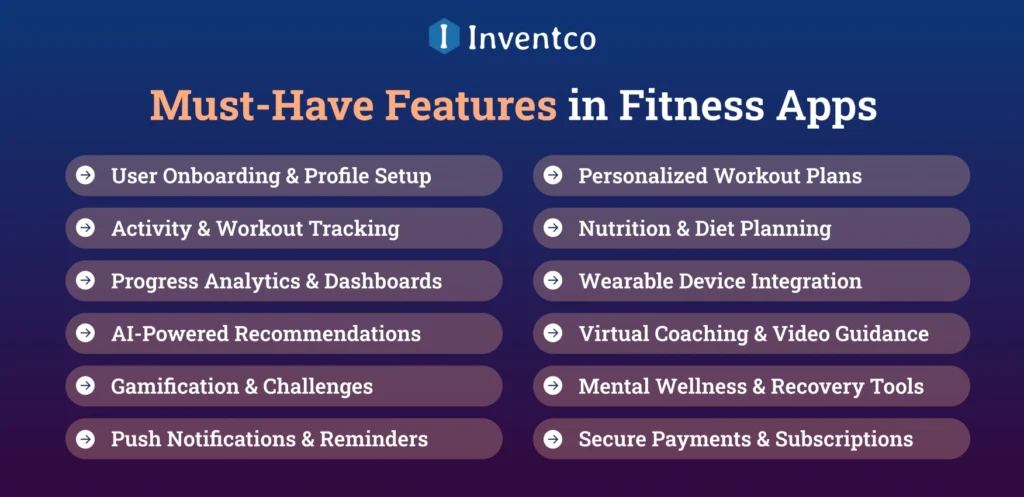
In 2026, fitness apps prioritize highly rated, advanced technologies as essential features of mobile apps to boost user retention and engagement, keep users motivated, and deliver meaningful, long-term health outcomes.
1. User Onboarding & Profile Setup
Integrating the user onboarding feature in the fitness app helps customize app features such as workouts, nutrition plans, and interactions using data like fitness targets, health data, user preferences, and experience levels. This is one of the key features in fitness apps that make users engage.
2. Personalized Workout Plans
One of the top features is a personalized workout plan. With the integration of AI into fitness apps, workout plans can be created and improved to enhance user motivation. With this, it can modify exercises, adjust workout intensity, and schedule workouts based on user progress, fitness objectives, and performance feedback.
3. Activity & Workout Tracking
User feedback and fitness accountability are satisfied through features that track and log data from workouts, walking sessions, running, burned calories, and heart rate.
4. Nutrition & Diet Planning
Customized nutrition and diet planning features help users track their meals, calories, and macros and are designed to assist users in reaching their fitness goals and match their lifestyle preferences.
5. Progress Analytics & Dashboards
Users are motivated by their app’s dashboard features that track and illustrate data on their performance progress and show new milestones and goals to achieve.
6. Wearable Device Integration
With advanced tech, users can track their activity, sleep, heart rate, and recovery with multiple devices and view all data in one integrated fitness app.
7. AI-Powered Recommendations
Smart tech in fitness apps evaluates user actions and accomplishments, giving recommendations for training, recovery, and nutrition as they are happening.
8. Virtual Coaching & Video Guidance
Remote coaching and video workouts offer motivation and coaching from trainers, including demonstrations of correct movements and motivational coaching while users train independently.
9. Gamification & Challenges
Stigma, badges, and leaderboards are elements of gamification and user engagement for long-term adherence to healthy behaviors.
10. Mental Wellness & Recovery Tools
To support integrated fitness and mental well-being, apps offer recovery tips, mindfulness exercises, breathing exercises, and sleep exercises.
11. Push Notifications & Reminders
Fostering goal achievement and consistent routines, smart reminders are designed to track workouts, water intake, and accomplishments to encourage users.
12. Secure Payments & Subscriptions
Users’ trust and seamless transactions are supported by systems for in-app purchases, subscription plans, and premium plans that require secure payment.
Cost to Build a Fitness App in 2026
Understanding the cost of fitness app development in 2026 involves several elements, such as app intricacy, required features, tech stack, and development strategy. Companies commonly inquire about the cost of creating a fitness app. Depending on the level of the app (basic, mid-range, or high-tech), the answer could be highly variable. Developing fitness apps can cost anywhere between $10,000 to $1,00,000+ based on the level of features and innovation required.
1. Basic Fitness App: $10,000 – $25,000
Developing a basic fitness app can cost between $10,000 – $25,000. At this level of development, the fitness app will have basic features such as user sign-in and basic workout routines, and it will allow the user to track their own activities. Because of the app’s low level of customization, these apps are best suited for new startups and businesses to validate their concepts as quickly as possible for a minimal cost.
2. Mid-Level Fitness App: $25,000 – $55,000
Mid-level apps also offer a higher level of customization and more attributes, such as better UI/UX, cloud integration, compatibility with wearables, advanced analytics, and more. Mid-range apps typically offer higher levels of engagement and more advanced levels of scalability.
3. Advanced AI-Driven Fitness App: $55,000 – $100,000+
Since high-end fitness apps with AI-Driven recommendations, real-time analytics, and cloud infrastructure offer rapid growth and premium user experiences, the development costs are higher than their competition, but the ROI makes them worth it.
Further, development must consider the platform, features, AI integration, testing, and adaptive maintenance. This, along with strategic cloud infrastructure planning, leads to the most flexible and intelligent development in 2026.
Key Cost Factors Involved In Fitness App Development
In 2026, the anticipated continued development costs associated with fitness apps continue to include things like expenses, design, and tech. These all impact performance and the success of the business as a whole.
1. App Complexity & Feature Set
Increased development costs and time will be associated with more complex features like nutrition planning, tracking of workouts, and AI-driven personalization for more real-time analytics.
2. Platform Selection
Deciding among development environments for Android, iOS, or cross-platform will lengthen development time and increase costs, as well as the investment and resources needed.
3. UI/UX Design Quality
High-quality UI/UX design, while more costly and time-consuming in design and development, does provide increased usability, accessibility, and engagement; more so with the added custom animations or layouts and user-centered design pathways.
4. Technology Stack
The long-term maintenance costs and an app’s performance, scale, and security can be impacted by the selection of a technology stack, which includes the coding of the framework and language, the cloud setup, AI model selection, and the integrated APIs used among the different choices of cloud services and the various tools.
5. Wearable & Third-Party Integrations
The expense and complexity of development and testing increase with the addition of wearables, although the overall experience and functionality of the app can be improved with various third-party APIs, including payment and health.
6. Data Security & Compliance
The app’s trustworthiness and user trust hinge on data security, protective safeguards, and regulations-compliant app encryption. However, these aspects build extra technical challenges.
7. Testing, Maintenance & Scaling
Cost increases when growth and ongoing maintenance, such as updates and bug fixes, are factored in. Fitness apps require a special focus on testing for mobile app performance.
Key Challenges in Fitness App Development
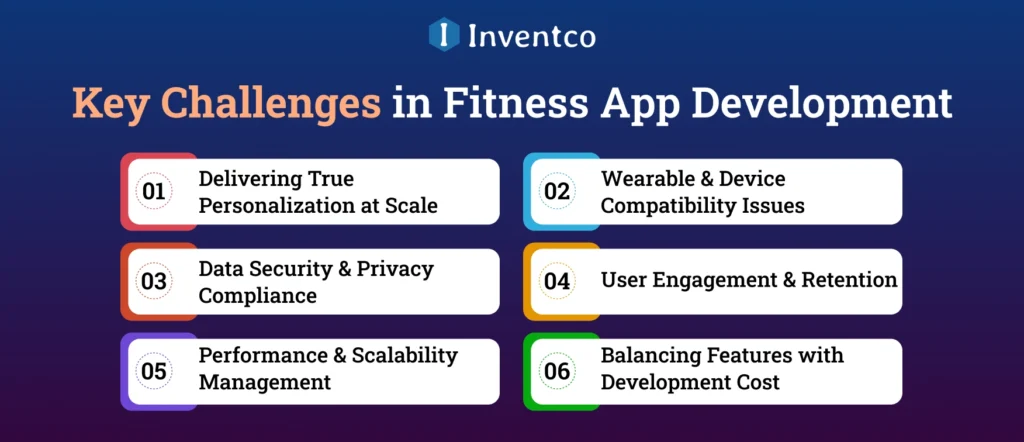
The rapid changes in user demands, technological benchmarks, and data legislation within the digital health ecosystem increase the challenges of developing fitness apps.
1. Delivering True Personalization at Scale
Personalizing individual workouts, nutrition plans, and providing insights via fitness app solutions using AI adds considerable complexity to development and increases the overall cost of developing fitness apps due to the level of precision and design needed for data, algorithms, and infrastructure.
2. Wearable & Device Compatibility Issues
Fitness mobile app development is subsequently challenged by the integration of multiple wearables and devices due to differing APIs, data formats, update cycles, and testing requirements. This creates additional long-term maintenance challenges.
3. Data Security & Privacy Compliance
Safeguarding sensitive health data requires strong encryption, secure authentication, and adherence to regulatory requirements, making data protection and privacy compliance a critical and costly concern in developing health and fitness apps.
4. User Engagement & Retention
Keeping users engaged and motivated to continue using an app is a challenge. Partially, this is due to the high level of competition among fitness apps. In order to reduce the likelihood of users abandoning the app, fitness apps must continuously add new features, new content, and new gamification to provide value to users.
5. Performance & Scalability Management
As the number of app users increases, so does the difficulty of maintaining optimal app performance, including reduced load times and providing real-time analytics. This is especially true for AI fitness apps, which often feature complicated back-end systems.
6. Balancing Features with Development Cost
When developing a fitness app, striking a balance between the budget required to develop the app and the app’s advanced features is a process that requires careful planning and prioritization to maintain quality within the budget constraints.
Overcoming these app development challenges in fitness apps demands strategic planning, scalable architecture, strong data security, and continuous innovation to balance performance, personalization, compliance, and long-term user engagement.
How Fitness Apps Make Money (Revenue Models Explained)
By 2026, the fitness app market will have fully developed mobile app monetization models that provide a balance between customer engagement and revenue generation, enabling fitness apps to sustain long-term growth in the increasingly competitive fitness app market.
1. Subscription-Based Model
Monthly and annual subscriptions are the most widely used revenue model in fitness app development. Users, for a fee, get access to premium workouts, personalized plans, progress tracking, AI coaching, and advanced analytics, and in return the app developers achieve predictable recurring revenue.
2. Freemium Model
Apps in the fitness industry give users the option to access some features for free while charging for premium features that include AI personalisation, nutritional planning, and/or integration with wearables. This business model tends to appeal to a broad audience, and eventually encourages users to purchase more.
3. In-App Purchases
Users are given the option to purchase exercise regimens, nutritional programs, e-coaching, and/or other premium materials. With this model, users pay only for what they want, which adds flexibility to the development of fitness apps.
4. Advertising & Brand Partnerships
Without charging users, fitness applications can access revenue from strategic partnerships with fitness equipment, nutrition, or wellness brands, and in-app promotions or sponsored workouts.
5. Personal Coaching & Live Sessions
Offering one-on-one virtual training, group classes, or live fitness sessions creates high-value revenue opportunities while enhancing user engagement and trust in health and fitness app development.
6. Corporate Wellness Programs
Fitness applications collaborate with businesses to implement wellness programs for their employees, generating significant revenue at the enterprise level while broadening their target audience to include organizations.
How Inventco Can Help You to Build the Robotus Fitness App
Inventco is the top mobile app development company specializing in intelligent next-generation fitness application solutions. Inventco has extensive experience in fitness app development, scalable cloud architectures, and AI-driven solutions. They craft high-end, user-centric fitness apps that align with current technology trends.
Inventco builds solutions like FitSmart to reflect this approach. FitSmart is a smart fitness workout app that incorporates customized training plans and goal tracking, along with data-driven insights.
With Inventco’s expertise and experience in fitness app solutions, every fitness app is designed and optimized for high engagement and long-term success. Inventco builds every app from the ground up, including the initial ideation and strategy, development, and testing, and provides excellent post-launch support.

Conclusion
The evolution of technology has integrated digital health with fitness apps, giving users an opportunity to manage their health and well-being using personalized and data-driven solutions. Fitness apps also provide a digital version of an ecosystem for health-related services, enabling them to grow sustainably as a business.
In order to provide an innovative fitness app, 2026 will challenge app developers to implement a technology stack that is user-centric, coupled with an understanding of market trends, along with a balanced cost-to-value and monetization consideration.
Building fitness apps that create value for their users will require a careful balancing of innovation, user-centric design, and ongoing enhancement. This will also facilitate the ability to respond to the anticipated rapid changes and evolution of technology in the digital health and fitness platform.
FAQs
Q1. How long does it take to build a fitness app?
Ans. A basic fitness app typically takes 2–3 months, while advanced AI-powered fitness apps may require 5–6 months or more, depending on features, integrations, and testing scope.
Q2. How much does it cost to develop a fitness app in 2026?
Ans. The fitness app development cost ranges from $10,000 to $100,000+, depending on app complexity, features, platforms, AI integration, testing, and long-term scalability requirements.
Q3. What features are essential in a modern fitness app?
Ans. Modern fitness apps need personalized workouts, activity tracking, nutrition planning, progress analytics, wearable integration, secure authentication, and intuitive UI/UX for strong engagement and retention.
Q4. Can fitness apps integrate with wearable devices?
Ans. Yes, fitness mobile app development supports wearable integration for tracking steps, heart rate, sleep, workouts, and real-time health metrics through secure device synchronization.
Q5. How do fitness apps make money?
Ans. Fitness apps earn revenue through subscriptions, freemium upgrades, in-app purchases, virtual coaching, advertisements, partnerships, and corporate wellness programs.
Q6. Is AI important in fitness app development?
Ans. AI in fitness app development enables personalized recommendations, adaptive training plans, predictive insights, and improved user engagement, making it essential for competitive fitness apps in 2026.
Q7. How do fitness apps ensure data security?
Ans. Fitness apps ensure data security through encryption, secure authentication, regulatory compliance, regular mobile app testing, and continuous monitoring to protect sensitive user health information.
Q8. Can a fitness app be scaled after launch?
Ans. Yes, with scalable cloud infrastructure, modular architecture, and ongoing optimization, fitness apps can easily scale to support more users, features, and device integrations over time.

Jitendra Jain
He is the CEO and Co-founder of Inventco, driving innovation in advanced computing and digital transformation. With deep expertise in modern IT ecosystems, he leads scalable, secure, future-ready solutions. His strategic leadership helps businesses accelerate growth, adopt innovation, and achieve success. You can connect with him on LinkedIn to follow his technology insights.