The mobile app ecosystem continues to expand rapidly in 2026, making the selection of the right mobile app development framework a strategic business decision rather than a purely technical one. According to recent industry projections, the global mobile application market is expected to reach approximately $391.3 billion in 2026, with forecasts indicating it will grow to $864.5 billion by 2031. This sustained expansion reflects increasing enterprise investment, rising consumer spending, and growing demand for scalable digital products.
To succeed in mobile app development, consider the business and technical complexities, as well as the features each framework provides. App development frameworks determine the speed of development, the number of platforms the app is cross-compatible with, the ability to integrate backends, performance and security, and the flexibility for maintaining the app in the future. The framework chosen will influence the app’s launch timing, scalability, and reliability, all of which will be subject to real-world conditions.
Developers and business leaders alike must evaluate frameworks not only for coding efficiency but also for ecosystem support, community strength, update frequency, device compatibility, and long-term maintainability. A poor framework decision can increase maintenance costs, introduce performance bottlenecks, and slow innovation cycles. A well-chosen framework accelerates deployment, reduces technical debt, and strengthens product stability.
This blog analyzes the most popular mobile app development frameworks for the year 2026, including frameworks based on iOS, Android, and cross-platform standards, to discover the best alternatives considering the metrics of performance, scalability, and sustainable growth.
Key Takeaways
- The mobile applications market is expected to reach ~$391.3 billion by 2026, indicating strong growth.
- The complexity of the framework you choose affects development speed, scalability, and long-term maintenance.
- Flutter (~46%) and React Native (~35%) dominate adoption in cross-platform development.
- Native cross-platform frameworks, such as SwiftUI, UIKit, and Kotlin, remain crucial for high-performance, platform-specific applications.
- Cross-platform frameworks improve development margins and cost efficiency by enabling a single codebase for all applications.
- The selected framework’s ecosystem, community, support, and update frequency are essential to its long-term sustainability.
- Selecting a strategic framework reinforces your application’s overall stability, performance, and ROI.
Framework Usage & Market Share in 2026
- According to recent developer surveys, Flutter accounts for about 46% of the cross-platform development market, while React Native accounts for around 35%, meaning these two frameworks together account for over 80% of cross-platform mobile development adoption.
- Flutter is the dominant cross-platform choice, driving UI consistency and near-native performance.
- React Native remains widely used, especially in projects where JavaScript skills and large community libraries are strategic advantages.
- Native frameworks Swift (iOS) and Kotlin (Android) still lead platform-specific development for performance-critical apps, although exact adoption percentages vary by OS and market segment.
- Global app downloads are expected to reach 292 billion in 2026, highlighting continued demand across gaming, fintech, ecommerce, AI, and utility apps.
What is a Mobile App Development Framework?
A mobile app development framework is a set of prewritten code, tools, and libraries that help developers build apps efficiently. Instead of coding it from scratch, you can use these frameworks to ensure no corners are cut and no mistakes are made, saving you time and guaranteeing high performance across devices and platforms. Frameworks are generally classified as native, cross-platform, or hybrid, depending on your mobile app’s target platform and audience.
Native frameworks are for a single platform, cross-platform frameworks are for multiple platforms, and hybrid mobile app frameworks combine web and native technologies. Understanding the types of frameworks is essential to choosing the most reliable and suitable framework that aligns with your business mobile app goals.
Types of Mobile App Development Frameworks
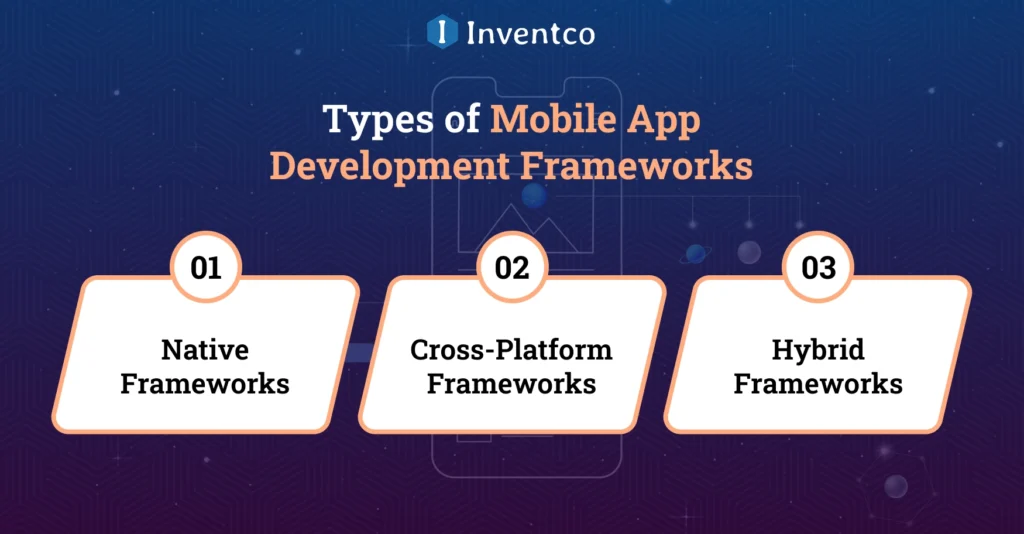
Mobile application development frameworks in 2026 can be categorized into three types: native, cross-platform, and hybrid.
1. Native Frameworks
The Native frameworks are specific to platforms such as iOS or Android. They offer high performance, a seamless user experience, and full access to device-specific features, the best framework for building apps where speed and functionality are paramount.
2. Cross-Platform Frameworks
These frameworks will help you write a single codebase and use it on multiple platforms. If you choose this type of framework for your mobile app, you can save time and reduce costs by building it with a cross-platform framework. You can reduce mobile app maintenance costs, making it the best mobile app framework for your modern apps.
3. Hybrid Frameworks
These frameworks use web technologies such as HTML, CSS, and JavaScript. They sit between both native and web applications, which means flexibility, quicker development times and cross-device compatibility, which makes frameworks for mobile application development the best choice for businesses.
Top Mobile App Development Frameworks in 2026
You must choose the best mobile app development framework for developing smooth-running, efficient, and user-friendly apps. Below is a detailed overview of the most preferred mobile app development frameworks in 2026:
- React Native: It is one of the most popular JavaScript frameworks for building cross-platform apps with near-native performance, delivered in much less time and at the same cost.
- Flutter: It is Google’s UI toolkit that allows you to create natively compiled applications for mobile, web, and desktop from a single codebase. With an expressive UI and even smoother animations, it is one of the best mobile app development frameworks.
- SwiftUI: Apple’s native UI framework for iOS that provides a declarative way to create an intuitive, modern app with far less demand for coding, which boasts smooth animations and the rapid speed of development, as well as full interlinking with apps at Apple.
- Kotlin Multiplatform: With this framework, you can share business logic between iOS and Android while maintaining native performance for faster development, writing less duplicate code, and making mobile app maintenance easier, supporting 2026’s modern mobile app development frameworks.
- Xamarin: A . NET-based cross-platform framework, shares code for Android and iOS, accesses native APIs from shared code, uses existing .NET libraries, and has built-in page controls. With the help of the Xamarin app framework, you get faster mobile app development time, a wide range of components to enhance the app’s performance capabilities, and highly scalable app solutions for startups as well as enterprises.
- Ionic: A type of hybrid framework based on HTML, CSS, and JavaScript in which you can develop a dynamic, cross-platform app for your business that is adaptable to different devices, as well as save mobile app development cost and time.
- UIKit: It is the classic Apple UI framework, perfect for legacy or complex projects, enabling high-performance, stable app development using native interface elements with library support at scale.
- . NET MAUI: Xamarin grew, allowing people to write code for mobile apps across multiple platforms, with additional work on mobile app features, shared codebases, native performance, and strong integration with Microsoft technologies.
Why Choosing the Right Framework Matters in 2026?
The choice of mobile app development framework affects the cost, speed, performance, and scalability of your mobile app development. In 2026, businesses need to focus on the following models:
- Cross-platform compatibility: Suitable Business mobile apps run on all devices with a single codebase.
- Updated UI/UX: Ensure your mobile app is easy to use and follows current mobile app development trends.
- Improved app security: With the best mobile app security practices, user data and mobile apps remain secure.
- AI, ML, and analytics integration: With AI and ML, you can boost your mobile application.
- Enable Fast Updates and Maintenance: Ensure applications are competitive and up to date.
There is a lot of competition in the mobile app world, and choosing the wrong framework can lead to slow apps, additional costs, and wasted time. That’s why careful selection is very important in developing a mobile app.
Best Mobile App Development Frameworks for iOS (2026)
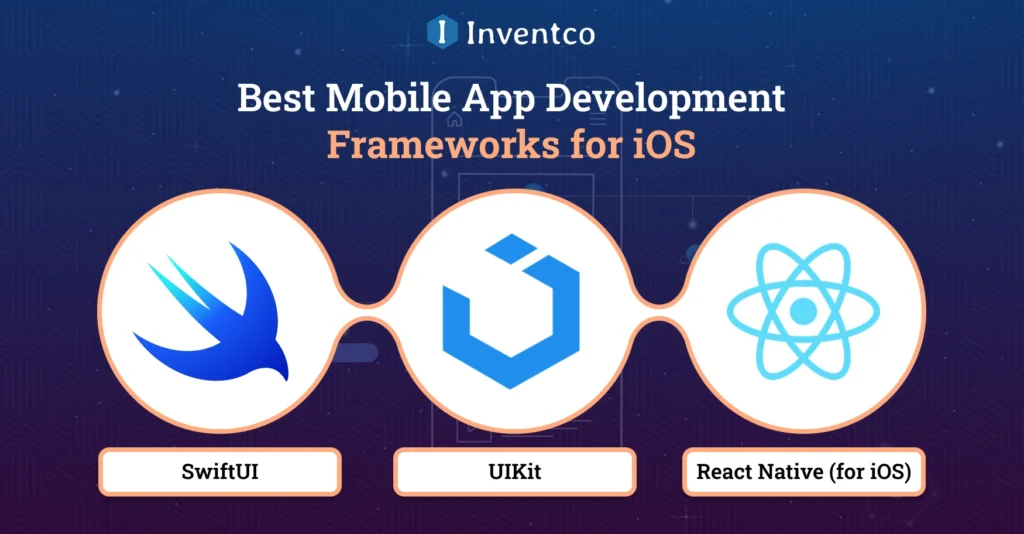
When creating an iOS application, some fundamental factors to consider include the framework’s efficiency, reduced load times, scalability, and the overall user experience. The most recommended and highest-rated framework to consider when creating your iOS application is one that supports the latest iOS interfaces and updates, enables seamless transitions, and reduces load times.
1. SwiftUI
SwiftUI enables seamless coding and real-time previews, which reduces development time. Apps can be developed for performance and visual appeal. If your target audience is Apple users and you’re looking for seamless, fluid, and non-invasive coding, SwiftUI is your best choice.
2. UIKit
If you’re about to launch your project, you should also consider the best overall framework: UIKit. It is a simple yet effective framework for integrating backend and front-end functionalities, and if you are interested, it can also help you customize and boost your app’s performance. UIKit is the best framework to consider if you are looking to build a complex, multi-system iOS application.
3. React Native (for iOS)
Using the React Native framework, companies can deliver high-quality, functional mobile applications for iOS devices, written in JavaScript. With this framework, companies can create mobile applications for both iOS and Android using the same codebase, significantly reducing the time and cost of app development. However, for more complex iOS applications that require high-level, platform-specific functional integration, it remains the best option among iOS mobile app development frameworks.
When combined with other frameworks, it enables the creation of high-quality, functional, and visually appealing mobile applications for iOS devices that are scalable and emphasize advanced mobile technologies.
Best Mobile App Development Frameworks for Android (2026)
In 2026, selecting an appropriate mobile app framework for Android app development will be invaluable for building a scalable, high-performance mobile app. The right Android mobile app framework will simplify your efforts, accelerate development, and deliver a better user experience. The following are several frameworks for Android app development that you may want to consider:
1. Kotlin Multiplatform
Kotlin Multiplatform lets you share business logic between iOS and Android in order to minimize duplication and maintenance. This will help you enjoy faster development while still maintaining control over native performance, making it a good fit for apps that target multiple platforms. Because of Kotlin’s strong typing, up-to-date syntax, and full integration with Android Studio, Kotlin will be a top choice for mobile app development frameworks in 2026.
2. Jetpack Compose
Jetpack Compose is Android’s up-to-date toolkit that facilitates building native UI. It reduces the amount of code developers are required to write, lets them create the UI declaratively, and boosts app performance. Since Jetpack Compose can be used to build native apps, you can use it to create a responsive app that has an attractive interface that is in line with Android’s current UI/UX trends.
3. Flutter (for Android)
Flutter is Google’s UI toolkit for creating beautiful, natively compiled applications for Android mobile apps from a single codebase. Flutter leverages high-performance animation and customizable widgets and runs on all platforms. With Flutter, you can reduce mobile app development time while delivering consistent performance across devices. As Flutter is a cross-platform framework, it is one of the best Android app frameworks, offering smooth integration and enhancing your mobile app’s performance.
By using these frameworks properly, businesses can build powerful, scalable, and feature-rich Android apps that perform well and deliver a seamless user experience while maintaining development efficiency and cost-effectiveness.
Best Cross-Platform App Development Frameworks (2026)
Cross-platform frameworks allow you to create apps for multiple platforms with a single codebase that can save app development time and cost. In 2026, businesses will rely on these cross-platform frameworks to build high-performance, scalable business apps that deliver a consistent user experience across devices. Below are the top cross-platform mobile app development frameworks:
1. React Native
React Native is one of the best and trending cross-platform mobile app development frameworks due to its flexibility, rich libraries and large developer community. React Native enables businesses to build high-quality, near-native apps for iOS and Android with less development time, effort, and maintenance costs, making it an ideal choice and the best tech stack for developing high-end mobile apps.
2. Flutter
Flutter allows you to create apps for mobile, web, and desktop with a single codebase. It is renowned for rapid development, expressive UIs, and smooth animations. Flutter delivers high performance and modern design principles. Flutter is one of the best mobile app development frameworks in 2026 because of its rich widget libraries and a thriving community, which makes it one of the top choices in mobile app development frameworks 2026.
3. Xamarin
Xamarin is a mature .NET-based framework that enables code sharing across iOS and Android applications. It provides full native access, enabling you to create apps that handle large amounts of data quickly without slowing down or crashing, making it one of the best choices for cross-platform mobile app development in 2026.
4. Ionic
Ionic is a popular hybrid framework that lets you build apps with HTML, CSS, and JavaScript and run them on a wide range of devices. The tool simplifies mobile and web deployment, decreases specific platform tweaks, and enables you to provide efficient, scalable, cost-effective applications and is therefore one of the most preferred hybrid mobile app development tools in 2026.
5. .NET MAUI
The successor to Xamarin, .NET MAUI, adds improved UI capabilities, strong cross-platform support, and tight integration with Microsoft tooling. It lets businesses develop robust, high-performance, enterprise-grade, scalable apps with ease and efficiency, which is the reason why it’s considered one of the most dependable cross-platform mobile app development frameworks in 2026.
By using these cross-platform frameworks, businesses can streamline their mobile app development process and achieve cost-effective, high-performing and visually striking applications on multiple platforms, responding to the user in the modern sense without delay.
How to Choose the Right Framework for Your App Idea?
Choosing the best mobile app framework is key to developing an effective app. Consider the following factors:
- Target Platform: You need to decide if your app is to be developed for iOS, Android or both. This decision will affect the framework to be used.
- Development Time: You need to decide on which platform you need to publish your business app, write a single codebase for cross-platform, or you can choose to native coding for platform-specific performance.
- Performance Requirements: For high-performance gaming applications, you need fast frameworks, but for content-driven applications, you may prioritize flexibility.
- Team Expertise: Utilize your team’s skills in JavaScript, Kotlin, Swift, or. NET for faster development.
- Budget: Choosing a cross-platform framework can save you time and the cost to build mobile app development compared to individual native app development.
Based on these considerations, Businesses should be able to choose the framework that makes their app efficient, faster, scalable, easy to use, and aligned with both technical and business strategies.
How Inventco Helps You Accelerate Development Without Compromising Quality?
Choosing the best mobile app development company can impact a mobile app security, performance, scalability, and long-term return on investment. This is why companies prefer Inventco: we have a structured development process, strong technical expertise, and reliable, high-quality delivery across multiple industries.
Inventco has proven experience developing iOS, Android, and cross-platform mobile applications, as well as providing performance-oriented digital solutions for startups, scale-ups, and enterprises. Every project starts with a process to ensure that the technology selected for development aligns with the business goals, user needs, and the solution’s scalability.
Engineering teams use frameworks such as Flutter, React Native, and Kotlin Multiplatform for cross-platform delivery, aiming to meet ‘native-level’ performance expectations. Inventco goes beyond traditional mobile development, incorporating cloud and complex backend systems, and develops analytics, AI, and ML for advanced app functionality.
Disciplined Agile provides a framework to manage iterative development, with goals and feedback loops to ensure communication throughout the development cycle. Clients don’t need to worry about transparency because, through the reporting & governance framework, they can manage performance at any point in the process development.
The only end goal is to launch a secure, scalable mobile app product that is mobile ready, to meet the competitive needs of a rapidly changing digital ecosystem.

Conclusion
Choosing the right mobile app development framework in 2026 is more critical than ever. Whether you focus on iOS, Android, or cross-platform development, using the best mobile app development frameworks ensures high performance, faster delivery, and an excellent user experience. Frameworks like Flutter, React Native, SwiftUI, and Kotlin Multiplatform dominate the landscape, while companies like Inventco provide the expertise to turn your app idea into reality.
FAQ’s
Q1. What are mobile app development frameworks 2026?
Ans. They are software platforms that provide prewritten code, libraries, and tools to build apps efficiently for iOS, Android, or both.
Q2. Which framework is best for mobile app development?
Ans. It depends on your project. SwiftUI and UIKit are best for iOS, Kotlin and Jetpack Compose for Android, and Flutter or React Native for cross-platform apps.
Q3. What framework to use for mobile app development?
Ans. Choose based on performance, target platform, development speed, and team expertise. Cross-platform frameworks save time and cost.
Q4. Are cross-platform frameworks as good as native?
Ans. Modern frameworks like Flutter and React Native offer near-native performance while reducing development time and cost.
Q5. Why choose Inventco for app development?
Ans. Inventco specializes in cutting-edge frameworks, AI/ML integration, and delivers high-performing, scalable mobile apps for businesses of all sizes.

Jitendra Jain
He is the CEO and Co-founder of Inventco, driving innovation in advanced computing and digital transformation. With deep expertise in modern IT ecosystems, he leads scalable, secure, future-ready solutions. His strategic leadership helps businesses accelerate growth, adopt innovation, and achieve success. You can connect with him on LinkedIn to follow his technology insights.