
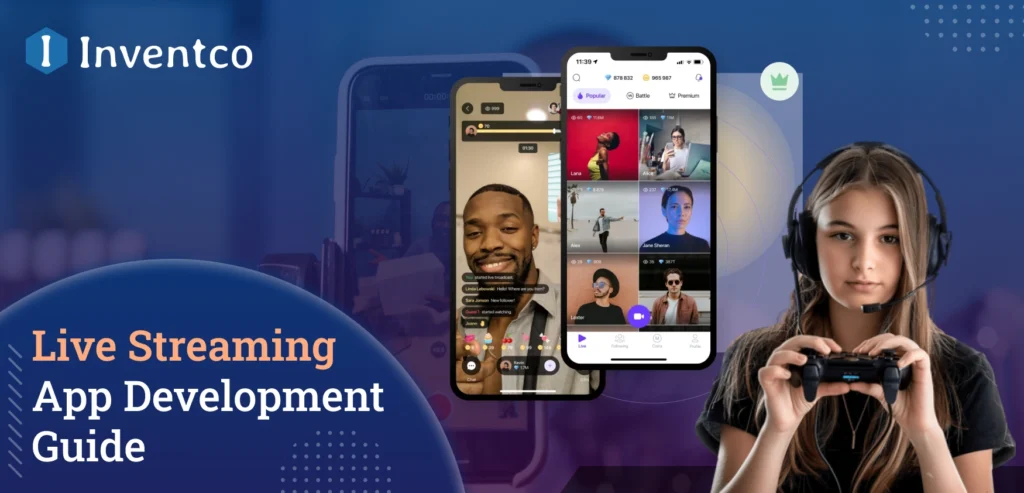
Live streaming has evolved into a critical digital layer powering modern platforms, from e-learning and telehealth to social commerce and enterprise collaboration. It is no longer a niche feature but a core capability driving real-time engagement and long-term user retention.
The global video streaming market is projected to reach over $150 billion by 2026. Streaming videos is fast becoming the preferred choice over text and other content formats. It is expected that over the next few years, streaming videos will become an everyday need within all industries.
For app developers, live streaming technology is a close to certain guarantee for app engagement and retention. As with all app development technology, there are risks, but if the monetization and scalable technology are thought out and developed correctly, your app will enjoy success.
This will guide you on developing a live streaming app. It provides detailed information on features, development steps, market insights, technical decisions, and future-ready streaming technologies.
Key Takeaways
- Live streaming has become an essential element for real time engagement, retention, and revenue across industries including e-learning, healthcare, entertainment and commerce.
- Selecting the appropriate app type and business model has a direct impact on the scalability, monetization potential, and overall success of the highly competitive live streaming industry.
- Taking a development approach, from MVP to scalable systems, helps to minimize potential losses, maximize the speed of going to market, and to maximize the product/service affinity.
- Use of the appropriate technology, streaming protocols, and other systems enhances the efficiency, speed, and quality of cross platform and global utilization.
- Features, such as AI, streaming analytics, and adaptive stream, influence the level of engagement and retention and play a vital role in revenue realization and retention.
- Mobile app development for live streaming has a range of between $10,000 to $100,000+. The true app cost for live streaming will be determined by complexity, required scalability, and infrastructure.
- Success for any live streaming app will necessitate a partnership with a qualified development team to ensure the app’s long term flexibility, stability, and overall success. This will result from a user of effective monetization strategies and a user engagement of the app to a high degree.
Live Streaming Market Statistics
Understanding the market landscape is critical before investing in live streaming app development, as data-driven insights help validate demand, reduce risk, and guide smarter product and investment decisions.
- The global video streaming market is projected to reach over $277 billion by 2026, driven by increasing digital consumption and mobile-first user behavior across industries.
- Video content is expected to account for around 82% of all internet traffic, highlighting its dominance in global digital consumption.
- The video streaming industry is projected to grow at a 12%+ CAGR through 2036, driven by increasing adoption across entertainment, education, and enterprise use cases.
- Mobile video streaming traffic already accounts for over 60% of total internet traffic, emphasizing the importance of mobile-first streaming platforms.
Types of Live Streaming Apps You Can Build
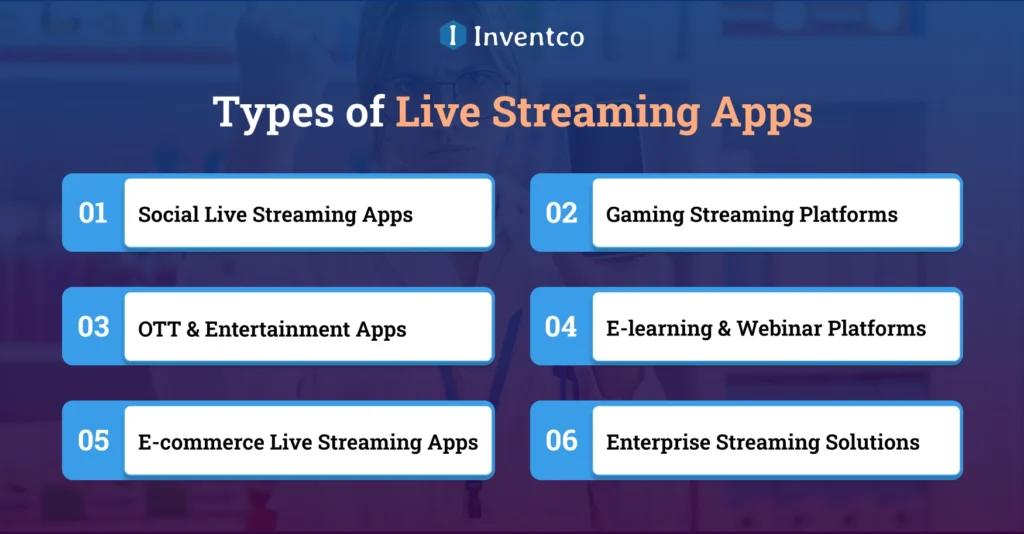
One of the most important decisions when developing a live streaming app is figuring out which streaming app fits your needs the best. This will determine your product strategy, target audience, possible monetization options, and long term competitiveness and scalability in the app dev market.
1. Social Live Streaming Apps
Live social streaming is based on user-generated content and on-the-go, real-time audience interactions. In this case, the audience is no longer a passive part of the stream as they are able to influence the stream by contributing comments. This is the kind of content that attracts a great deal of user engagement on platforms like Instagram Live.
2. Gaming Streaming Platforms
Game streaming apps allow content creators to stream live gameplay, chat with viewers, and earn money through subscriptions, advertising, or viewer donations. Highly engaged communities develop within platforms like Twitch, and creators can take advantage of scalable revenue potential as well.
3. OTT & Entertainment Apps
OTT and entertainment apps deliver live TV, sports events, and shows directly to users. These platforms focus on high-quality streaming, content licensing, and large-scale audience engagement across multiple devices and global markets.
4. E-learning & Webinar Platforms
Webinar and e-learning platforms use live streaming to conduct real-time classes, training sessions, and workshops. Live streaming helps educators and trainers to create structured learning experiences through live discussions and audience Q&A sessions.
5. E-commerce Live Streaming Apps
Live streaming e-commerce apps allow businesses to promote and sell products in real time. Businesses can provide live product demonstrations, and the audience can engage in real time during the stream. These elements greatly enhance conversion rates and overall engagement.
6. Enterprise Streaming Solutions
Enterprise streaming solutions facilitate internal communications, virtual events, and corporate training. These streaming solutions allow secure streaming, large audience participation, and seamless collaboration, allowing organizations to improve communication efficiency and employee engagement across geographically distributed teams.
Note: A well-planned approach to ott app development ensures better scalability, performance, and user engagement in streaming apps.
How to Build a Live Streaming App: Step-by-Step
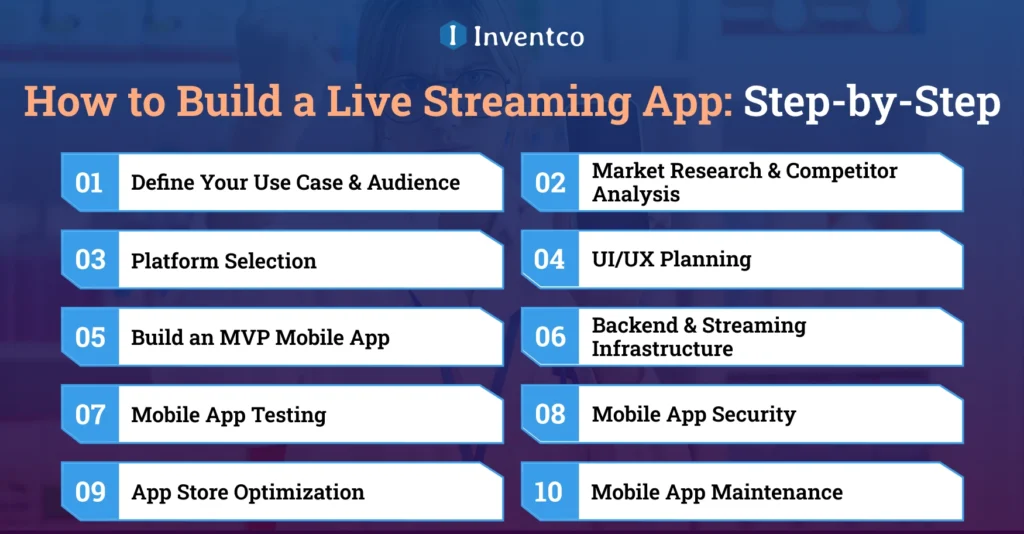
When developing a live streaming application, a focused approach is needed that merges the components of technology, user experience, and scalability needed to meet the requirements of performance, user engagement, and the continued growth of your business in a challenging and highly competitive industry.
1. Define Your Use Case & Audience
Start your mobile app development process by detailing the purpose of the app, audience, and the core value of the proposition. It is important to understand the user’s needs and requirements for a live streaming app like Twitch, or a commerce or e-learning app. Identify the most critical issues in your app.
Define the most important features of your live streaming app. It is important to obtain validation of your idea, and the most effective way is to obtain some feedback from the target audience. The feedback determines the product-market fit. Long-term growth and scalability are derived from strong product-market fit.
2. Market Research & Competitor Analysis
The next step of Live streaming app development is market research and competitor analysis, which should comprehensively cover the current market to understand demand, user behavior, and the current trends that are emerging for your type of live streaming app. Study your competition to understand the strengths and weaknesses, as well as the features, that help each product succeed, and those that are missing.
This understanding will dictate how to refine your strategy, differentiate your product, and how to catch up with the evolving app development trends. The successful positioning of value in your app will be a condition of the successful achievement of market needs and users’ preferences.
3. Platform Selection
Choosing a platform for your live video streaming app from Android or iOS will be highly dependent on your target market, your budget, and your defined business objectives. You will either choose to develop distinct applications and build them separately as native apps on each system, or choose to build one application that is cross-platform.
Depending on the framework chosen, the other factors of development cost, app performance, and time to market will be impacted. Reducing the time to market will give your competitors less advantage over you. Therefore, ensure that the decisions that are taken meet the objectives of your defined user experience, scalability, and resource management.
4. UI/UX Planning
This phase of video streaming involves app wireframing, then developing an app prototype that presents an engaging and user-friendly design. Ensure that users can navigate streams, access them quickly, and experience minimal buffering. UI/UX strategies with a design focus on user retention and engagement. With real-time design interactivity, ensure uniformity, consistency, and seamless integration on all devices and screen sizes.
5. Build an MVP Mobile App
Build a Minimum Viable Product (MVP) with core functionalities like user profiles, live chats, and live streaming. A MVP helps with testing an idea while limiting the investment. With an MVP, you will be able to collect user feedback to make necessary changes. Also, you will be able to validate your idea and with an MVP, you will be able to build a live streaming platform to scale with you as you grow.
6. Backend & Streaming Infrastructure
Use CDNs with cloud back-ends to build a back-end with low latency and high quality streaming. By using back end streaming that is reliable streaming protocols like WebRTC or HLS for real-time delivery, you will be able to make your streaming service efficient. Build for the future, as your platform becomes big, you will need to deal with a lot of concurrent users or multiple users and peak traffic loads. A good back-end will also remove buffering and improve your live streaming experience.
7. Mobile App Testing
Mobile app testing is necessary to ensure the platform is flexible for multiple scenarios. Testing your platform for performance, security, and usability is vital. Depending on bugs, the project can be modified and the user experience can be improved. Testing your mobile app for multiple scenarios will ensure that you meet quality standards, and it will also improve user experience.
8. Mobile App Security
While ensuring the app security, protect users’ details, user content, and transactions through various means. Some of these means include encryption, secure login techniques, and Digital Rights Management (DRM). Emerging security threats can be combatted through regular updates of security systems. Security of mobile applications enhances user trust, compliance with legal guidelines, and protection of the business from probable risks caused by loss of data and cybercrime.
9. App Store Optimization
In order to attract users to download and engage with your live streaming application, App Store Optimization has to be performed. This can be achieved by proper documentation, proper pictures, and the use of trending and popular keywords. To gain organic users, further advance App Store Optimization (ASO). A newly optimized app communicates with users better by improving its popularity and retaining app users.
10. Mobile App Maintenance
Long-term mobile app maintenance support helps businesses adapt to changes, from time to time. It ensures quality improvement, bug elimination, and peak app functionality by analyzing user activity on a regular basis. The streaming app has to be improved at all times to retain users and support, to cope with changing user behavior.
Tech Stack for Live Streaming App Development
Building a high-performance live streaming app comes with many challenges. Selecting the right app tech stack guarantees video delivery, interaction, and reliability for users worldwide, across any device, and for any use case.
| Layer | Technologies |
| Frontend | React Native, Flutter, Swift, Kotlin |
| Backend | Node.js, Django, Ruby on Rails |
| Streaming Protocols | RTMP, HLS, WebRTC |
| Cloud Infrastructure | AWS, Google Cloud Platform, Microsoft Azure |
| CDN (Content Delivery) | Cloudflare, Akamai |
| Database | PostgreSQL, MongoDB |
| Video Processing | FFmpeg |
| Real-time Communication | Firebase, Socket.IO |
Ensuring real-time streaming, a well-defined mobile app technology stack is essential. When combined with the right mobile app development frameworks, it will shorten the development timeline and enable quick deployment and future scalability.
Must-Have Features of a Live Streaming App
A well-defined set of mobile app features is essential for building a competitive live streaming platform, ensuring seamless performance, higher engagement, and scalable growth in today’s experience-driven digital ecosystem.
Core Features
1. Live Video Streaming (Low Latency)
Real-time video streaming can be enabled with low latency through Live Streaming Video (HLS) and Web Real-Time Communication (WebRTC) protocol and will help to provide high quality and smooth streaming to users regardless of the quality of the network and the devices they are using.
2. Real-Time Chat & Reactions
Real-time Chat and instant reactions to video streams are features that can be integrated to provide the opportunity for the audience to engage in real-time. Community engagement can be elevated, which leads to longer streams and increases user immersion.
3. User Profiles & Subscriptions
Create systems in which users can make accounts to personalize their profiles. Users will have the ability to follow content creators and subscribe to content of their choosing. Retaining users, building loyalty, and long-term revenue growth for the platform can all be achieved through this.
4. Push Notifications
To keep users engaged and returning, implement a feature that allows users to receive notifications about live streams, new content, and interaction with the platform. Users will remain connected to the platform with the use of notifications.
5. Multi-Device Compatibility
To enhance device accessibility and provide a consistent viewing experience, work to make your app available to smart systems, tablets, desktops, and smart televisions. It will help to provide an improved experience to users all over the world.
6. Content Moderation Tools
Moderation tools can include AI and manual moderation. To keep the community safe and ensure that the platform is compliant with the community guidelines, implement community moderation tools to monitor live chats and video content.
7. Recording & Playback
This feature allows users to enhance their convenience and increase content longevity through the use of live stream recordings. Further monetization can be achieved through the use of replay-based engagement strategies.
8. Payment Integration
Implement safe payment systems for subscriptions, donations, and in-app purchases. This allows for smoother transactions, better monetization potential, and increased consumer trust through safe and dependable payment systems.
Advanced Features
1. AI-Based Content Recommendations
Use artificial intelligence to analyze user behavior and deliver personalized content recommendations. This improves user engagement, increases watch time, and enhances overall user experience through tailored content discovery and suggestions.
2. Adaptive Bitrate Streaming
Use adaptive bitrate streaming. This means videos will stream in real time based on how good their internet connection is. This means better internet speed will have better videos and there will be less buffering.
3. Multi-Host Streaming
Use multiple hosts in one streaming session. This will allow more collaboration and for people to interview each other and have more discussions. This will increase audience engagement and content diversity.
4. Live Analytics Dashboard
Use a real time analytics dashboard to track audience and revenue data. This will improve a streamer’s content and give them more data to improve their streams.
5. Virtual Gifting & Gamification
Use virtual gifts, games, and other monetization streams to increase engagement. This will allow audience participation and will help increase revenue for the creators and the platform.
6. Cloud DVR & Time-Shift Viewing
Use cloud DVR to give users the ability to pause, rewind, and replay streams. This will allow users to have a better experience and allow them to consume content when they want.
Live Streaming App Development Cost: Honest Numbers for 2026
The cost to build a mobile app, especially for live streaming, typically ranges from $10,000 to $100,000+, depending on the complexities of the product, the type of real-time infrastructure, the number of features, the depth of features, and requirements for scalability. Founders must analyze the costs of initial development and operational costs in the future to help them know how to strategize future investments and how to grow their platform in the foreseeable future.
Basic App (MVP): $10,000 – $25,000
A simple live-streaming app has all the basic functionalities wanted, such as live video streaming, a simple log-in, basic chat, and basic user interface. This combination of features helps to keep the initial investments low, launch the app quickly, help founders to get user feedback, and help users to identify what features they would like to have added.
Mid-Level App: $25,000 – $60,000
A mid-level live-streaming app development would cost between $25,000 and $60,000. These types will have added features which include real-time chat, user profile, push notifications and a better user interface. Additionally, they will have better scalability and can be optimized for a certain number of users.
Advanced Platform (Twitch-like): $60,000 – $100,000+
A high level live streaming platform is designed for a high level of complexity, user base, scalability and complex monetization features. Live Streaming apps in this class will have features such as: streaming with adaptive bitrate, streaming with multiple hosts on a live chat, AI-powered live streaming suggestions, analytics, and security features. This class of app significantly invests in the quality of the app’s infrastructure, harnessing performance, reliability, and content delivery to global users.
Key Challenges in Live Streaming App Development and How to Solve Them
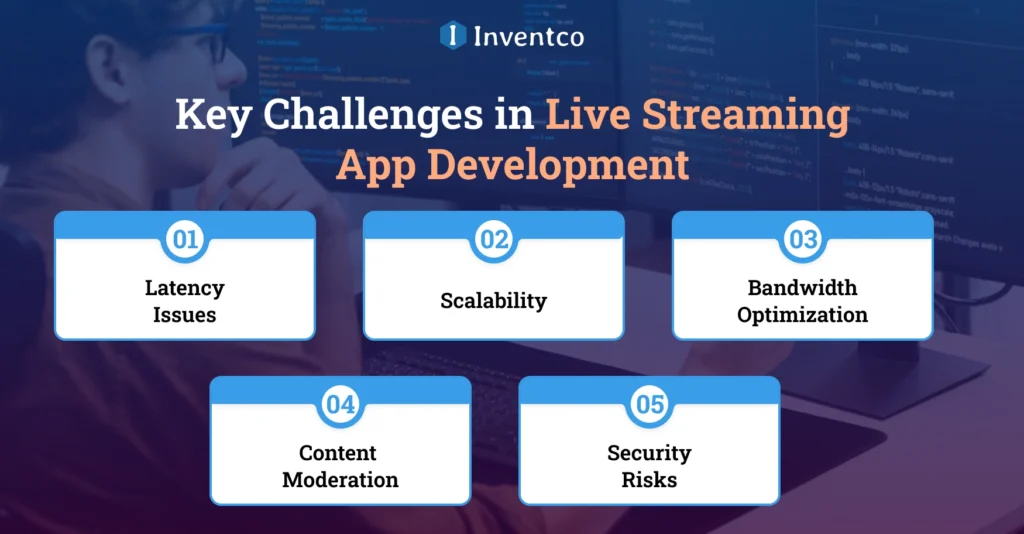
Building a live streaming app comes with technical and operational challenges that directly impact performance, scalability, and user trust, requiring strategic solutions to ensure seamless streaming experiences.
1. Latency Issues
App developers face a number of obstacles when it comes to latency, which affects real-time interaction and user experience. Delays can reduce engagement, especially in gaming or live commerce platforms.
Solution: Developers can utilize latency, diplomatic relations and trade mechanisms to ensure that latency is as near to real-time as possible.
2. Scalability
The ability to scale is one of the most critical aspects of a streaming application. If a live streaming application is not built to scale, thousands or even millions of users could overwhelm the application’s back-end, causing the application to become unresponsive.
Solution: Developers are encouraged to use AWS or Google Cloud as they provide on-demand live streaming solutions that will allow the application to grow without any obstacles.
3. Bandwidth Optimization
Users vary in their internet speed and streaming applications utilize users’ internet speed to determine how quickly the application will buffer or how low the quality of the video will be. Applications suffer when the user’s internet speed is slower for the application due to the user’s aversion to buffering or low quality videos.
Solution: Developers are encouraged to allow their video streaming applications to adjust the users video stream on-the-fly based on the internet to help counter the application’s adverse effects on its users.
4. Content Moderation
Real-time oversight of streaming applications is almost impossible due to the user-generated content, especially for large applications.
Solution: Developers can lease oversight to “artificial intelligence” systems to ensure that oversight is real and not simply a compliance issue.
5. Security Risks
The use of live streaming applications is fraught with dangers for users, including phishing, breaches of data, piracy, and the loss of users’ confidence in the platform.
Solution: Your data and user content can be protected through strengthened security measures like DRM protection, end-to-end encryption, and secured APIs.
Monetization Models for Your Live Streaming App
The right choice of app monetization model allows the user to maximize the revenue while ensuring user satisfaction and the sustainability of the live streaming platform over time.
1. Subscription Plans
Subscription models create stable revenue streams by charging users recurring payments to access premium and exclusive content. They also improve user loyalty and retention, as well as the platform’s long-term monetization potential.
2. In-App Purchases (Gifts, Coins)
Users can purchase coins and virtual gifts to support live stream creators. These in-app purchases create new revenue streams for the creators and the platform while increasing user engagement and participation.
3. Advertisements
By including ads in live streams, the platform can earn revenue. This model is effective for platforms with a large user base and allows advertisers to earn revenue without charging users to access the platform.
4. Pay-Per-View Events
Users can access certain live streaming events (webinars, concerts, and sports) by paying a fee. This model is ideal for frequent, exclusive content as it generates significant revenue for the platform.
5. Brand Sponsorships
In brand sponsorships, live stream creators promote a brand’s products and services in their streams. This monetization model allows the brands to promote their products while the creators earn revenue through sponsored content.
In the competitive environment of live streaming, a well-planned strategy for mobile app monetization creates a clear path for sustainable growth by increasing revenue consistently over time.
How Inventco Can Help You in Your Live Streaming App Development Journey?
At Inventco, the emphasis is not only on the esoteric process of app development but also on the construction of scalable, performance-focused platforms for live streaming, which are more harmoniously paired with your business objectives, the expectations of customers, and your strategy for growth. Our methodology uses the synthesis of technological and real-time streaming knowledge of the streaming ecosystem.
As a case in point, Inventco built a live fitness streaming tool that enables seamless trainer-led sessions with multi-user participation and subscription monetization. The platform also employed AI-based analytic tools for participant monitoring to enhance content delivery to participants and enhance the overall user experience.
The impact was statistically evident and directly correlated with business metrics. The platform achieved two and a half times higher user retention and 40 percent higher revenue growth within 6 months of launch, illustrating the importance of technologically sound innovations on business growth.
From MVP mobile app development to enterprise-grade solutions, Inventco ensures scalable architecture, secure streaming infrastructure, faster time-to-market, and continuous post-launch optimization, helping founders and investors build reliable, future-ready live streaming platforms with confidence.
Conclusion
The implementation of live streaming features is no longer optional, but the strategy is an absolute necessity for sustainable growth of businesses in all sectors for real-time interactions with customers, user retention through increased streaming engagement, and revenue maximization.
The success of investors and founders focuses on optimized live streaming app development, coupled with a unique business model, scalable integrated technology, and reliable demand and market responsive digital solutions.
Long-term success is more than just development. A businesses’ ability to be sustainably successful is heavily correlated with performance monitoring, and the ability to be responsive to user digital interactions and the innovation of technology.
Selecting the appropriate development partner will allow you to create a live streaming app that offers continual value to consumers, resulting in sustainable growth, increased engagement, and long-term profitability.
FAQ’s
Q1. How to develop a live streaming app?
Ans. Start with market research, define your audience and features, build an MVP, choose a scalable tech stack, integrate streaming protocols, test performance, and optimize continuously for user experience, security, and growth.
Q2. What is the cost of live streaming app development?
Ans. Live streaming app development cost typically ranges from $10,000 to $100,000 or more, depending on features, platform complexity, real-time scalability requirements, third-party integrations, and ongoing maintenance and infrastructure expenses over time.
Q3. Which technology is best for live streaming app development?
Ans. The best technologies include WebRTC for low-latency streaming, HLS for adaptive delivery, cloud platforms like AWS or Google Cloud, and backend frameworks like Node.js for scalability and performance optimization.
Q4. How long does it take to build a live streaming app?
Ans. Building a live streaming app usually takes around 3 to 9 months, depending on app complexity, feature set, development approach, team expertise, and the time required for testing, optimization, and deployment stages.
Q5. What features should a live streaming app have?
Ans. A live streaming app should include real-time video streaming, chat functionality, user profiles, push notifications, content moderation, multi-device compatibility, secure payment integration, and analytics to enhance engagement, retention, and monetization strategies.
Q6. How do live streaming apps make money?
Ans. Live streaming apps generate revenue through subscriptions, advertisements, in-app purchases, virtual gifting, pay-per-view events, and brand partnerships, allowing platforms to create multiple income streams while maximizing user engagement and retention effectively.

Ajay Bhal
He is an on-demand app solutions expert with 11+ years of experience in business consulting and building scalable, user-centric digital products. He specializes in robust on-demand platforms across industries, combining technical expertise with business-focused strategy to deliver efficient, top notch solutions that drive growth and enhance user experience. You can connect with him on LinkedIn to follow insights.


