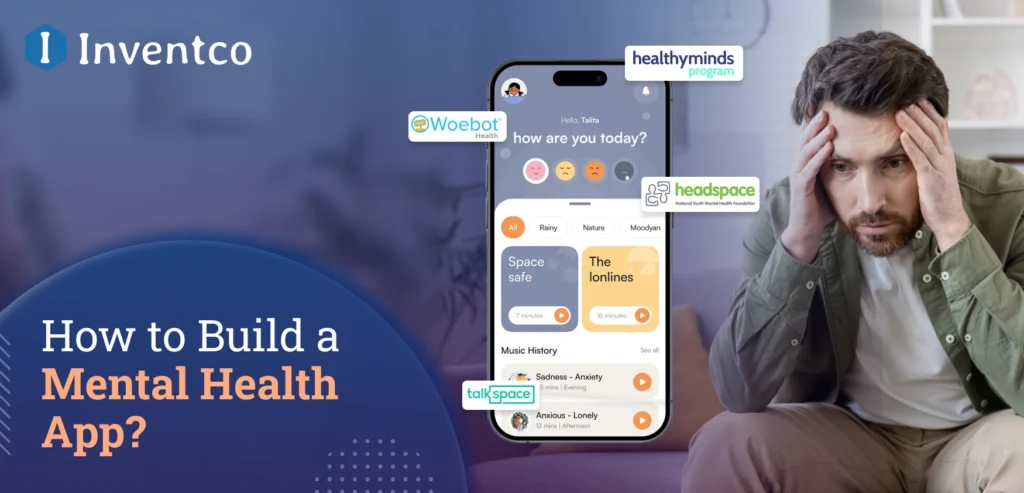
Healthcare today isn’t just changing, it’s being fundamentally rebuilt for the digital-first world. Care that was once based on in-person visits and manual processes is now intelligent, digitally connected, and on-demand. We went through the global pandemic, which altered the time and space of healthcare. It also illuminated the critical need for smarter methods for disease detection, management, and treatment. Healthcare today is powered by immersive, tech-enabled solutions that for the first time bring care closer to patients anytime, and anywhere. From remote consultations & telehealth, to real-time diagnostics & digital therapeutics, modern healthcare is a tech-enabled solution.
Reengineering health care digitally is the new merging of service delivery and healthcare delivery innovation. The frontiers of healthcare `SMART` services and interface innovation. The new frontiers of healthcare service innovation have changed service and interface design. Artificial intelligence, Internet of Things (IoT) devices, secure big data, and clinical data storage merge to redefine and operationalize precision medicine. These intelligent healthcare app development solutions are turning hospitals into connected ecosystems, enabling healthcare delivery, and assisting service personnel in a connected ecosystem to optimize and enhancing healthcare delivery.
Why Investing in Healthcare Apps Makes Sense in 2026
As healthcare shifts toward remote, personalized, and data-driven care, 2026 emerges as the most strategic year to invest in scalable healthcare app solutions.
- The global digital health market size is projected to reach about USD 491.62 billion in 2026, covering telehealth, mHealth apps, analytics, EMRs, and digital therapeutics. It is expected to grow to roughly USD 2,351.24 billion by 2034 at a CAGR of ~21.6%.
- The healthcare IT market was valued at approximately USD 880.56 billion in 2025 and is forecast to expand to around USD 3,715.34 billion by 2035, growing at ~15.48% CAGR from 2026–2035.
- The AI in healthcare market is estimated at around USD 36.79 billion in 2026, with strong long-term growth predicted toward USD 543.83 billion by 2035.
- The global telemedicine market is expected to grow from about USD 169.20 billion in 2025 to USD 596.08 billion by 2034, expanding at a CAGR of ~15.06% through this period.
- The digital transformation in the healthcare market is projected to expand significantly through the next decade, with estimates suggesting it could reach around USD 1,404.35 billion by 2034 on the back of new technologies like EHRs, AI, telemedicine, and cloud solutions.
Top 11 Innovative Ideas for Healthcare Entrepreneurs & Startups
Innovative concepts can allow for Custom Healthcare Software Solutions in the constantly evolving area of healthcare business ideas. Let’s look at some creative business ideas for healthcare startups and healthcare.
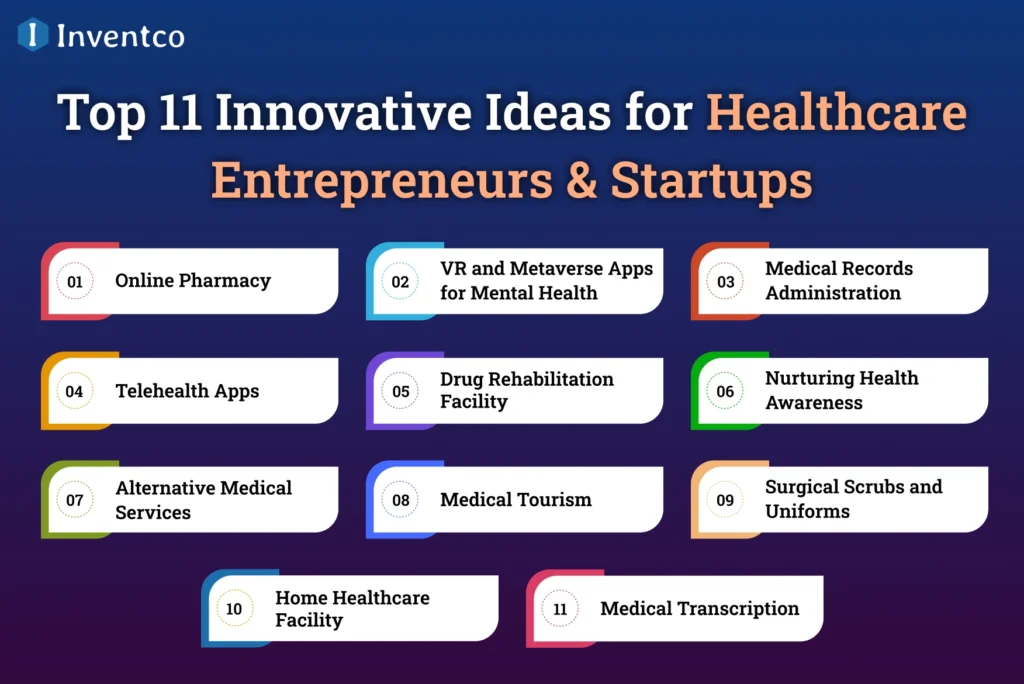
1. Online Pharmacy
The concept of an online pharmacy has revolutionized how we access healthcare. Entrepreneurs can create an online marketplace where consumers can buy medical supplies, including over-the-counter pharmaceuticals and prescription medications. It ensures a smooth and secure purchase of drugs and ease of use. Some features that can enhance user experience and improve healthcare accessibility and effectiveness include digital prescriptions, delivery on doorstep delivery, and online appointments.
2. VR and Metaverse Apps for Mental Health
The use of Metaverse and Virtual Reality (VR) apps to improve mental health provides innovative ways to treat and improve overall well-being. Entrepreneurs can design immersive experiences that assist with therapy, anxiety, and stress management. Virtual worlds give users an innovative and exciting way of receiving the mental health treatment they need by simulating exposure to mindfulness, therapy, or guided relaxation scenarios. Startups have the potential to reach a bigger market that needs help by creating accessible and inclusive mental health services and capitalizing on the increasing popularity of Metaverse technology.
3. Medical Records Administration
The most innovative healthcare startups are likely to revolutionize the management of medical records by introducing modern technologies that prioritize security, accessibility, and interoperability. The previously tedious procedure of managing medical records can be simplified using blockchain technology for secure records storage and retrieval, integrating AI to ensure efficient record administration, and creating user-friendly interfaces to aid healthcare professionals. This idea aims to reduce administrative burden, improve data accuracy, and enhance patient care.
4. Telehealth Apps
Telehealth applications are a modern method of enhancing accessibility to healthcare business opportunities. Entrepreneurs can design and develop solutions that allow remote connections between providers and patients. Virtual health monitoring and video consultations are potential options. Telehealth applications can be more effective when they’re integrated with AI-driven diagnostics and wearables that provide real-time health information. Alongside being patient-friendly, this innovative approach is crucial to expanding health services to those in poor or rural areas, encouraging preventative healthcare, and easing the burden on traditional health facilities.
Explore More: How Much Does It Cost to Build a Prescription Discount App like GoodRx?
5. Drug Rehabilitation Facility
Establishing a rehab center for drug addiction is a unique method of dealing with the problems of addiction and misuse of drugs that are becoming more common. By integrating modern treatment methods, personalized care plans, and holistic methods, the entrepreneurs are able to create an environment of support for those seeking recovery. Rehabilitation programs are more successful if they employ technology to provide telehealth care, continuous monitoring, and data-driven information. This is beneficial to both patients as well as communities with innovative ideas for the healthcare industry.
6. Nurturing Health Awareness
Partnering with a health care app development service provider may create platforms or products that permit people to take active steps toward their health and well-being by focusing on health-related awareness campaigns for businesses. It may involve coordinating community wellness programs, implementing preventive health education programs, or creating mobile applications to aid health monitoring. Startups can reduce the pressure on healthcare systems by promoting an awareness culture that promotes better lifestyles and improved community well-being.
7. Alternative Medical Services
Entrepreneurs and startups working in the health industry could explore alternative therapies by offering treatments beyond traditional Western medicine. Services such as naturopathy, Acupuncture, chiropractic adjustment, and holistic wellness programs may fall into this category. A variety of patients who want an extensive and personalized approach to their health can be attracted to your health firm by offering alternative medical options as the demand for holistic approaches to health is growing.
8. Medical Tourism
Healthcare entrepreneurs can now gain access to a global market through medical tourism. The provision of cutting-edge medical treatment, specialist treatments, or affordable healthcare services could attract patients from all over the world. It may involve forging partnerships with travel companies to deliver the highest quality medical treatment and to help make the experience smoother for patients traveling from abroad. In addition to aiding your healthcare company’s future growth, medical tourism ideas help people worldwide access business opportunities in healthcare.
9. Surgical Scrubs and Uniforms
Innovative healthcare startups can concentrate on modernizing and redesigning scrubs and uniforms for surgical use. Healthcare professionals should consider introducing materials that have cutting-edge characteristics, such as antibacterial properties and moisture-wicking capabilities. Ergonomic designs can also enhance the quality of life, hygiene, and overall efficiency. Smart fabrics that monitor vital signs or allow for easy access to medical information could further redefine traditional medical attire.
10. Home Healthcare Facility
Startups can develop modern, cutting-edge facilities for home health care to take advantage of the increasing trend of providing healthcare efficiently in the privacy of patients’ homes. These institutions offer various options, including treatment administration, diagnostic tests, and medical consultations at home. The use of devices that are connected to wearables, IoT equipment, and technologies for telemedicine remote monitoring is made more accessible, ensuring that patients receive prompt, individualized medical care in a relaxing environment. This method improves the overall efficiency of healthcare while improving the overall experience for patients.
11. Medical Transcription
Medical transcription transforms healthcare professionals’ audio recordings of their medical reports into written documents. This unique solution speeds up the documentation process, thereby helping medical professionals save time while improving the quality of the medical information. Entrepreneurs can design advanced transcription tools that incorporate voice recognition with natural language processing technology to enhance and automate the transcription process. Startups in this sector will help improve the quality of patient care and record-keeping by offering adequate and reliable medical documentation. They can also assist in making health facilities more efficient and organized overall.
Explore More: Intelligent Document Processing- How it Works and Impacts the Healthcare Industry
Case Study: Delivering Impactful Healthcare Apps at Scale
Inventco has developed cutting-edge healthcare applications across a wide range of areas, including diagnostics, wellness, telemedicine, mental health, and remote patient care. Inventco understands healthcare workflows and compliance and builds scalable, secure, and user-centered digital solutions for healthcare providers, startups, and wellness brands. Inventco has taken on the challenge of modernizing healthcare delivery across multiple projects. Clients requested data security, user experience, and application performance. Clients requested applications capable of supporting remote consultations, continuous monitoring, and on-demand healthcare services.
Inventco considered each of these factors in developing applications. In addition to the patient-centered approach, technology-driven applications included: Check My Mole, an AI-powered cancer detection app; Sugamya Ayurveda Health & Wellness App and Wellness Ayurveda Practitioner App for holistic care; a secure mental health app for remote therapy and counseling, Wasfat Health App for ordering prescription medicines; and Espitalia Health Application. Other applications, such as Hello Doctor, Sensivision Health Technologies, and MDLing Health CheckUp App, provided on-site medical consultations and booked appointments. These projects streamlined operations, improved care accessibility, and fostered digital healthcare growth.
Top Technology for Healthcare to Adopt by 2026
Healthcare is rapidly shifting from reactive care to intelligent, connected ecosystems. By 2026, emerging technologies will redefine how providers diagnose, treat, monitor, and deliver truly patient-centric healthcare experiences.
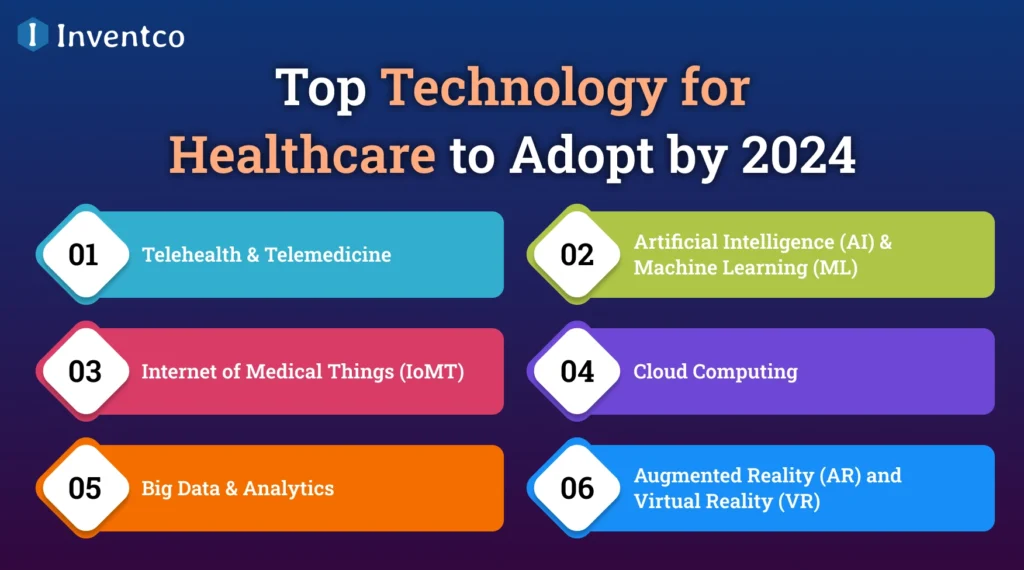
1. Telehealth & Telemedicine
Telemedicine and telehealth healthcare technologies are geared towards moving offline manual services into a remote-based format. Telemedicine platforms and applications benefit hospitals by allowing remote consultations, decreasing the time it takes to see patients, and increasing access to specialist services. The typical use cases for Telehealth and telemedicine applications include:
- Remote consultations allow patients to consult physicians remotely for non-urgent medical concerns, prescriptions, or follow-ups.
- Remote monitoring permits continuous monitoring of a patient’s health conditions and data from a distance.
- Follow-up care after treatment for monitoring reduces hospital visits for routine checks.
- Health professionals need education and training to improve their abilities and knowledge online.
For example, Massachusetts General Hospital integrates Telehealth for mental health services. They offer therapy and counseling sessions remotely. In this way, the institution separates patients with urgent needs from those without, reducing patient wait times and boosting operational efficiency.
2. Artificial Intelligence (AI) & Machine Learning (ML)
Artificial Intelligence (AI) and Machine Learning (ML) are the most well-known health and technology developments. In medicine, they’re extensively used to process massive amounts of data, provide predictive insights, and enhance the quality of care for patients. Medical facilities upgrade their traditional health systems and work with AI-powered software for:
- Examining medical images like X-rays, CT scans, and pathology slides to make precise diagnoses.
- Make tailored treatment plans using patient and genetic information to improve results.
- The speed of drug development can be increased by studying the molecular structure and predicting possible drug candidates.
- Predicting patient outcomes, identifying health risks, and developing preventive health strategies.
- Enhancing patient experience by introducing chatbots for healthcare and interactive tablets. Patients can look over their medical plans and request more information right away.
Mayo Clinic is a hospital in the United States that represents a shining example of the success of AI implementation. The hospital is embracing AI-powered healthcare IT techniques to improve predictive analytics, personal treatment plans, and patient outcomes.
3. Internet of Medical Things (IoMT)
The Internet of Medical Things (IoMT) is a broad term for medical devices and software that collect and transfer data from patients in real-time. It’s a sophisticated system of interconnected applications and tools that are powered through biotech SaaS solutions that could include:
- Wearable health trackers, such as fitness bands, smartwatches, and many other wearables, track vital indicators of physical activity and health.
- Devices for remote health monitoring include devices that measure glucose levels, blood pressure, and heart rate.
- These include insulin pumps, pacemakers, and neurostimulators implanted in the body that can transmit information.
- Automated vending machines and pharmacy kiosks allow patients to get medication without contact, consultations, or even prescriptions.
Cleveland Clinic (United States) has implemented IoMT as a part of its health management system to monitor patients remotely. This allows health professionals to monitor patients’ health online and helps reduce hospital readmissions.
Explore More: How AI is Revolutionizing Medical Practice in the Future?
4. Cloud Computing
Healthcare cloud computing entails using distant servers to store, manage, and process health information and applications. Utilizing HIPAA-compliant software protocols. These applications are typically employed to:
- Medical records, patient images, and health data are stored securely on cloud servers to ensure access and backup.
- Facilitating remote doctor-patient interaction and remote health services using online communication software.
- Contributing to collaborative research in medicine by offering a platform for sharing information, resources, and tools for computation among researchers worldwide.
- Cloud-based hosting of electronic health records (EHR) systems on cloud-based platforms allows easy access to patient information across facilities and healthcare networks.
Facilities such as The Alfred Hospital (Australia) utilize cloud technology in healthcare to predict patient outcomes and analyze them. This method has enhanced clinical decision-making and improved collaboration between healthcare professionals.
5. Big Data & Analytics
Big data is among the most exciting technological trends sweeping the health industry. Utilizing big data processing applications and tools that collect smartly and efficiently accessible data, medical companies gain valuable insight by:
- Examining patient records, medical imaging, and genetic data aids in diagnosing and developing treatment plans.
- Recognizing patterns and trends in medical data to predict outbreaks, patient outcomes, and health risks.
- Utilizing data specific to the patient to tailor treatments or therapies and medicines to improve effectiveness and reduce adverse side effects.
- It is also important to monitor the population’s health trends, observe epidemiological change patterns, and design prevention and management strategies.
However, harnessing the potential of technology based on data for healthcare requires a comprehensive method of medical cybersecurity. Singapore General Hospital is one of those facilities that concentrate heavily on big data and information security. Employing big data analytics for predictive analytics, the hospital invests in solid security measures to protect patient data and the healthcare infrastructure.
Explore More: Medicine Delivery App Development Guide: NowRx for Pharmacy
6. Augmented Reality (AR) and Virtual Reality (VR)
The AR and VR duo is a different technology, altering healthcare practices and methods of working. It is employed in medical practice to improve medical education, improve the outcomes of patients, and aid in the development of new treatments and treatments.
- Surgeons can visualize the anatomy of their patients in 3D. This aids in planning surgical procedures and preparing complicated procedures prior to performing them on patients.
- Patients participate in an interactive experience that assists in physical therapy and motor skill development.
- VR creates immersive medical simulations that allow students and health professionals to experience procedures in a safe and real-world setting.
- AR and VR aid in explaining complicated medical ailments and treatments to patients by creating interactive and educational content.
Challenges in Implementing Innovative Ideas for Healthcare Entrepreneurs
In the constantly changing world of healthcare entrepreneurs in the healthcare industry, implementing new ideas creates both challenges and opportunities. Here are some of the challenges facing business ideas for healthcare and solutions.
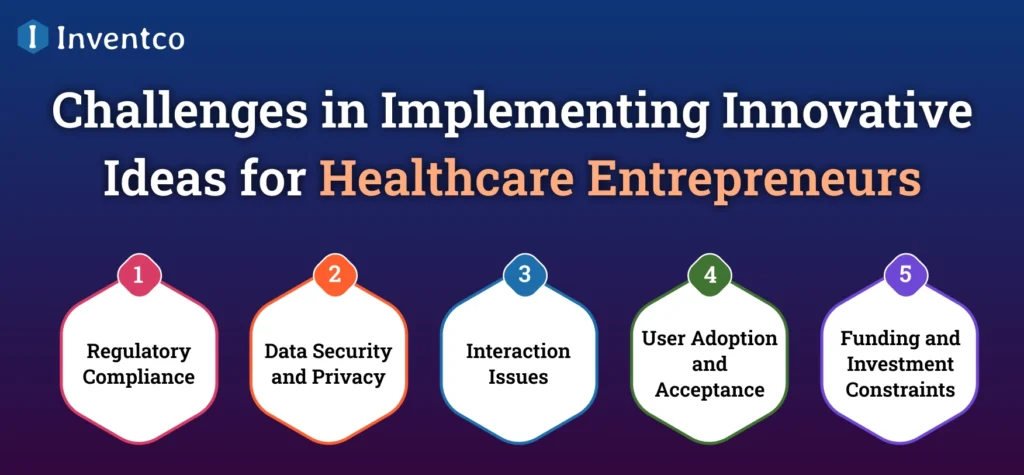
1. Regulatory Compliance
Challenge: Adherence to different standards is vital in the highly controlled healthcare industry.
Solution: work with legal experts to develop a strong framework for compliance, conduct an in-depth study, and be aware of all applicable laws. Continuous compliance with evolving regulations is guaranteed through periodic updates and audits.
2. Data Security and Privacy
Challenge: Security should always be the first priority in medical business developments involving sensitive patient information.
Solution: Implement secure cloud services, set up strong encryption protocols, and enforce strict access restrictions. A comprehensive security plan must also include regular employee training on best privacy practices and data protection laws.
3. Interaction Issues
Challenge: Healthcare systems typically employ a range of technologies and standards that make it challenging to integrate the latest advances. The inability of the current systems to work in a coordinated manner could cause delays in the circulation of vital patient information.
Solution: To facilitate data exchange, implement standard protocols such as FHIR (Fast Healthcare Interoperability Resources). Prioritize the development of APIs and interoperable technology to facilitate cooperation between different healthcare platforms. Create common interoperability standards for healthcare industry players to enable seamless integration.
4. User Adoption and Acceptance
Challenge: Healthcare professionals may hesitate to adopt technological advances due to their lack of knowledge, fears about disrupting productivity, or doubts about potential benefits. Adoption by users becomes a significant obstacle to the efficacy of new ideas.
Solution: Make user-centric design the top priority when designing new products so they’re compatible with current procedures. Develop comprehensive training programs that educate medical professionals about the advantages and features of the new invention. To boost acceptance and increase adoption to increase adoption and acceptance, solicit feedback regularly and make minor adjustments based on the user’s experience.
5. Funding and Investment Constraints
Challenge: Funding restrictions hinder healthcare entrepreneurs from developing and implementing innovative ideas. The high cost of capital for research, development, and deployment creates a significant hurdle for potential entrepreneurs.
Solutions: Various healthcare entrepreneurs’ opportunities exist to deal with financial problems. Financial assistance is vital and can be found through collaboration with venture capitalists, investors, or funding organizations that specialize in healthcare. Other options for funding include exploring grants from the government, crowdsourcing, and working with universities.
Future Trends in Healthcare
It is important to note that the healthcare industry trends and startups highlighted in this report represent only a fraction of the innovations uncovered through our extensive research. Several emerging technologies are poised to redefine how healthcare is delivered, managed, and experienced.
1. AI-Powered Smart Healthcare Apps
AI-driven healthcare apps analyze patient data to deliver predictive diagnostics, personalized treatment plans, automated clinical insights, and virtual assistants that enhance decision-making, reduce errors, and improve overall patient care efficiency.
2. Telemedicine & Virtual Care Apps
Telemedicine apps enable remote consultations, digital prescriptions, virtual follow-ups, and specialist access, reducing hospital visits, lowering wait times, improving care accessibility, and ensuring continuity of treatment through secure digital platforms.
3. Remote Patient Monitoring (RPM) Apps
Remote patient monitoring apps integrate with wearables and medical devices to track vital signs in real time, supporting chronic disease management, early intervention, improved outcomes, and reduced hospital readmissions.
4. Mental Health & Wellness Apps
Mental health apps offer virtual therapy, mood tracking, meditation, stress management, and behavioral support, helping users manage emotional well-being, reduce anxiety, improve resilience, and access professional care conveniently.
5. Data-Driven Personalized Healthcare Apps
Data-driven healthcare apps use analytics and patient insights to deliver personalized recommendations, preventive care reminders, lifestyle guidance, and tailored health journeys that enhance engagement, outcomes, and long-term wellness.
Explore More: Ultimate Guide to Referral Management Software Development in the Healthcare Sector
How Innovative Healthcare Apps Are Built with Inventco
Building a healthcare app goes beyond development, it requires trust, compliance, and innovation. As a leading mobile app development company, Inventco delivers secure, scalable, and future-ready healthcare solutions.
Inventco blends healthcare domain expertise with advanced technologies such as AI, IoMT, cloud computing, and data analytics to create high-performance applications. From ideation and UX/UI design to development, testing, and deployment, every stage follows strict regulatory standards, including HIPAA and GDPR.
Whether you’re building telemedicine platforms, remote patient monitoring solutions, mental health apps, or AI-driven diagnostic tools, Inventco focuses on usability, compliance, and scalability, helping you launch a healthcare app that stands out in a competitive market.
Conclusion
Healthcare in 2026 is being reshaped by innovation, connectivity, and patient-centric technology. As digital transformation accelerates, healthcare apps are no longer optional, they are essential tools for improving accessibility, efficiency, and quality of care. From telemedicine and AI-driven diagnostics to remote monitoring and immersive technologies, digital solutions are redefining how care is delivered and experienced.
The rapid growth of global healthcare and digital health markets further highlights the immense potential for innovation-led investments. For entrepreneurs, startups, and healthcare providers, adopting advanced healthcare app solutions offers a powerful opportunity to meet evolving patient needs, overcome operational challenges, and build sustainable, future-ready healthcare ecosystems.

Sandeep Agrawal
Sandeep Agrawal is the visionary CTO at Inventco, bringing innovation to life through his technical expertise. With a passion for cutting-edge technologies, Sandeep leads the team in developing robust solutions. His dedication and continous efforts to pushing the boundaries of what’s possible defines his role as a transformative and innovative force in the tech industry.